

Bite force PSI is frequently mentioned when discussing protection dog breeds, but it’s also one of the most misunderstood topics in dog behavior. While jaw strength can sound intimidating, it does not determine aggression, danger level, or suitability as a protection dog.
This article explains what bite force PSI really means, how it’s measured, which protection breeds are often cited, and why training, temperament, and control matter far more than raw strength.
What Bite Force PSI Means
Bite force PSI refers to the amount of pressure a dog’s jaws can exert per square inch. It measures physical potential, not behavioral intent.
Key points to understand:
- PSI reflects jaw strength, not aggression
- Dogs rarely bite at full force
- Emotional state and training affect real-world bites
- Bite force varies by skull shape and muscle structure
Bite force is a mechanical measurement, not a predictor of behavior.
How Bite Force Is Measured
There is no single universal method for measuring bite force in dogs. Most PSI numbers are estimates rather than exact figures.
Common measurement approaches include:
- Pressure sensors in controlled bite tests
- Biomechanical modeling based on skull anatomy
- Veterinary and academic estimates
Because testing conditions differ, published PSI numbers should be viewed as approximate ranges, not precise rankings.
Why Bite Force Is Associated With Protection Dogs
Protection dog breeds are typically large, confident, and physically powerful. These traits often correlate with stronger jaw structures, which is why bite force gets attention.
However, protection dogs are bred for:
- Controlled defensive responses
- Handler focus and obedience
- Stable nerves under stress
- Discrimination between threat and non-threat
A strong bite may exist, but it is not the defining feature of a reliable protection dog.
Protection Dog Breeds Commonly Linked to High Bite Force
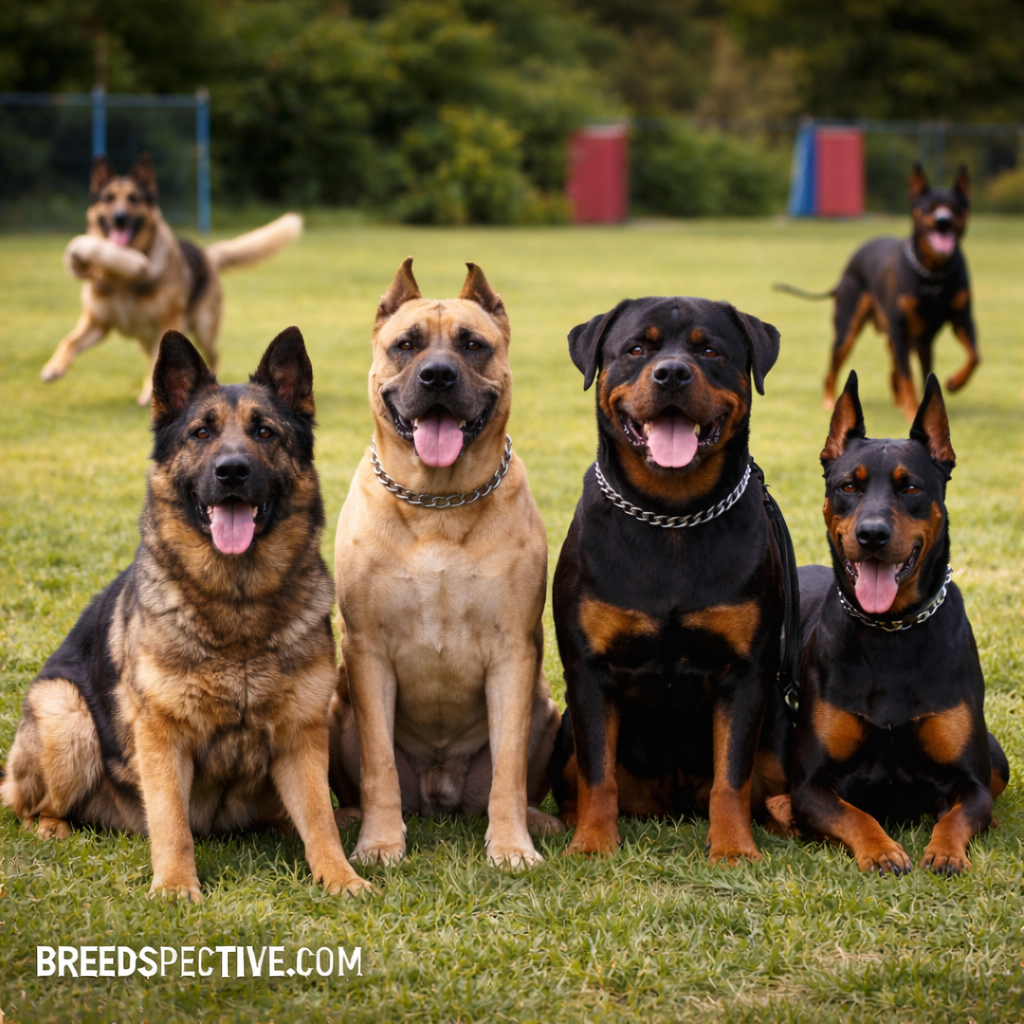
The following breeds are often cited in discussions of bite force. Numbers vary widely by source and should be interpreted cautiously.
Kangal
- Estimated bite force: 700+ PSI
- Livestock guardian breed
- Extremely powerful jaws
- Not typically used for personal protection
Cane Corso
- Estimated bite force: around 650 PSI
- Strong guardian instincts
- Calm but assertive temperament
- Requires experienced ownership
Rottweiler
- Estimated bite force: 320–330 PSI
- Balanced strength and trainability
- Widely used in protection and service roles
German Shepherd
- Estimated bite force: 230–240 PSI
- Exceptional control and responsiveness
- One of the most trusted working protection breeds
Doberman Pinscher
- Estimated bite force: around 245 PSI
- Relies on speed and precision
- Highly handler-focused and responsive
Why Bite Force Alone Does Not Equal Protection Ability
A dog with extreme jaw strength but poor impulse control is a liability, not a protector.
Effective protection dogs must demonstrate:
- Clear decision-making
- Immediate obedience to commands
- Ability to disengage on cue
- Emotional stability
- Predictable behavior in public
Many elite protection dogs do not rank highest in bite force.
Training and Bite Control
Training determines how and when a dog uses its bite, not how strong that bite is.
Professional protection training emphasizes:
- Precision targeting
- Controlled engagement
- Immediate release on command
- Situational awareness
- Neutral behavior outside protection scenarios
A trained dog with moderate bite force is safer and more effective than an untrained dog with extreme PSI.
Temperament vs Jaw Strength
Temperament plays a far greater role in protection success than physical power.
Important temperament traits include:
- Confidence without aggression
- Low fear response
- Strong handler bond
- Emotional resilience
- Consistent behavior patterns
Protection dogs are selected for nerve stability, not intimidation.
Common Myths About Bite Force
There are many misconceptions surrounding bite force and protection breeds.
Common myths include:
- Higher PSI means higher aggression
- Stronger bite equals better protection
- High-bite-force dogs are unsafe pets
- Bite force predicts attack likelihood
Bite force is physical capability. Aggression is behavioral.
Legal and Ethical Responsibilities
Owning a protection-capable breed carries responsibility beyond training.
Important considerations include:
- Local breed regulations
- Liability laws
- Proper containment
- Ongoing training documentation
- Public safety awareness
Responsible ownership matters more than any statistic.
Choosing a Protection Dog Wisely
If protection is your goal, prioritize:
- Stable temperament
- Proven working history
- Access to professional training
- Lifestyle compatibility
- Legal considerations
The best protection dog is one that can remain calm, controlled, and obedient at all times.
Final Thoughts
Bite force PSI can be interesting, but it is often misunderstood and overemphasized. True protection dogs are defined by control, intelligence, and training, not raw jaw strength.
The most reliable protectors are dogs that know when not to bite—and can stop instantly when told.