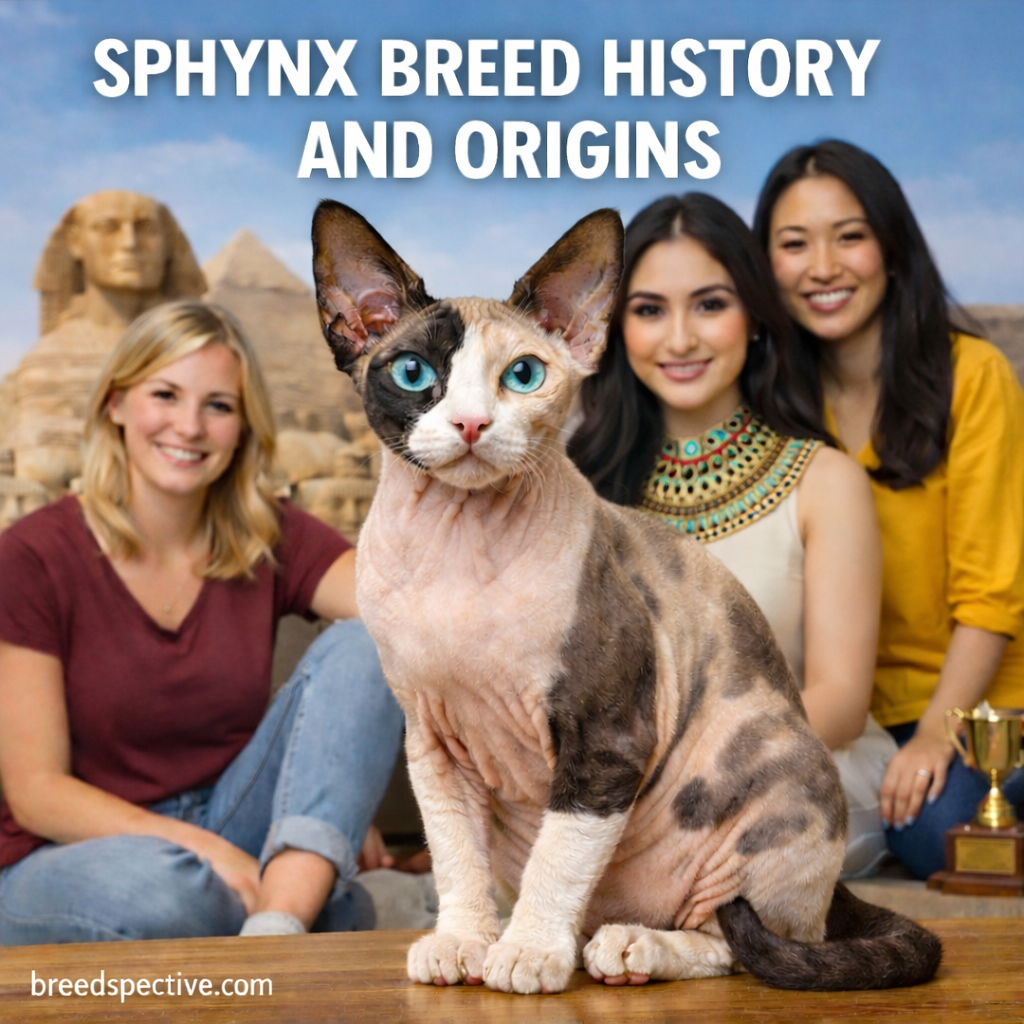
The Sphynx cat is one of the most recognizable and misunderstood cat breeds in the world. Known for its hairless appearance, wrinkled skin, and expressive personality, the breed often sparks curiosity and debate. Despite its ancient-sounding name and almost mythical look, the Sphynx is a modern breed with well-documented origins rooted in genetics rather than antiquity.
This article explores the true history of the Sphynx cat, how the breed developed, and how it became a globally recognized companion.
The Myth Behind the Name “Sphynx”
The Sphynx cat is not an ancient Egyptian breed. The name was chosen purely for symbolic reasons. Early breeders felt the cat’s elegant posture, angular features, and intense gaze resembled the Great Sphinx of Giza.
In reality, the breed has no direct historical connection to ancient Egypt or early domesticated cats. Its origins are firmly grounded in 20th-century breeding programs.
Early Hairless Cats Before the Sphynx
Hairless cats have appeared sporadically throughout history due to natural genetic mutations. Records of hairless cats exist in:
- Central America in the early 1900s
- Mexico, where they were sometimes called “Mexican Hairless Cats”
- Various isolated litters around the world
These early hairless cats did not lead to a stable breed. Most lines disappeared because the mutation was rare and breeding programs were inconsistent.
The Birth of the Modern Sphynx Breed
The modern Sphynx breed began in 1966 in Canada.
A domestic cat in Toronto gave birth to a naturally hairless kitten due to a spontaneous genetic mutation. This kitten, named Prune, became the foundation for what would eventually become the Sphynx breed.
Early breeders recognized the potential of this mutation and began carefully controlled breeding efforts to preserve the trait.
Genetic Foundations of the Sphynx
The Sphynx’s hairlessness is caused by a recessive genetic mutation. This means:
- Both parent cats must carry the gene for hairlessness to appear
- Not all kittens in a litter will be hairless
- Some kittens may have a light peach-fuzz coat rather than complete baldness
Because early breeding populations were small, breeders introduced other cats to strengthen genetic diversity while maintaining the hairless trait.
Breed Development and Refinement
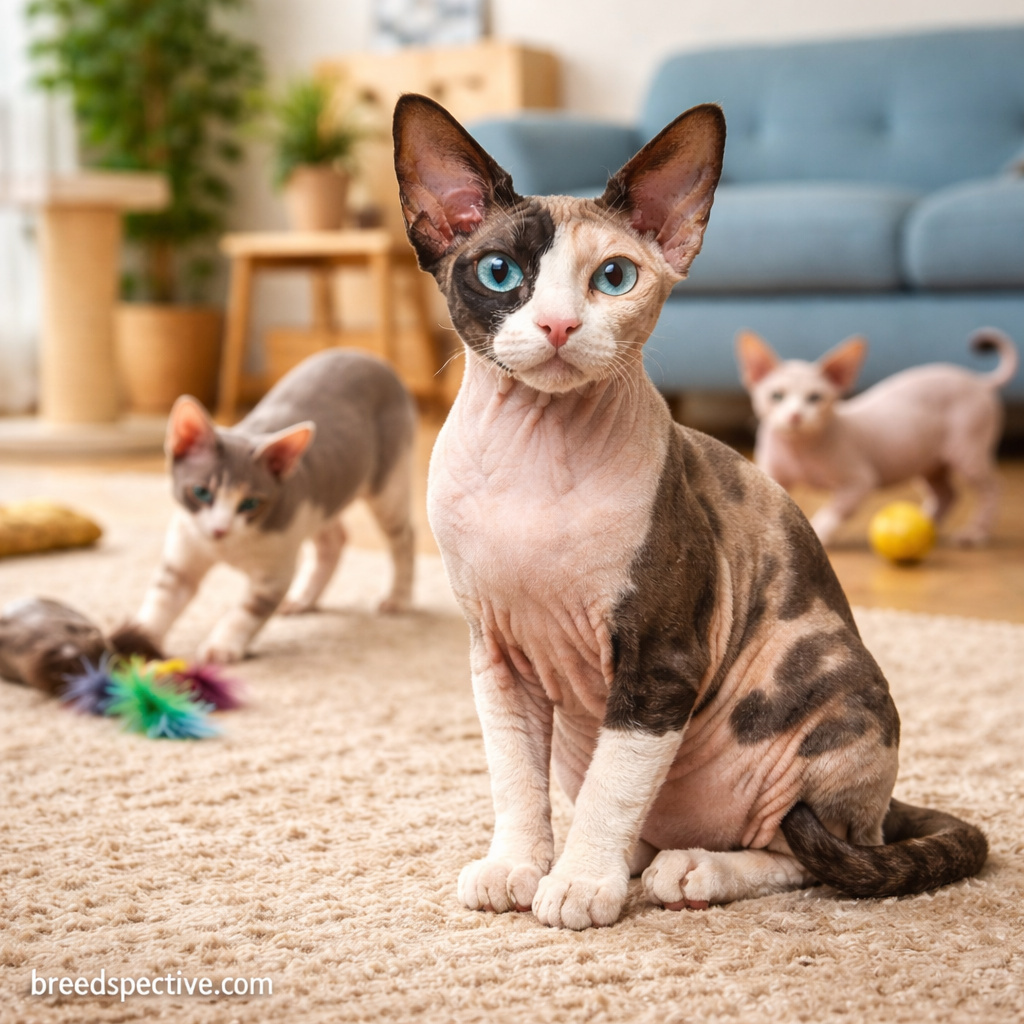
During the 1970s and 1980s, breeders refined the Sphynx by focusing on:
- Health and immune strength
- Body structure and musculature
- Temperament and sociability
- Skin texture and wrinkle patterns
Outcrossing with other domestic cats helped stabilize the breed and reduce health risks associated with limited gene pools.
Official Recognition by Cat Associations
After decades of selective breeding and health monitoring, the Sphynx gained recognition from major cat organizations.
Key milestones include:
- Provisional status in the late 1980s
- Championship status granted in the early 2000s by several international cat associations
- Global acceptance as a distinct and standardized breed
This recognition helped legitimize the Sphynx and expanded its popularity worldwide.
The Sphynx’s Rise in Popularity
Once considered unusual or controversial, the Sphynx grew in popularity thanks to:
- Media exposure and celebrity ownership
- Its affectionate, social personality
- Its hypoallergenic reputation (though not scientifically guaranteed)
- Increased awareness of responsible breeding
Today, the Sphynx is prized not only for its appearance but also for its dog-like loyalty and playful nature.
Modern Sphynx Cats Today
Modern Sphynx cats are found across the world and are known for being:
- Highly social and people-oriented
- Curious, energetic, and intelligent
- Sensitive to temperature due to lack of fur
- Dependent on regular skin care and indoor living
Responsible breeders now prioritize health testing and ethical breeding standards to ensure long, healthy lives for these cats.
Final Thoughts on Sphynx Breed History
The Sphynx cat is a striking example of how a rare genetic mutation, paired with careful and ethical breeding, can result in a beloved modern breed. Far from being an ancient relic, the Sphynx is a contemporary success story shaped by science, dedication, and a passion for preserving something truly unique.
Understanding the Sphynx’s origins helps dispel myths and highlights the importance of responsible breeding in maintaining the health and character of this extraordinary cat.