

The Siamese cat is one of the oldest and most historically significant cat breeds in the world. Revered for centuries, this breed has a rich past tied to royalty, religion, and cultural symbolism. Understanding the history of the Siamese cat offers insight into why this breed is so distinctive in appearance, personality, and behavior today.
This article explores the origins, cultural importance, and global spread of the Siamese cat—from ancient temples to modern homes.
Ancient Origins in Thailand (Formerly Siam)
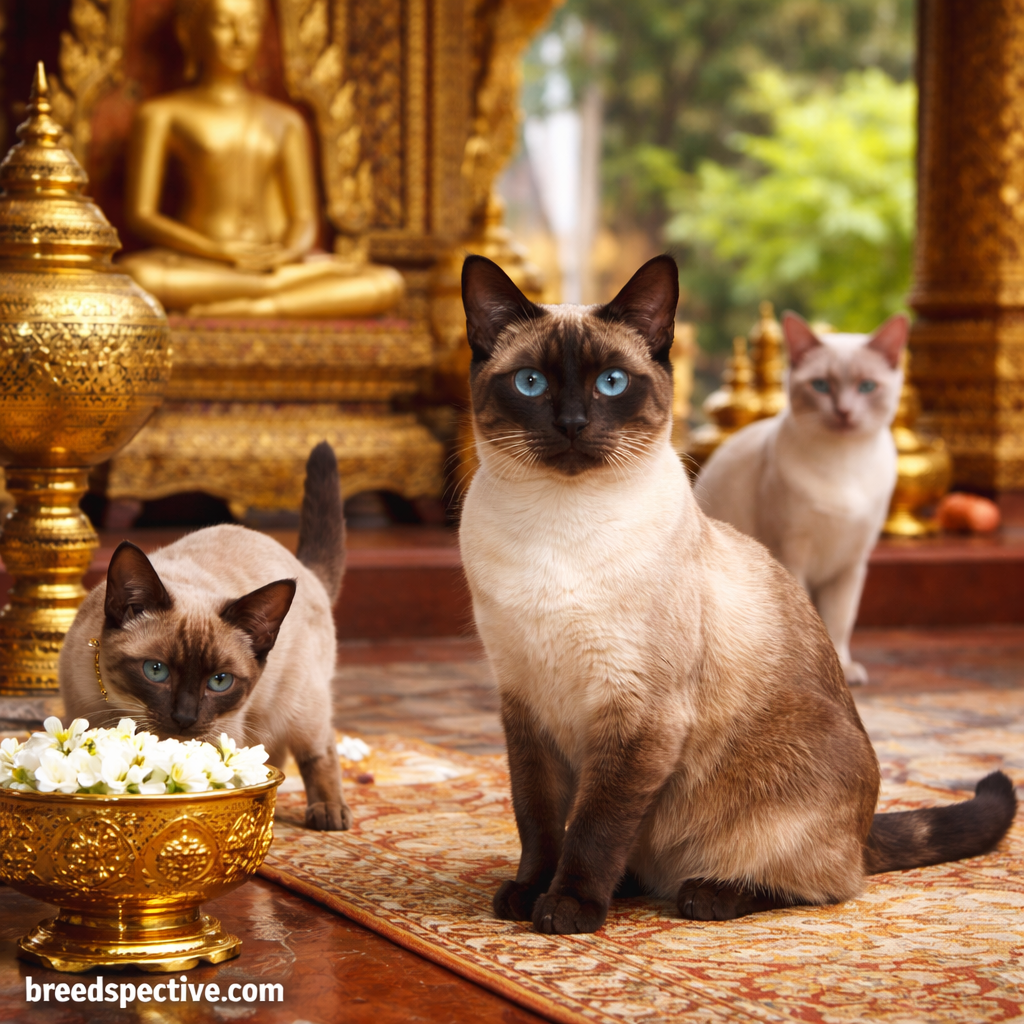
The Siamese cat originates from Thailand, which was historically known as Siam. This is where the breed gets its name.
Historical records and manuscripts suggest Siamese cats existed as early as the 14th century.
Early Evidence of Siamese Cats
- Described in ancient Thai manuscripts known as the Tamra Maew (Cat Poems)
- Illustrated with pale bodies, dark points, and blue eyes
- Considered rare and valuable animals
- Associated with good fortune and spiritual protection
These early depictions closely resemble the modern Siamese cat, indicating the breed has remained relatively consistent over centuries.
Royal and Sacred Status
Siamese cats were not common household pets in ancient Siam. They were closely guarded and often reserved for royalty, monks, and nobility.
Role in Thai Culture
- Lived in royal palaces and Buddhist temples
- Believed to bring luck and prosperity
- Thought to house the souls of deceased royalty
- Protected and bred selectively
When a royal family member passed away, a Siamese cat was sometimes placed near the tomb and cared for by monks, reinforcing the belief that the cat carried the spirit of the departed.
Arrival in the Western World
Siamese cats were introduced to Europe and North America in the late 19th century, quickly capturing attention for their unusual appearance and temperament.
Key Moments in Western History
- 1884: First Siamese cats imported to England
- Given as diplomatic gifts from the King of Siam
- Exhibited at early cat shows in Britain
- Rapid rise in popularity among breeders and cat enthusiasts
Their sleek bodies, color-point coats, and vivid blue eyes were unlike anything seen in Western cat breeds at the time.
Early Breed Development and Standards
As Siamese cats gained popularity, selective breeding began shaping their appearance.
Evolution of Siamese Appearance
- Early Siamese were more rounded and muscular
- Gradual shift toward longer bodies and wedge-shaped heads
- Development of large ears and slim tails
- Emphasis on striking contrast between body and points
By the mid-20th century, breed standards began favoring a more refined and angular look, which became dominant in show cats.
Traditional vs. Modern Siamese Cats
Today, there are two widely recognized types of Siamese cats, both tracing their roots to the original breed.
Traditional (Thai) Siamese
- Rounder head and body
- Softer facial features
- Closer to original historical depictions
- Often referred to as “Applehead” Siamese
Modern (Show) Siamese
- Long, slender body
- Wedge-shaped head
- Large ears and narrow face
- Bred to meet contemporary show standards
Both types share the same origins but reflect different breeding priorities over time.
Genetics Behind the Color-Point Coat
One of the Siamese cat’s most defining traits—their color-point pattern—has a genetic explanation tied to their history.
Why Siamese Cats Have Dark Points
- Caused by a temperature-sensitive gene
- Cooler areas (ears, face, paws, tail) develop darker fur
- Warmer body areas remain light
- Kittens are born nearly white and darken with age
This unique genetic trait fascinated early breeders and contributed to the breed’s mystique.
Global Influence on Other Breeds
The Siamese cat has played a major role in the development of many modern cat breeds.
Breeds Influenced by Siamese Cats
- Oriental Shorthair
- Balinese
- Tonkinese
- Himalayan
- Colorpoint Shorthair
Their genetics helped introduce new coat patterns, body types, and personality traits into the feline world.
Modern Popularity and Cultural Impact
Today, Siamese cats are among the most recognizable and beloved breeds worldwide.
Reasons for Lasting Popularity
- Ancient and noble lineage
- Distinctive appearance
- Intelligent and social temperament
- Strong human bonding
- Prominent roles in films, literature, and pop culture
Despite centuries of change, the Siamese cat remains a symbol of elegance, intelligence, and emotional connection.
Final Thoughts
The Siamese cat’s history is deeply rooted in tradition, spirituality, and cultural prestige. From sacred temples in ancient Siam to homes around the world, this breed has maintained its identity while evolving alongside humans.
Understanding the Siamese breed’s origins not only enriches appreciation for their beauty but also explains the confident, expressive, and loyal nature that defines them today.