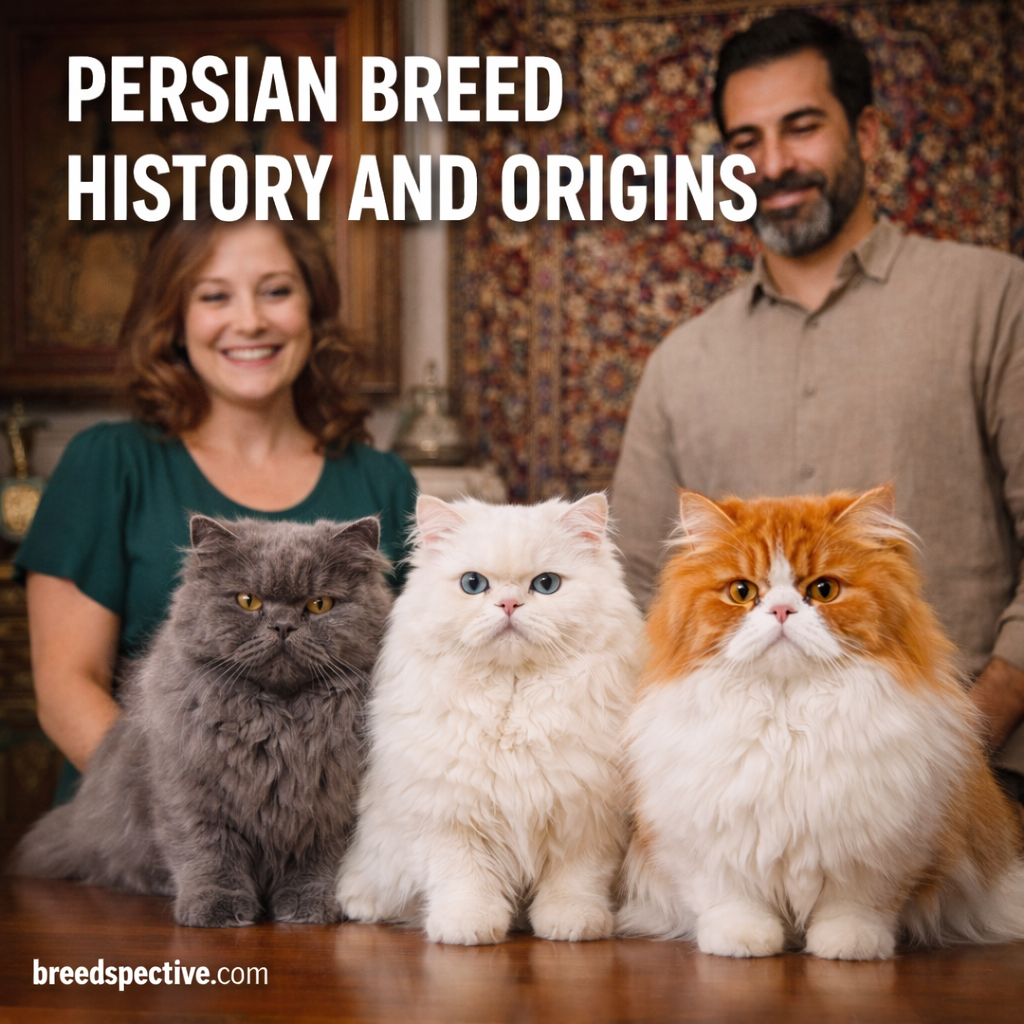
The Persian cat is one of the oldest and most recognizable cat breeds in the world. Known today for its long coat, round face, and calm demeanor, the Persian’s journey spans centuries of trade, selective breeding, and cultural fascination. Understanding where this breed came from helps explain not only its appearance, but also its gentle temperament and unique care needs.
This article explores the origins of the Persian cat, how it evolved over time, and how it became a global symbol of elegance and luxury.
Ancient Roots in the East
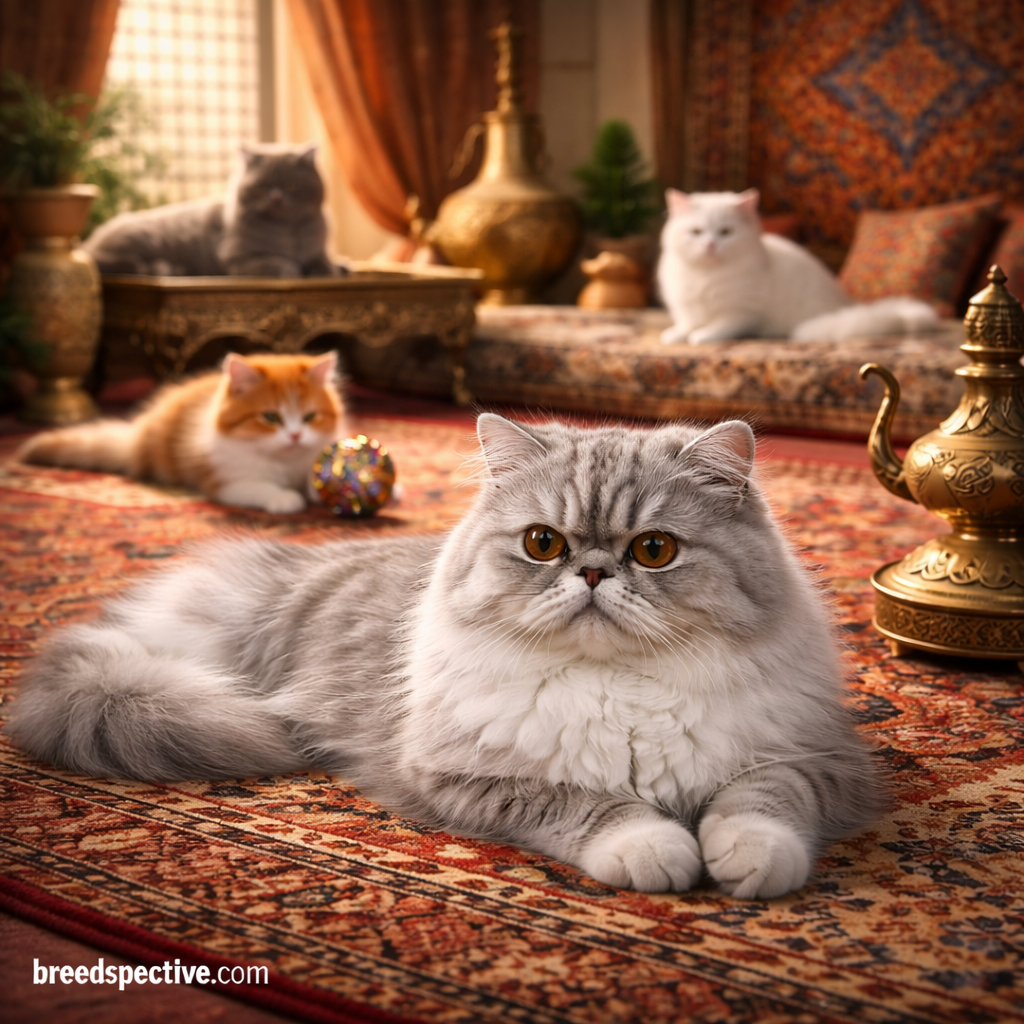
The earliest ancestors of the Persian cat are believed to have originated in the region historically known as Persia, modern-day Iran. Long-haired cats were uncommon in most parts of the ancient world, making these early cats especially notable.
Historical accounts suggest:
- Long-haired cats appeared naturally due to genetic mutations
- These cats were valued for their unusual coats
- They were often kept by nobility and wealthy households
Because long fur provided no survival advantage in hot climates, its persistence suggests humans intentionally preserved and bred these cats for their beauty.
Introduction to Europe
Persian cats were introduced to Europe in the 1600s, likely through trade routes connecting the Middle East and Italy. Early explorers and merchants brought long-haired cats back from Persia and surrounding regions, where they quickly attracted attention.
Key developments during this period:
- Italian and French nobility began keeping long-haired cats
- The breed became associated with wealth and refinement
- Early Persians had longer noses and slimmer faces than today’s cats
These early European Persians looked quite different from modern examples, resembling what we now call traditional or “doll-face” Persians.
The Rise of the Persian in England
England played a major role in shaping the modern Persian cat. During the 19th century, British breeders began selectively breeding long-haired cats for specific traits.
Important milestones include:
- Early cat shows in England featured Persian cats
- Coat length, color, and fullness became breeding priorities
- Facial structure gradually became rounder
Queen Victoria herself owned Persian cats, which significantly increased the breed’s popularity and prestige across Britain and Europe.
Evolution of the Flat-Faced Persian
One of the most significant changes in Persian history occurred in the late 19th and early 20th centuries, particularly after the breed reached the United States.
Breeding trends shifted toward:
- Shorter noses
- Larger, rounder eyes
- Fuller cheeks
- A more compact body shape
This led to the development of the modern flat-faced, or “peke-face,” Persian. While visually striking, these changes also introduced health considerations that did not exist in earlier versions of the breed.
Persian Cats in the United States
Persian cats arrived in the United States in the late 1800s and quickly became one of the most popular breeds.
In the U.S., breeders:
- Intensified selective breeding for facial features
- Expanded the range of coat colors and patterns
- Helped standardize the modern Persian look
Today, Persian cats are recognized by all major cat registries and remain one of the most iconic purebred cats worldwide.
Development of Coat Colors and Varieties
Originally, Persian cats were most commonly seen in solid colors such as gray (blue) and white. Over time, breeders developed an extraordinary range of coat colors and patterns.
Modern Persian varieties include:
- Solid (white, black, blue, cream, red)
- Tabby
- Bicolor
- Calico
- Himalayan (colorpoint Persians)
This diversity helped the breed appeal to a wider audience and cemented its place in competitive cat shows.
Traditional vs Modern Persian Lines
As the breed evolved, two general types of Persian cats emerged.
Traditional (Doll-Face) Persians:
- Longer noses
- Less extreme facial features
- Fewer breathing and eye issues
Modern (Peke-Face) Persians:
- Very flat faces
- Large, round eyes
- Distinctive show-ring appearance
Both types share the same historical roots, but differ significantly in appearance and care requirements.
Cultural Significance and Popularity
Persian cats have long been associated with luxury, calmness, and refinement. They appear frequently in art, photography, advertising, and pop culture.
Their reputation is built on:
- A long history tied to nobility
- A visually striking appearance
- A gentle, laid-back temperament
This combination has helped Persians maintain popularity even as many newer breeds have emerged.
How History Shaped the Persian Personality
The Persian cat’s calm and affectionate nature is closely tied to its history.
Selective breeding favored cats that were:
- Comfortable indoors
- Tolerant of handling
- Low in aggression
- Content with quiet companionship
Over generations, these traits became deeply ingrained, making Persians ideal for peaceful households rather than high-energy environments.
Final Thoughts
The Persian cat’s history is a story of beauty, human influence, and centuries of selective breeding. From its early origins in ancient Persia to its transformation into one of the world’s most recognizable breeds, the Persian has remained a symbol of elegance and tranquility.
Understanding the breed’s origins provides valuable insight into its appearance, temperament, and care needs today. For owners who appreciate history as much as companionship, the Persian cat offers a living connection to one of the oldest feline legacies in the world.