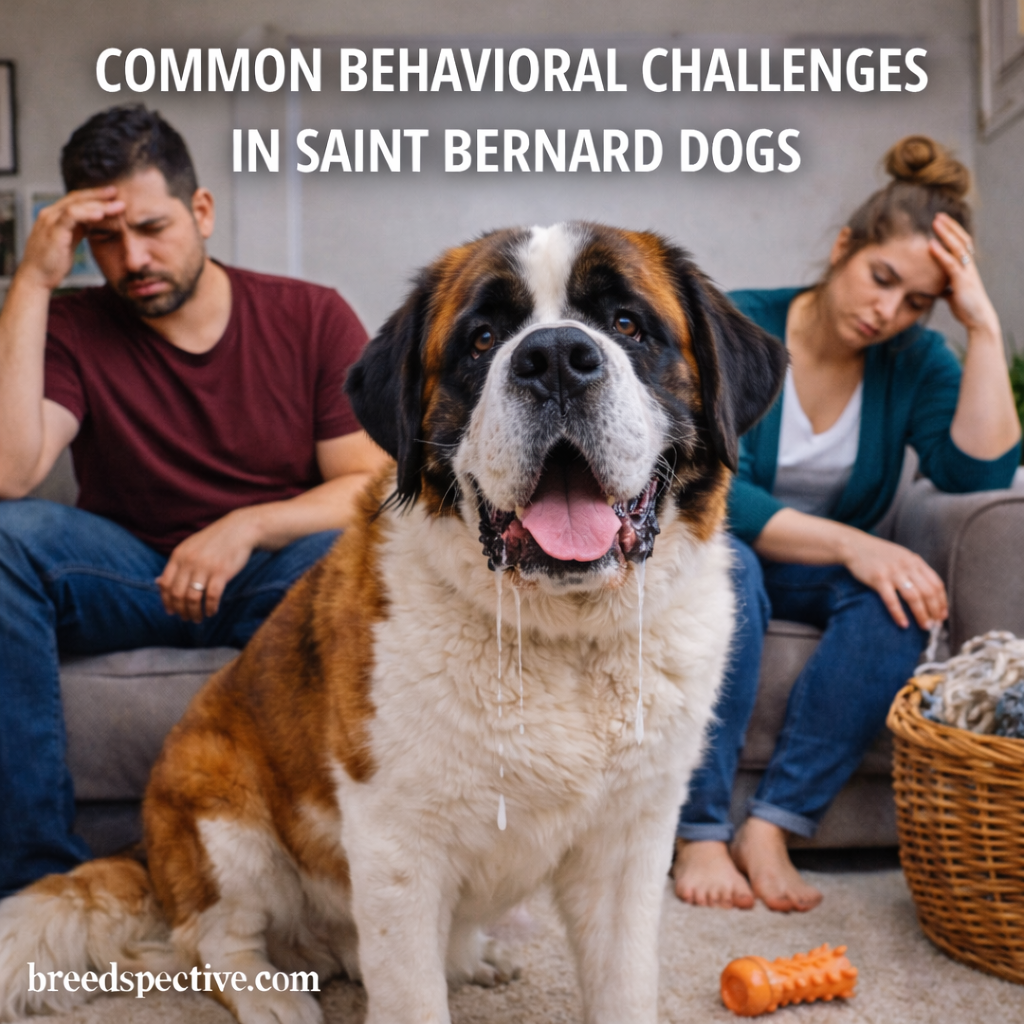
Common Behavioral Challenges in Saint Bernard Dogs

Saint Bernard sitting indoors with owners looking concerned, illustrating common behavioral challenges such as drooling and stubbornness.
A Saint Bernard indoors with its owners, representing common behavioral challenges and the breed’s gentle but demanding nature. breedspective.com.

Overview of Saint Bernard Behavior Challenges

Saint Bernards are famous for their gentle temperament, patience, and affectionate nature. While they are rarely aggressive or high-strung, their size, emotional sensitivity, and slow-maturing nature can lead to specific behavioral challenges if their needs are not properly understood.

Most behavior issues in Saint Bernards are not caused by dominance or defiance. Instead, they usually stem from boredom, lack of structure, emotional attachment, or physical discomfort related to their size and growth.

Continue reading “Common Behavioral Challenges in Saint Bernard Dogs”
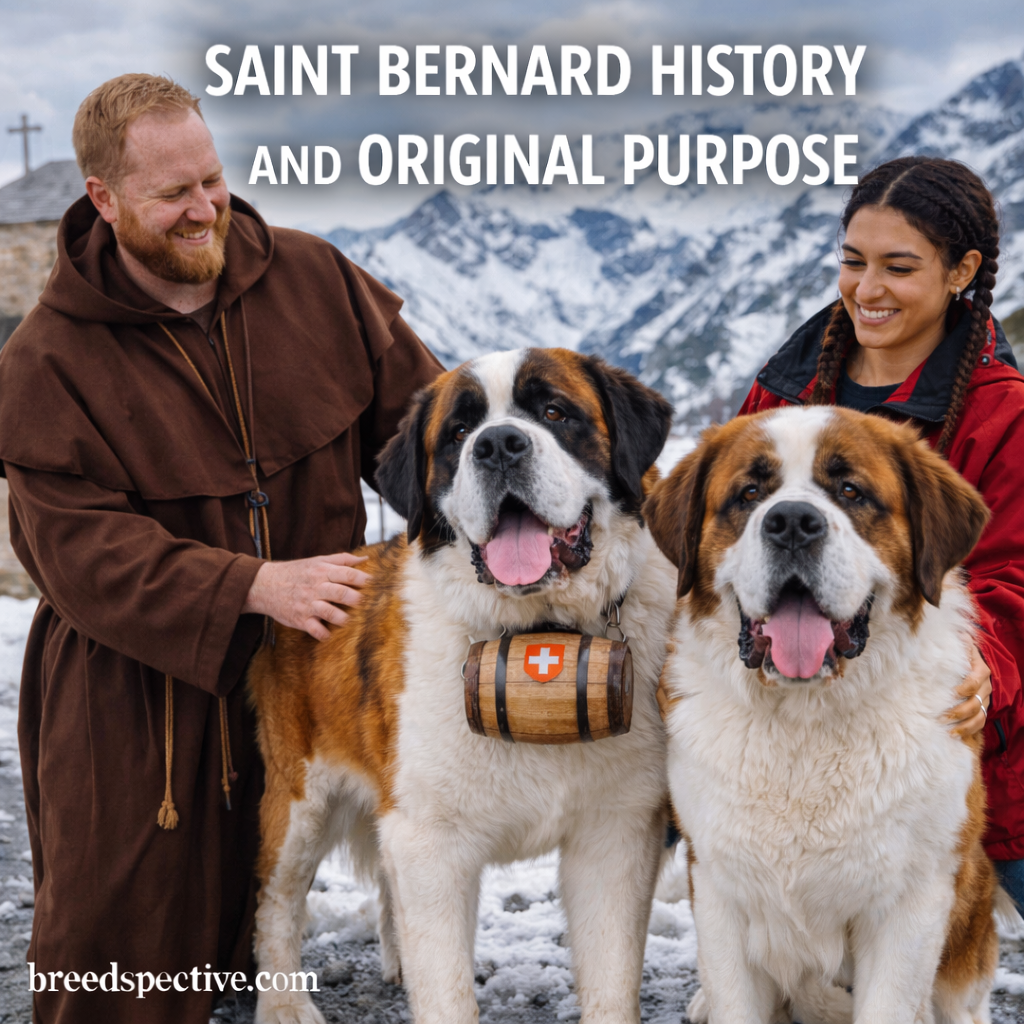
Saint Bernard History and Original Purpose

Saint Bernard dogs standing in a snowy alpine setting with caretakers, representing the breed’s historical rescue role in the mountains.
Saint Bernard dogs in an alpine environment with caretakers, reflecting the breed’s history and original purpose as mountain rescue dogs. breedspective.com.

Saint Bernard History Overview

The Saint Bernard is one of the most iconic working dogs in history, renowned for its heroic rescue work in the snowy Alps. Originating in the mountainous regions between Switzerland and Italy, this breed was developed for endurance, strength, and lifesaving instincts rather than speed or aggression.

Every defining trait of the Saint Bernard—its size, calm demeanor, and resilience—was shaped by centuries of work in harsh alpine conditions where human survival often depended on canine assistance.

Continue reading “Saint Bernard History and Original Purpose”

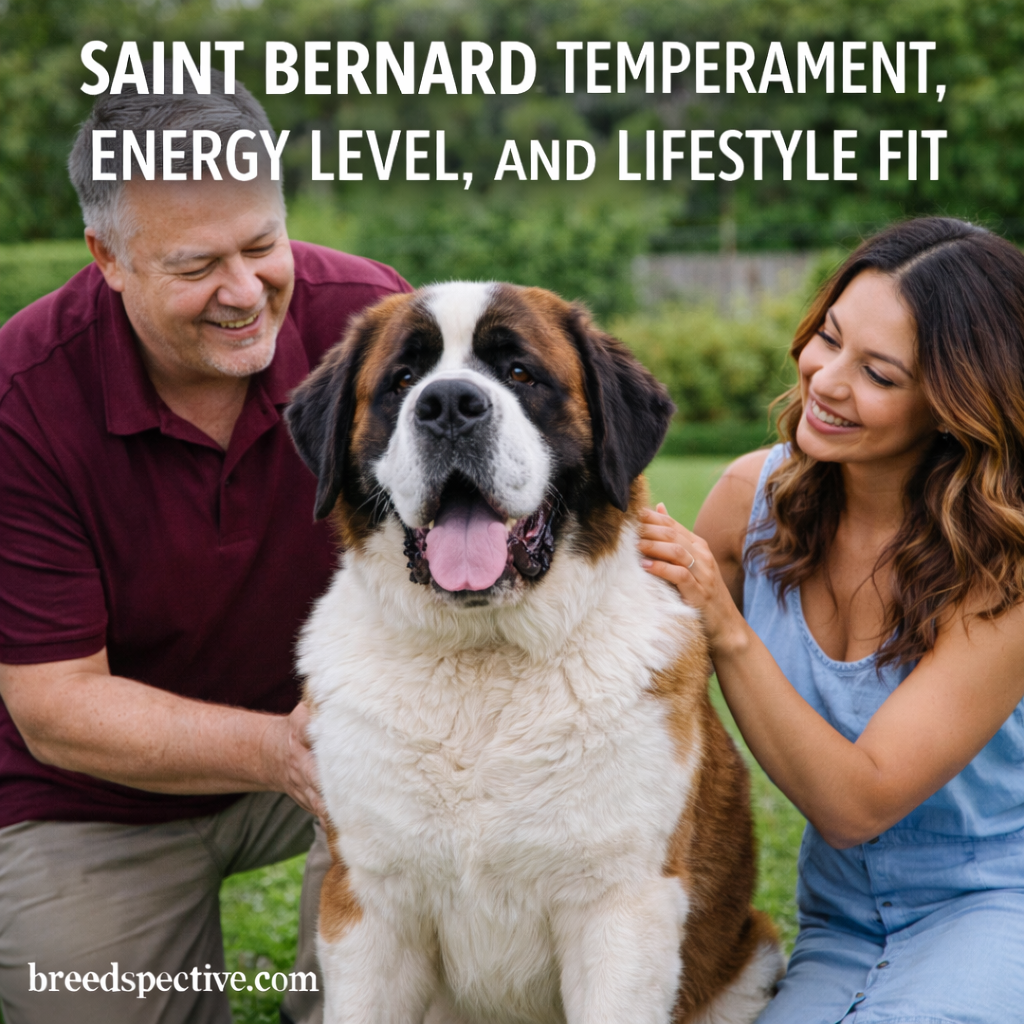
Saint Bernard Temperament, Energy Level, and Lifestyle Fit

Saint Bernard sitting outdoors with owners, highlighting the breed’s gentle temperament and family-friendly nature.
A Saint Bernard with its owners outdoors, showcasing the breed’s calm temperament and suitability for relaxed family lifestyles. breedspective.com.

Saint Bernard Temperament Overview

The Saint Bernard is best known for its calm demeanor, affectionate personality, and patient nature. Often described as a classic “gentle giant,” this breed is deeply loyal and naturally inclined toward companionship rather than independence.

Saint Bernards are emotionally intuitive and tend to form strong bonds with their families. They are rarely aggressive and generally prefer peaceful, predictable environments where they can remain close to the people they love.

Key temperament traits include:

  • Gentle and affectionate
  • Calm and steady in most situations
  • Loyal and people-oriented
  • Patient and tolerant
  • Emotionally sensitive

Their combination of size and softness makes them especially appealing to families seeking a large but loving dog.

Continue reading “Saint Bernard Temperament, Energy Level, and Lifestyle Fit”

Puggle Grooming and Exercise Expectations

Puggle sitting indoors while being brushed and engaged with a toy, illustrating grooming and exercise needs.
A Puggle receiving grooming and playtime indoors, highlighting the breed’s grooming routine and exercise expectations. breedspective.com.

Puggle Grooming and Exercise Overview

The Puggle is a mixed breed that combines the Pug’s compact build and expressive face with the Beagle’s athleticism and curiosity. As a result, Puggles have moderate grooming needs and a manageable but important exercise requirement.

While they are generally easy to care for, their grooming and activity routines must be consistent to prevent common issues such as shedding buildup, skin irritation, weight gain, and boredom-related behaviors.

Continue reading “Puggle Grooming and Exercise Expectations”

Common Behavioral Challenges in Newfoundland Dogs

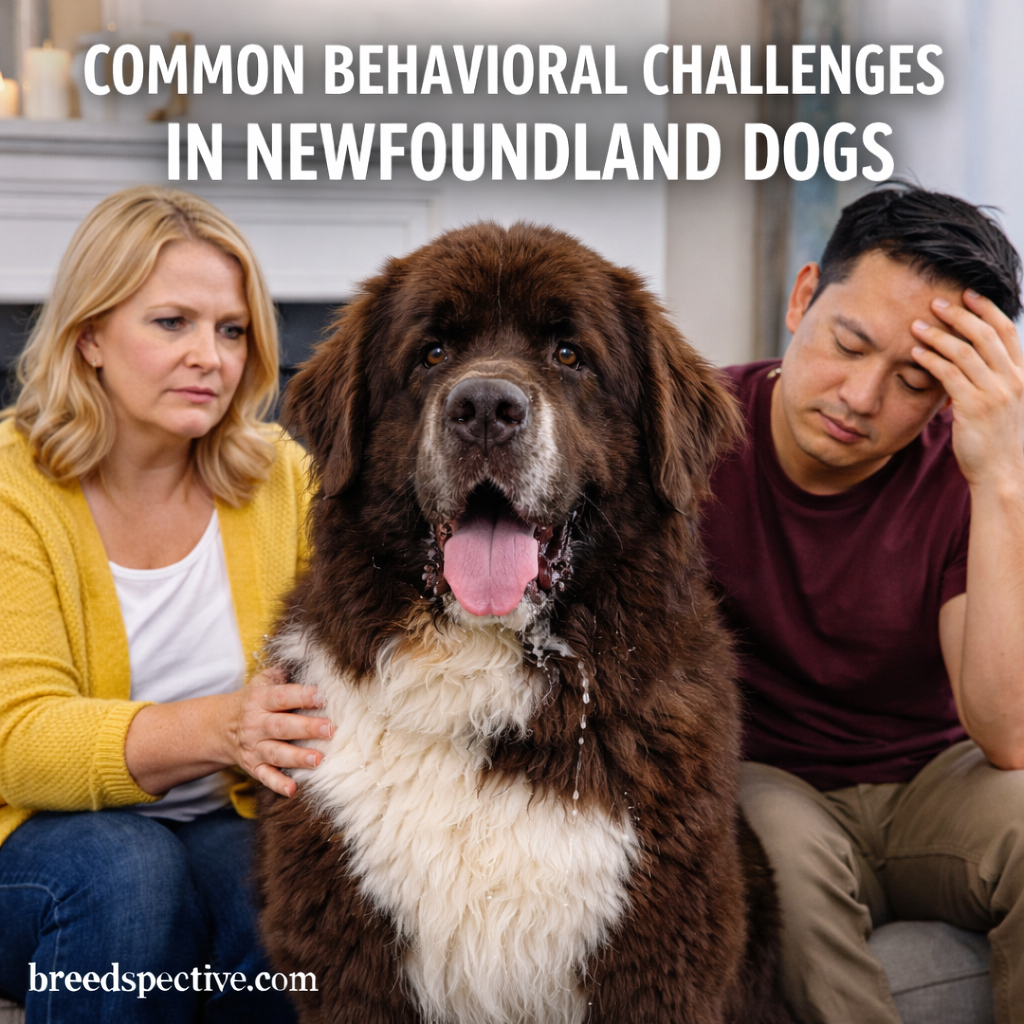
Newfoundland dog sitting indoors with owners showing concern, illustrating common behavioral challenges in the breed.
A Newfoundland dog indoors with its owners, representing common behavioral challenges and the breed’s emotional sensitivity. breedspective.com.

Overview of Newfoundland Behavior Challenges

Newfoundland dogs are widely admired for their gentle temperament, patience, and emotional intelligence. Often described as nurturing and calm, they are not prone to aggression or hyperactivity. However, their size, sensitivity, and strong attachment to family can lead to specific behavioral challenges if their needs are not properly met.

Most behavioral issues in Newfoundlands are not rooted in dominance or defiance. Instead, they typically arise from emotional stress, lack of structure, or unmet physical and mental needs.

Continue reading “Common Behavioral Challenges in Newfoundland Dogs”

Newfoundland History and Original Purpose

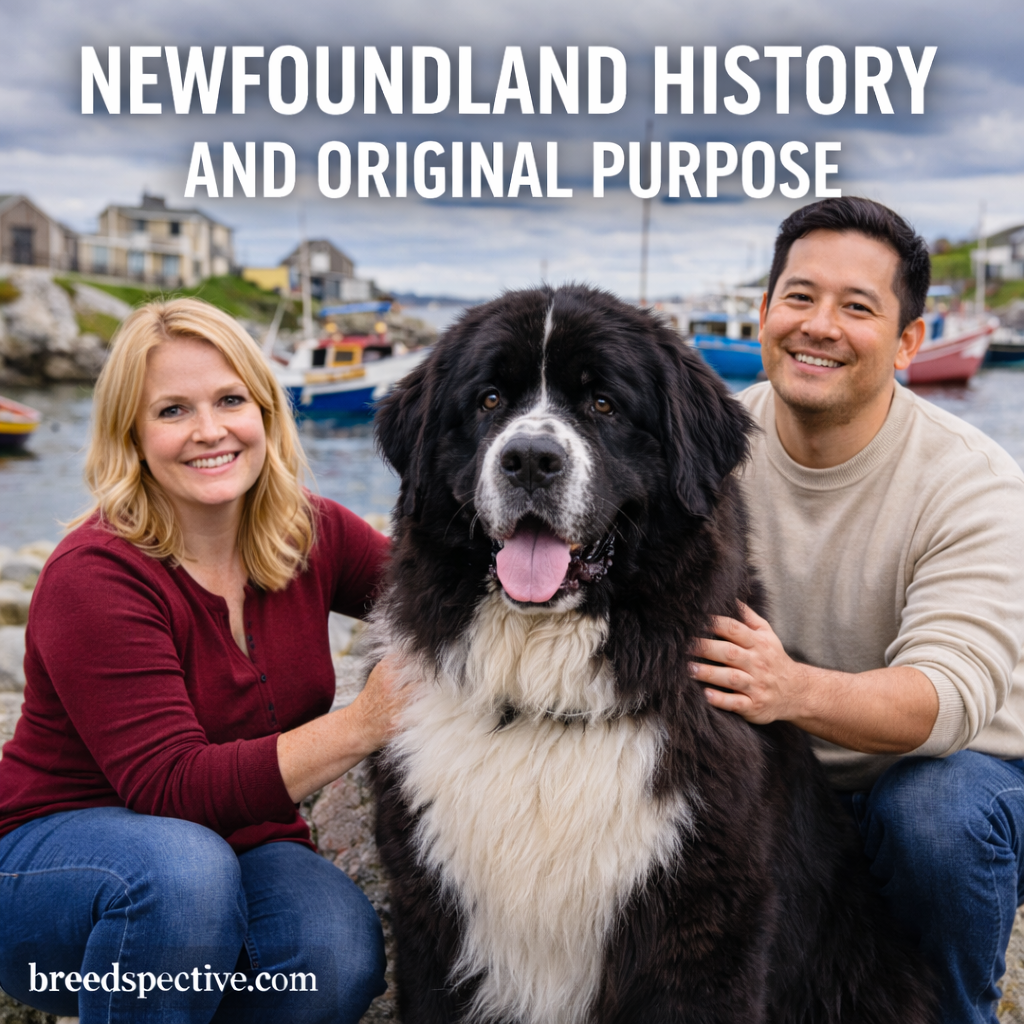
Newfoundland dog sitting by a coastal harbor with owners, representing the breed’s historical working role in fishing communities.
A Newfoundland dog pictured near a coastal harbor with its owners, reflecting the breed’s origins and original working purpose. breedspective.com.

Newfoundland History Overview

The Newfoundland dog has one of the most remarkable working histories of any large breed. Originating in the rugged coastal regions of Newfoundland and Labrador, Canada, this breed was shaped by icy waters, harsh weather, and a strong dependence on human partnership.

Unlike many breeds developed for herding or guarding, the Newfoundland was bred for strength, endurance, and lifesaving ability. Its calm temperament and natural swimming instincts made it indispensable to fishing communities.

Continue reading “Newfoundland History and Original Purpose”

Newfoundland Temperament, Energy Level, and Lifestyle Fit

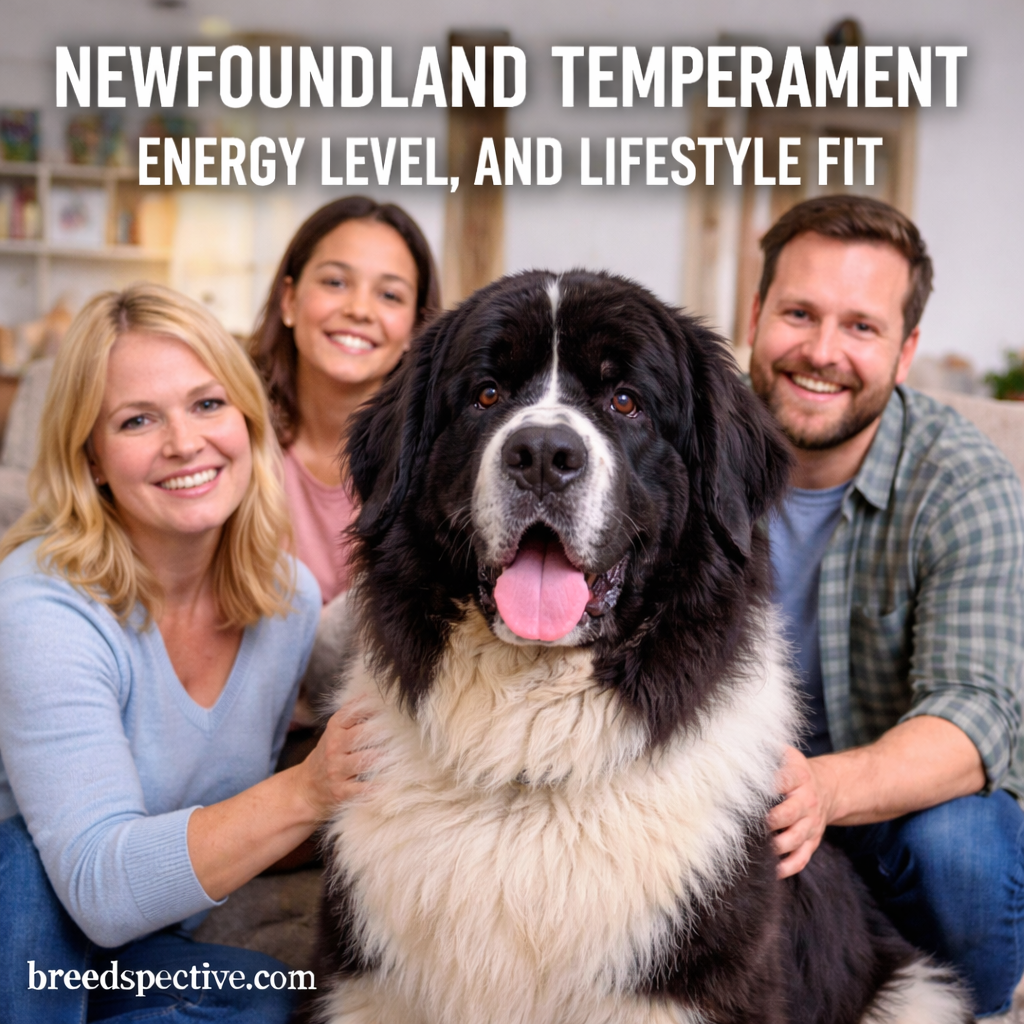
Newfoundland dog sitting indoors with family members, illustrating the breed’s gentle temperament and family-friendly nature.
A Newfoundland dog with its family in a home setting, showcasing the breed’s calm temperament and suitability for family life. breedspective.com.

Newfoundland Temperament Overview

The Newfoundland is widely recognized for its calm demeanor, affectionate nature, and exceptional gentleness. Often referred to as a true “gentle giant,” this breed is known for its patience, loyalty, and strong emotional connection with its family.

Newfoundlands are naturally nurturing and tend to form deep bonds with their owners. They are not typically excitable or reactive, making them a great choice for households seeking a relaxed and dependable companion.

Key temperament traits include:

  • Extremely gentle and patient
  • Loyal and devoted to family members
  • Calm and steady in most environments
  • Emotionally intuitive and sensitive
  • Friendly toward familiar people

Their soft nature makes them especially well-suited to families, seniors, and individuals looking for a calm presence in the home.

Continue reading “Newfoundland Temperament, Energy Level, and Lifestyle Fit”

Puggle Temperament and Family Compatibility

Puggle sitting indoors with a family, illustrating the breed’s friendly temperament and family compatibility.
A Puggle with a family in a home setting, highlighting the breed’s affectionate temperament and suitability for family life. breedspective.com.

Puggle Temperament Overview

The Puggle is a popular mixed breed created by crossing a Pug with a Beagle. This combination results in a dog that blends the Beagle’s curiosity and energy with the Pug’s affectionate, people-loving nature. Puggles are known for being friendly, expressive, and deeply attached to their families.

They tend to thrive on human interaction and enjoy being involved in daily household life. While generally cheerful and outgoing, their temperament can vary depending on which parent breed’s traits are more dominant.

Common temperament traits include:

  • Affectionate and people-oriented
  • Playful and energetic
  • Curious and alert
  • Social with familiar people
  • Emotionally expressive

Puggles are rarely aloof and usually prefer companionship over independence.

Continue reading “Puggle Temperament and Family Compatibility”

Common Behavioral Challenges in Bernese Mountain Dogs

Bernese Mountain Dog sitting indoors with owners showing concern, illustrating common behavioral challenges in the breed.
A Bernese Mountain Dog indoors with its owners, representing common behavioral challenges and emotional sensitivity in the breed. breedspective.com.

Overview of Bernese Mountain Dog Behavior Challenges

Bernese Mountain Dogs are widely loved for their gentle temperament, loyalty, and calm nature. However, like all breeds, they come with specific behavioral challenges that stem from their history, emotional sensitivity, and physical makeup.

Most behavior issues in Bernese Mountain Dogs are not rooted in aggression or dominance. Instead, they are usually linked to emotional needs, lack of stimulation, or misunderstanding of the breed’s unique traits. When properly understood, many of these challenges are preventable or manageable.

Continue reading “Common Behavioral Challenges in Bernese Mountain Dogs”

Bernese Mountain Dog History and Original Purpose

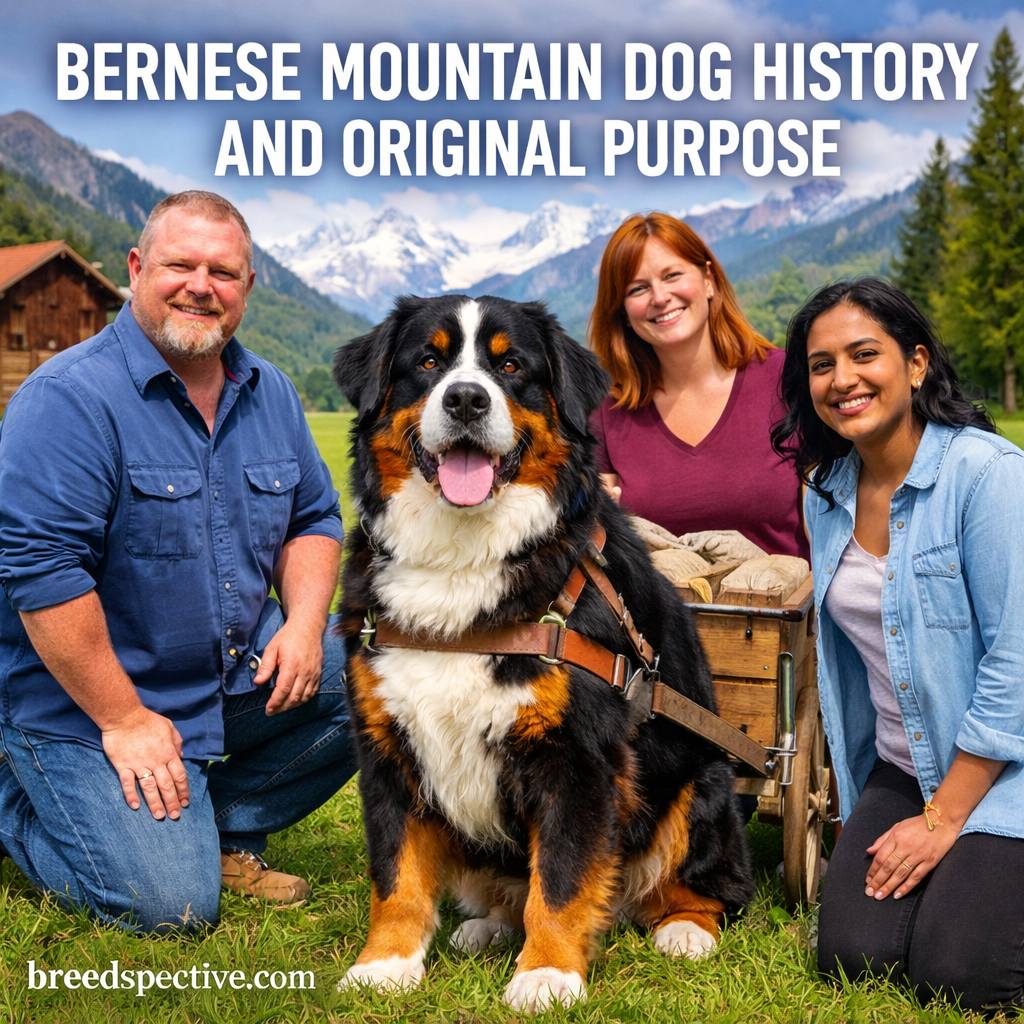
Bernese Mountain Dog wearing a draft harness with people beside it in a rural alpine setting, representing the breed’s historical working role.
A Bernese Mountain Dog in traditional draft gear with people in a Swiss-inspired rural landscape, reflecting the breed’s original working purpose. breedspective.com.

Bernese Mountain Dog History Overview

The Bernese Mountain Dog has a long and practical history rooted in the rural farming regions of Switzerland. This breed was developed not for appearance or companionship alone, but for hard work, reliability, and close cooperation with humans in challenging alpine environments.

Every defining trait of the Bernese Mountain Dog—its size, strength, coat, and temperament—was shaped by its original working purpose. Understanding this history helps explain why the breed remains calm, loyal, and deeply people-oriented today.

Continue reading “Bernese Mountain Dog History and Original Purpose”