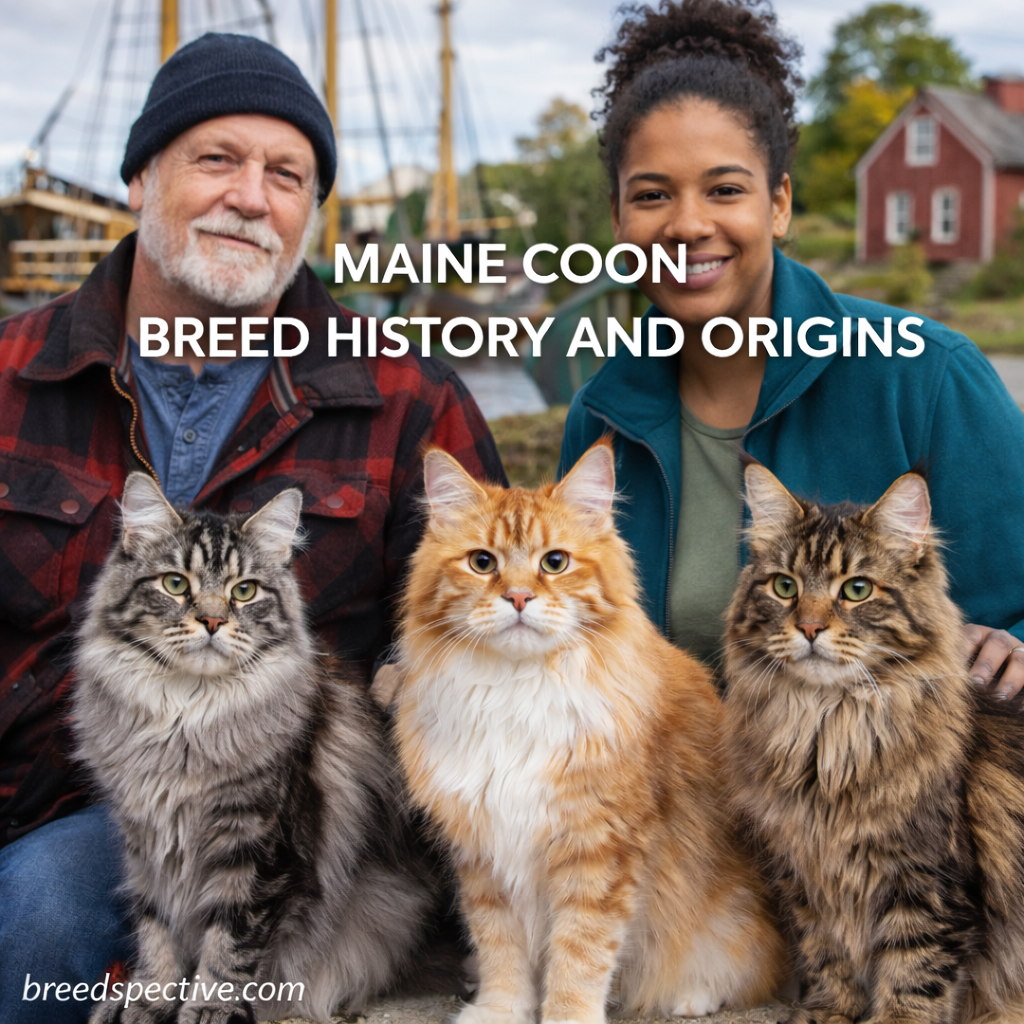
The Maine Coon is one of the oldest natural cat breeds in North America and one of the most recognizable feline companions today. Known for its impressive size, tufted ears, and sociable personality, the breed carries a history shaped by environment, folklore, and practical survival rather than intentional early breeding.
Understanding the Maine Coon’s origins helps explain its physical traits, temperament, and enduring popularity as a gentle, adaptable companion.
Early Origins of the Maine Coon
The Maine Coon’s exact origin is not fully documented, but most historians agree that the breed developed naturally in the northeastern United States, particularly in the state of Maine.
Key points about early origins:
- Developed without early selective breeding
- Adapted naturally to cold climates
- Lived alongside settlers, farmers, and sailors
- Valued for hunting and companionship
Unlike many modern breeds, the Maine Coon evolved through necessity rather than human design.
Natural Evolution in Harsh Climates
Maine’s long winters and rugged terrain played a significant role in shaping the breed. Cats that survived needed physical traits that supported endurance, warmth, and hunting ability.
Environmental adaptations include:
- Large body size for heat retention
- Thick, water-resistant fur
- Bushy tails used for warmth
- Tufted paws for walking on snow
- Strong hunting instincts
These features remain defining characteristics of the Maine Coon today.
Common Myths and Legends
Several myths surround the Maine Coon’s origins, adding to the breed’s mystique.
Popular legends include:
- Descent from domestic cats and raccoons (biologically impossible)
- Cats arriving with Vikings long before European settlement
- Long-haired cats brought by Marie Antoinette’s belongings
While entertaining, these stories lack scientific evidence. Genetic studies instead point to a mix of long-haired cats introduced by European settlers.
Influence of European Long-Haired Cats
One of the most widely accepted theories suggests that Maine Coons descended from long-haired cats brought by sailors from Europe.
Likely contributors include:
- Cats from England and France
- Norwegian Forest Cat-like ancestors
- Ship cats used to control rodents
These cats bred with local short-haired cats, gradually developing into the robust, long-haired Maine Coon.
Role as Working Cats
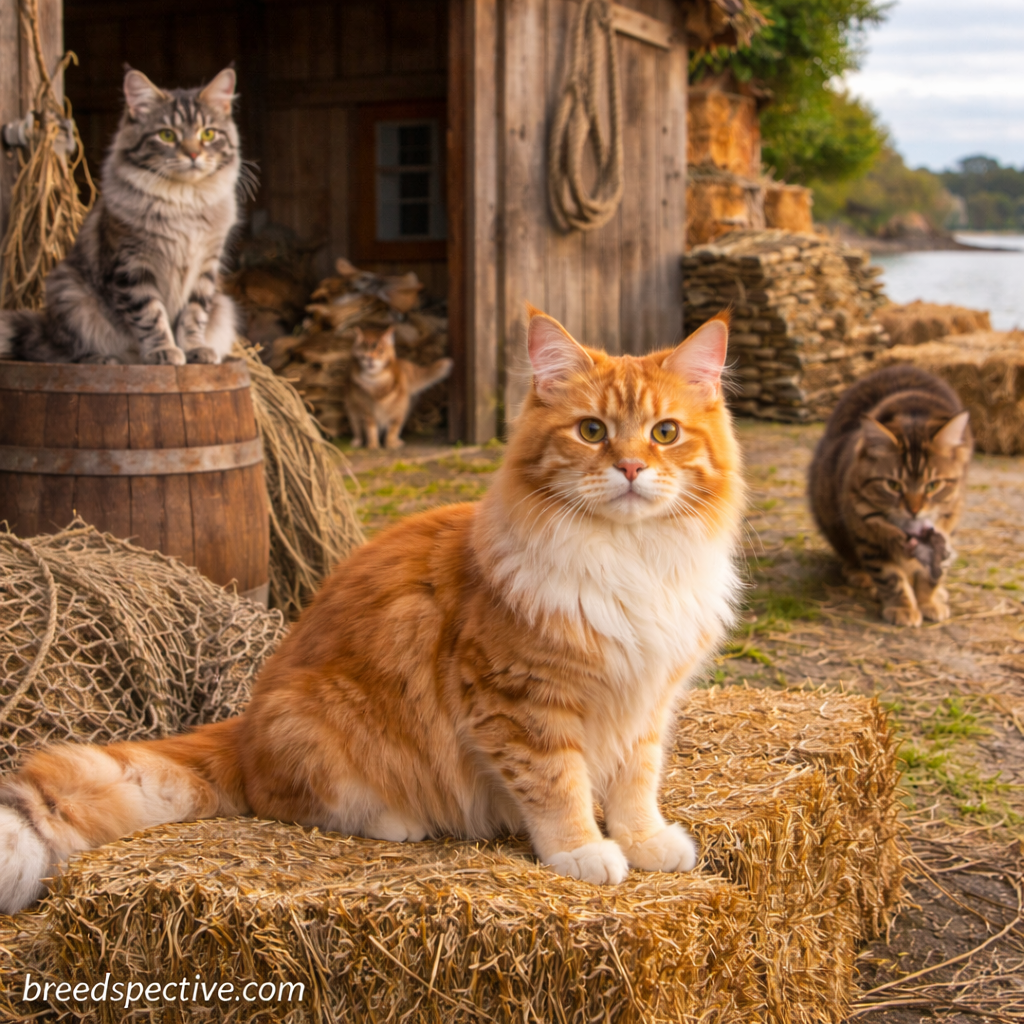
Before becoming show cats or family companions, Maine Coons were valued primarily as working animals.
Their historical roles included:
- Controlling rodent populations
- Protecting food stores on farms
- Living aboard ships and docks
- Assisting in barns and homes
Their intelligence, size, and hunting ability made them highly practical companions.
Rise in Popularity During the 19th Century
By the mid-1800s, Maine Coons began to gain recognition beyond working roles.
Important milestones:
- Featured in early American cat shows
- Considered one of the first “native” American breeds
- Frequently awarded for size and appearance
At one point, Maine Coons were among the most celebrated cats in early feline competitions.
Decline and Near Obscurity
The breed’s popularity declined in the early 20th century with the introduction of exotic long-haired cats such as Persians.
Factors contributing to decline:
- Preference for imported breeds
- Reduced interest in native cats
- Lack of formal breed protection
For several decades, the Maine Coon was at risk of fading into obscurity.
Revival and Breed Preservation
Dedicated breeders began restoring the Maine Coon’s reputation in the 1950s and 1960s.
Revival efforts focused on:
- Preserving natural traits
- Establishing breed standards
- Promoting temperament and health
- Registering cats with official organizations
These efforts helped secure the breed’s future.
Official Recognition by Cat Associations
Formal recognition marked a turning point for the Maine Coon.
Key recognition milestones:
- Recognized by major U.S. cat associations
- Championship status granted in the 1970s
- International recognition followed shortly after
Once recognized, the breed’s popularity surged worldwide.
How History Shaped the Maine Coon Personality
The Maine Coon’s temperament reflects its working and survival-based origins.
Historical influences include:
- Confidence without aggression
- Strong adaptability
- Sociability with humans
- Intelligence and curiosity
- Calm demeanor despite size
These traits make Maine Coons uniquely balanced companions.
Modern Role of the Maine Coon
Today, Maine Coons are cherished family pets rather than working animals, but their instincts remain.
Modern roles include:
- Companion animals
- Therapy cats
- Show cats
- Indoor family pets
Their adaptability allows them to thrive in many environments.
Final Thoughts
The Maine Coon’s history is rooted in resilience, natural selection, and companionship. From rugged farm cat to beloved household companion, the breed’s journey reflects both environmental influence and human appreciation.
Understanding the Maine Coon’s origins helps owners better appreciate its personality, needs, and enduring charm as one of the most iconic cat breeds in the world.