
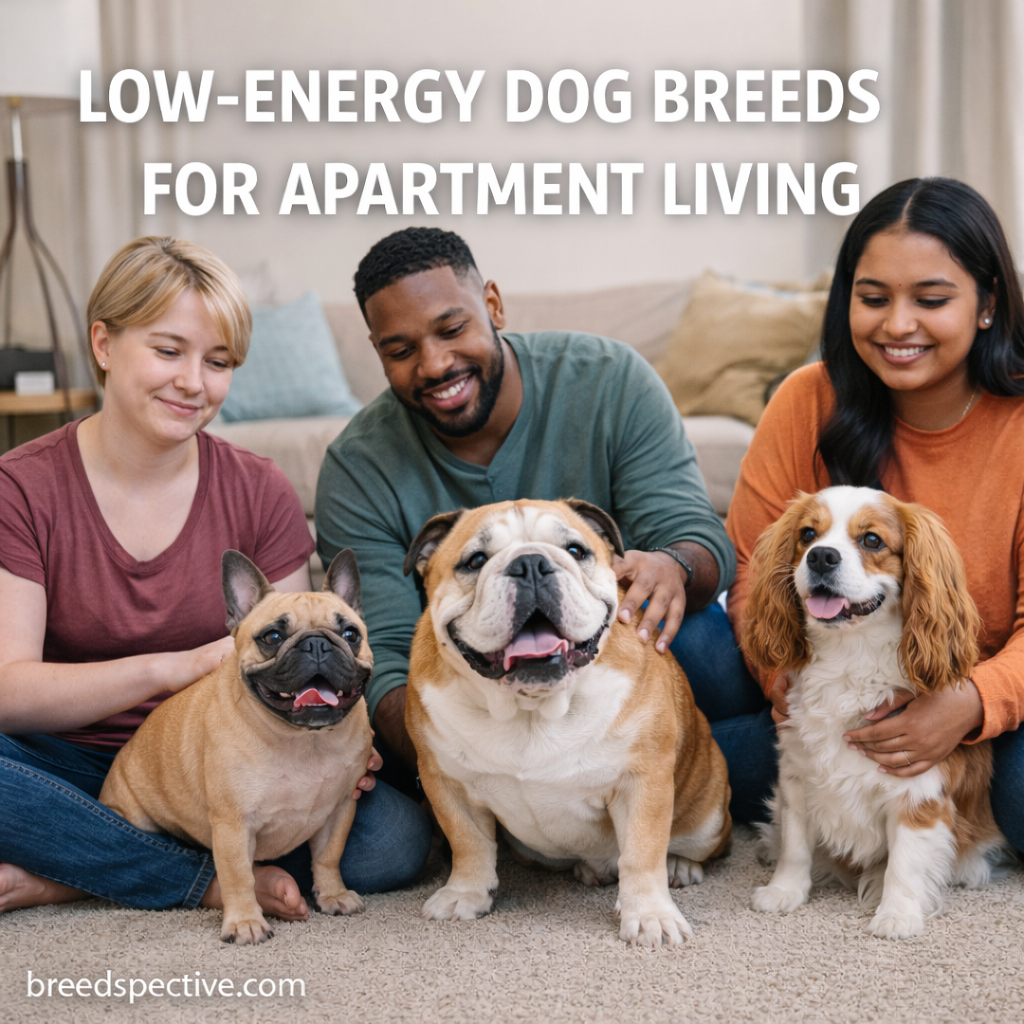
Living in an apartment doesn’t mean you can’t enjoy life with a dog. While some breeds require constant activity and large yards, others are naturally calm, adaptable, and content with shorter walks and indoor relaxation. Choosing a low-energy dog breed that matches apartment living can lead to a happier dog and a more peaceful home.
This guide explores low-energy dog breeds that tend to thrive in apartments, along with what makes them a good fit for smaller living spaces.
What Makes a Dog Suitable for Apartment Living?
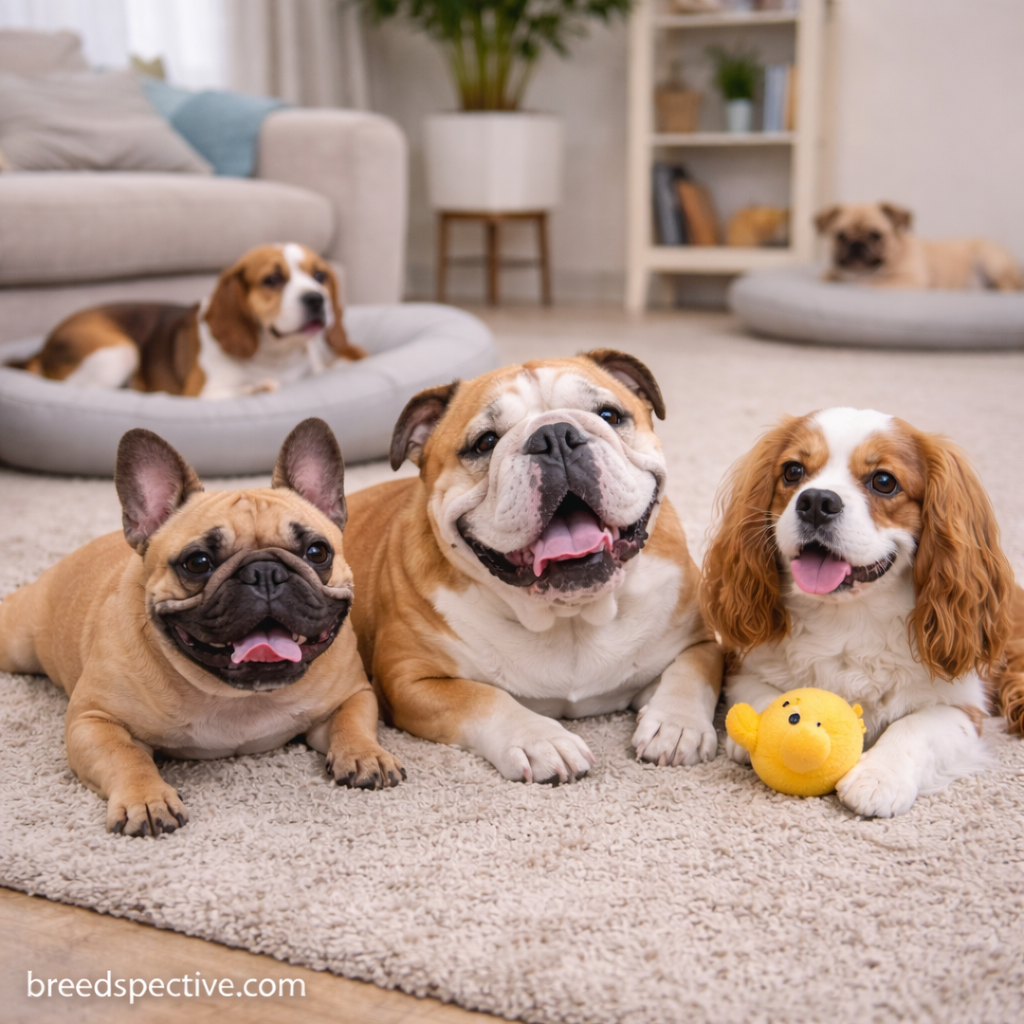
Low-energy dogs are not inactive—they simply don’t require hours of intense exercise each day. These breeds are often content with routine walks, light play, and plenty of rest.
Common apartment-friendly traits include:
- Moderate or low exercise needs
- Calm, relaxed temperament
- Minimal barking tendencies
- Ability to settle indoors
- Comfort with smaller living spaces
Proper training, routine, and enrichment remain essential for any dog, regardless of energy level.
English Bulldog
English Bulldogs are famously laid-back and enjoy lounging around the home. Their low endurance makes them well-suited to apartment life.
Why they work well in apartments:
- Low exercise requirements
- Calm indoor behavior
- Generally quiet
Short daily walks and indoor play are usually sufficient.
French Bulldog
French Bulldogs are affectionate, adaptable, and thrive on human companionship. They are playful in short bursts but prefer relaxed indoor time.
Apartment-friendly traits:
- Compact size
- Moderate energy levels
- Quiet and people-oriented
They do best in climate-controlled environments and enjoy being close to their owners.
Pug
Pugs are social, gentle dogs that enjoy relaxing at home just as much as spending time with their people.
Why pugs suit apartments:
- Low to moderate energy
- Friendly, adaptable personality
- Content with indoor play
They benefit from routine but don’t require intense physical activity.
Cavalier King Charles Spaniel
This breed combines affectionate companionship with a calm demeanor, making it ideal for apartment dwellers.
Key traits include:
- Gentle temperament
- Adaptable activity levels
- Enjoys both walks and downtime
They are happiest when close to their owners.
Shih Tzu
Shih Tzus are calm, friendly dogs bred primarily for companionship rather than work.
Apartment advantages:
- Low exercise needs
- Quiet nature
- Comfortable indoors
Daily walks and light play meet their activity needs.
Greyhound
Despite their reputation as racing dogs, Greyhounds are often referred to as “couch potatoes.”
Why Greyhounds work in apartments:
- Low energy indoors
- Enjoy long naps
- Short bursts of exercise
A couple of daily walks usually suffice.
Basset Hound
Basset Hounds are relaxed, easygoing dogs that prefer sniffing strolls over vigorous activity.
Apartment-friendly qualities:
- Low stamina
- Calm demeanor indoors
- Minimal need for intense exercise
They thrive with a consistent routine and gentle activity.
Senior Dogs as Apartment Companions
Age matters just as much as breed. Senior dogs of many breeds often have lower energy levels and can be excellent apartment companions.
Benefits of senior dogs:
- Predictable energy levels
- Established personalities
- Lower exercise demands
Adopting an older dog can be a great option for apartment living.
Tips for Apartment Living With a Low-Energy Dog
Even low-energy breeds need structure and care.
Helpful tips:
- Maintain consistent walking schedules
- Provide mental stimulation with toys
- Establish quiet times and rest areas
- Train basic manners and leash behavior
Routine and consistency help dogs feel secure in smaller spaces.
Breeds to Approach With Caution
Some breeds may struggle in apartments due to high energy or vocal tendencies.
Consider alternatives if a dog:
- Requires constant physical stimulation
- Barks excessively
- Becomes restless indoors
Matching energy level is more important than size alone.
Final Thoughts
Low-energy dog breeds can thrive in apartment settings when their needs are understood and met. Calm temperaments, moderate exercise requirements, and adaptability make these breeds excellent companions for smaller living spaces.
By choosing a dog whose energy level aligns with your lifestyle, apartment living can be rewarding for both you and your canine companion.