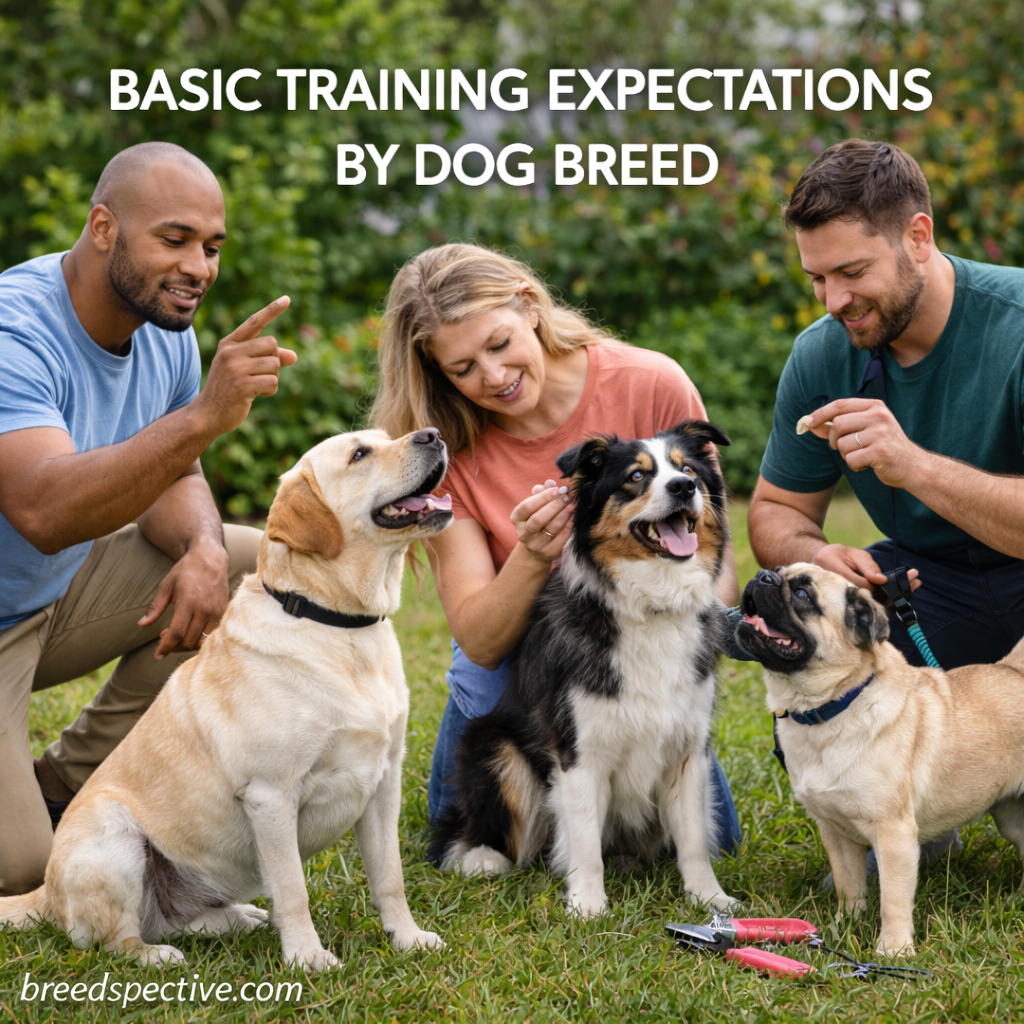
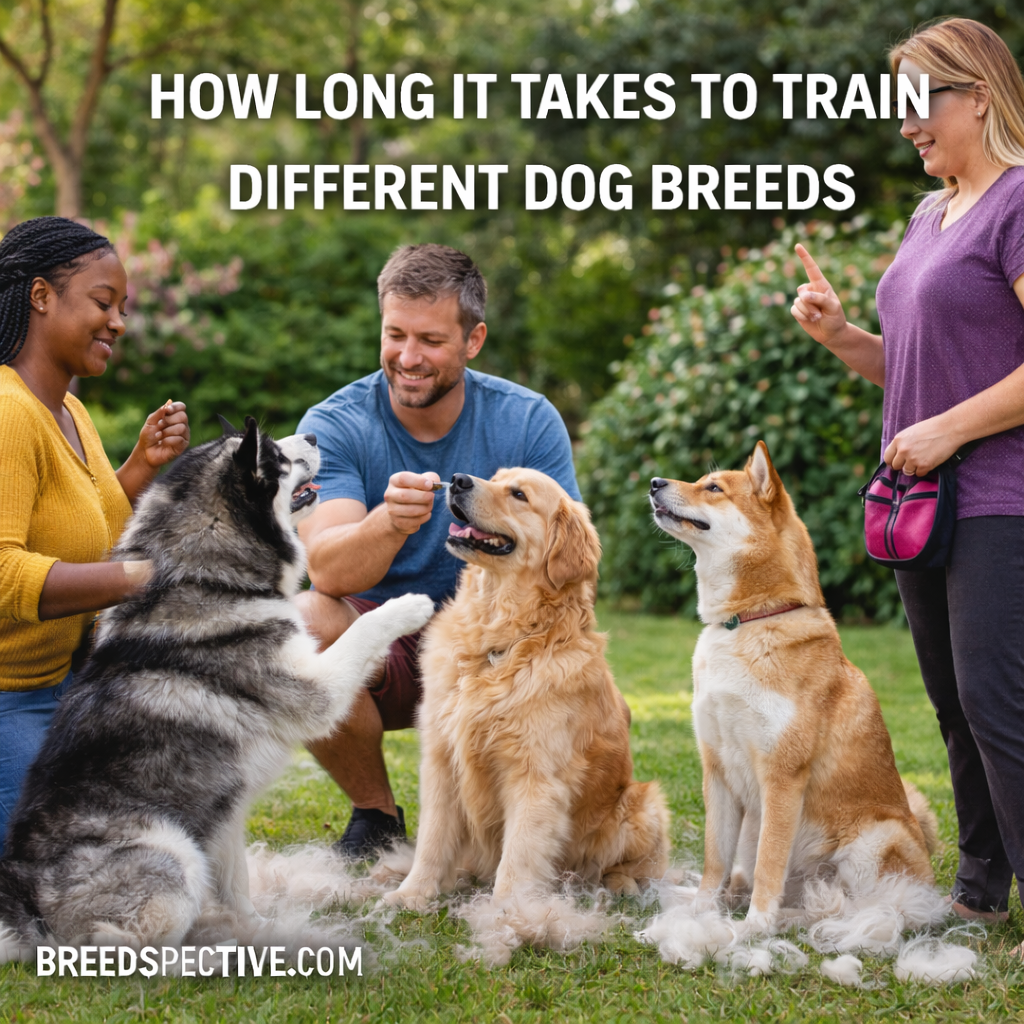
Training a dog is not a one-size-fits-all process. Some dogs pick up commands quickly and thrive on structure, while others need more repetition, patience, and motivation. How long it takes to train a dog depends heavily on breed traits, temperament, intelligence, and consistency, not just effort.
This guide explains how long training typically takes for different dog breeds, what affects training speed, and how to set realistic expectations based on breed tendencies.
What Does “Training Time” Really Mean?
Training time doesn’t mean reaching perfection. It usually refers to how long it takes a dog to:
- Learn basic obedience commands
- Respond reliably in familiar environments
- Develop good household habits
- Understand boundaries and routines
Most dogs continue learning throughout their lives, but early training progress varies widely by breed.
Key Factors That Affect Training Speed
Before comparing breeds, it’s important to understand what actually influences training timelines.
Major factors include:
- Breed intelligence and problem-solving ability
- Motivation (food, praise, play)
- Energy level and focus span
- Consistency of training routines
- Owner experience and expectations
Even highly intelligent dogs can be difficult to train if their needs aren’t met.
Highly Trainable Dog Breeds
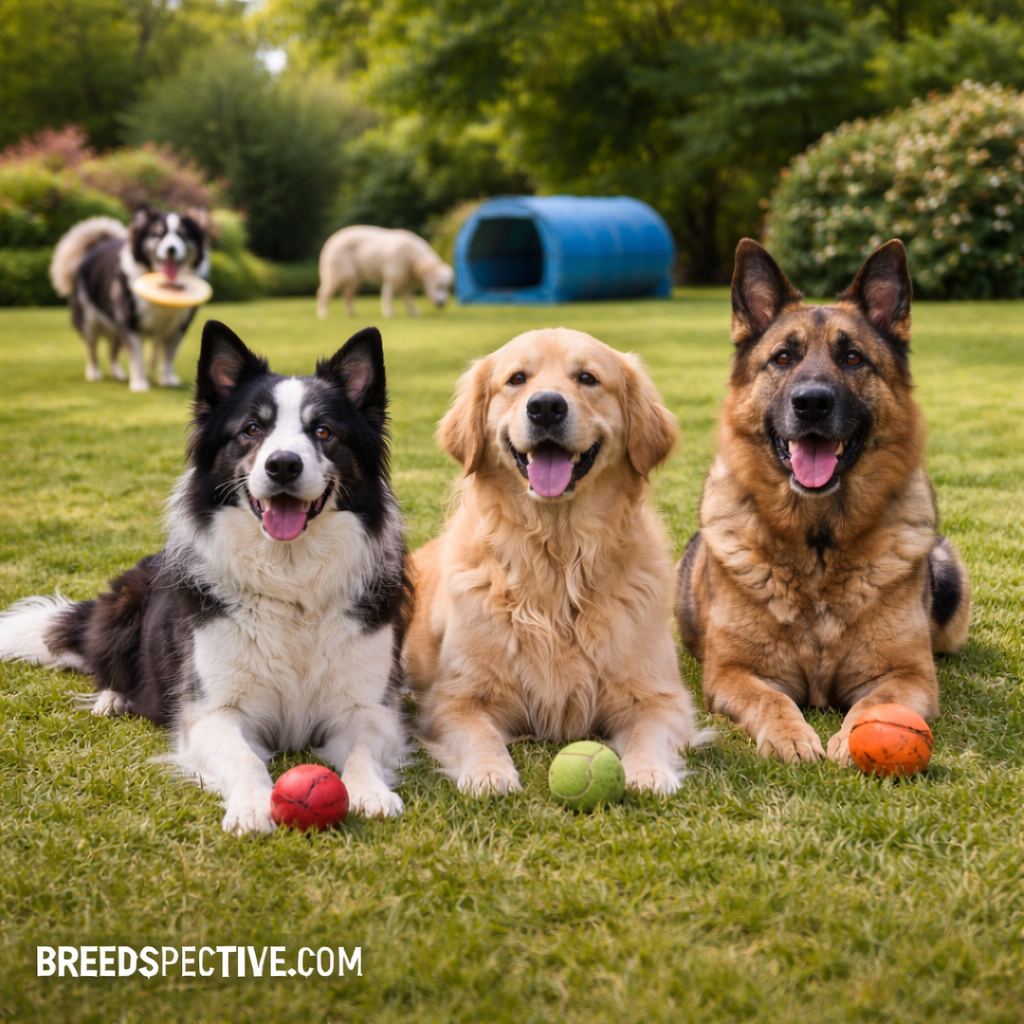
Some breeds are known for learning commands quickly and responding well to structured training.
Typical training timeline:
- Basic commands: 2–4 weeks
- Reliable obedience: 2–3 months
- Advanced training: 3–6 months
Breeds that tend to train faster include:
- Border Collie
- Poodle
- German Shepherd
- Golden Retriever
- Labrador Retriever
These breeds are often eager to please, highly intelligent, and motivated by interaction.
Moderately Trainable Dog Breeds
Many popular family dogs fall into this category. They can learn well but may need more repetition or stronger incentives.
Typical training timeline:
- Basic commands: 1–2 months
- Reliable obedience: 3–5 months
- Ongoing reinforcement needed
Common moderately trainable breeds include:
- Boxer
- Cocker Spaniel
- Australian Shepherd
- Doberman Pinscher
- Shetland Sheepdog
These dogs often respond best to positive reinforcement and structured routines.
Independent or Stubborn Dog Breeds
Some breeds were developed to think independently rather than follow constant direction. This doesn’t mean they’re unintelligent—just less obedient by nature.
Typical training timeline:
- Basic commands: 2–3 months
- Reliable obedience: 6 months or longer
- Lifelong reinforcement often required
Breeds in this group often include:
- Siberian Husky
- Akita
- Shiba Inu
- Chow Chow
- Basenji
These dogs benefit from short, engaging training sessions and patient handlers.
Small Breeds and Training Expectations
Small size doesn’t automatically mean easy training.
Common challenges include:
- House-training taking longer
- Owners unintentionally reinforcing bad habits
- Short attention spans
Typical training timeline:
- Basic commands: 1–2 months
- House-training: up to 6 months
Small breeds that may take longer include:
- Dachshund
- Chihuahua
- Maltese
- Pomeranian
Consistency is especially important with small dogs.
Working and Herding Breeds
Dogs bred for work often learn quickly but require ongoing mental stimulation.
Training characteristics:
- Fast initial learning
- High need for continued engagement
- Behavioral issues if under-stimulated
Training may feel “easy” at first but requires long-term commitment.
Puppies vs Adult Dogs
Age plays a role, but not always in the way people expect.
Puppies:
- Learn quickly but forget easily
- Require repetition and structure
- Need patience during development stages
Adult dogs:
- May take longer initially
- Often retain lessons better once learned
- Can still be trained successfully at any age
Consistency matters more than age.
Common Training Mistakes That Slow Progress
Many training delays are caused by human error, not the dog.
Common mistakes include:
- Inconsistent rules
- Training sessions that are too long
- Lack of mental or physical exercise
- Expecting instant results
- Using punishment instead of guidance
Clear communication and routine accelerate learning more than strictness.
How Long Until a Dog Is “Fully Trained”?
Most dogs are never truly “finished” with training.
General expectations:
- 3–6 months for solid basics
- 6–12 months for advanced reliability
- Ongoing reinforcement for life
Training is a habit-building process, not a finish line.
Choosing a Breed Based on Trainability
If fast training is important to you, consider:
- Your experience level
- Time available for daily training
- Energy level you can handle
- Patience for repetition
Matching breed traits to your lifestyle is more important than choosing the “smartest” dog.
Final Thoughts
How long it takes to train a dog depends less on intelligence and more on breed tendencies, consistency, and realistic expectations. Some dogs learn quickly and thrive on structure, while others require patience and creative motivation.
When training is approached as an ongoing relationship rather than a checklist, every breed can become a well-mannered, reliable companion—at their own pace.