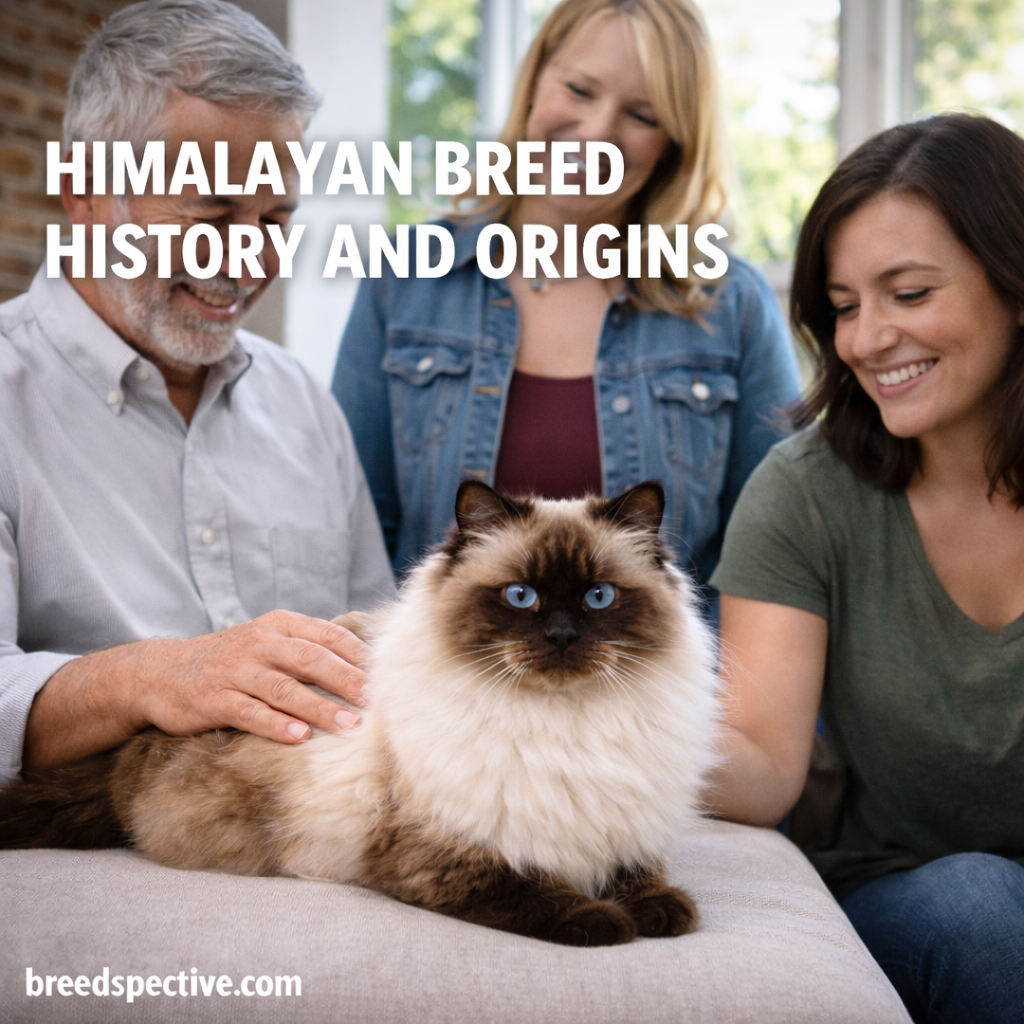
The Himalayan cat is admired for its luxurious coat, deep blue eyes, and calm, affectionate temperament. While it often resembles a Persian at first glance, the Himalayan has a unique and carefully planned history that blends beauty, genetics, and purposeful breeding. Understanding the breed’s origins explains not only its appearance but also its gentle personality and care needs today.
The Origins of the Himalayan Cat
The Himalayan cat is a relatively modern breed that emerged in the mid-20th century through intentional crossbreeding. Breeders set out to combine the long, plush coat and calm demeanor of the Persian with the striking colorpoint pattern and blue eyes associated with Siamese cats.
Key goals behind the breed’s creation included:
- A long-haired cat with colorpoint markings
- Deep blue eye color
- A calm, companion-focused temperament
- Consistent and predictable physical traits
This was not an accidental mutation but a carefully guided breeding effort.
Early Breeding Experiments
The earliest Himalayan breeding programs began in the 1930s and 1940s, primarily in the United States and the United Kingdom. Breeders selectively crossed Persians with Siamese cats and then bred the offspring back to Persians to refine coat length, body structure, and temperament.
Early challenges included:
- Maintaining long fur while preserving colorpoints
- Achieving consistent eye color
- Balancing body type with facial structure
- Stabilizing temperament
These early generations required patience and careful record-keeping to achieve uniform results.
Why the Breed Is Called “Himalayan”
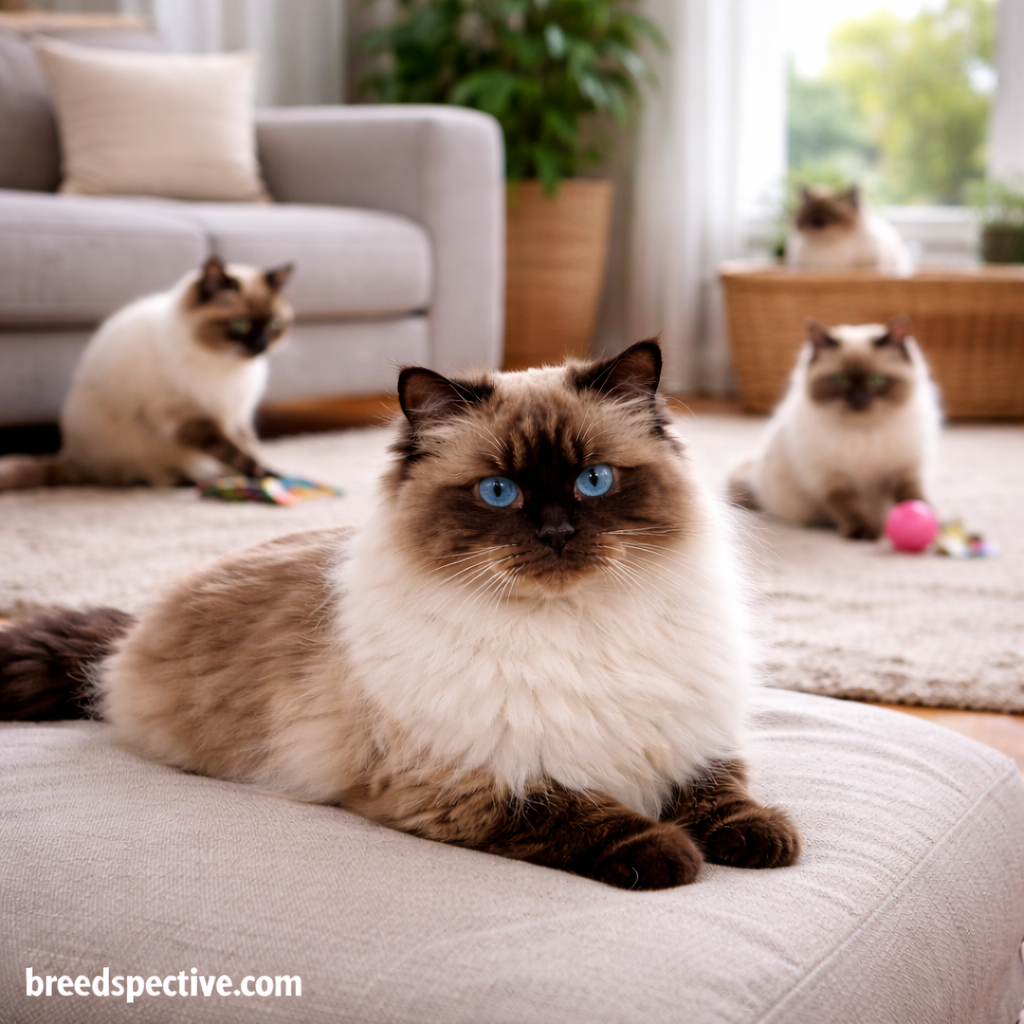
The name “Himalayan” does not refer to geographic origin. Instead, it describes the cat’s colorpoint pattern, which resembles the markings seen in Himalayan rabbits.
The term reflects:
- Darker coloration on ears, face, paws, and tail
- Lighter body color
- High contrast between points and body
This naming convention helped distinguish the breed visually from Persians without colorpoints.
Development of Breed Standards
As Himalayan cats became more consistent in appearance, breeders worked with cat associations to establish formal standards. These standards defined acceptable coat colors, eye color, body type, and facial structure.
Standardized traits included:
- Bright blue eyes
- Long, dense coat
- Rounded body and short legs
- Calm, gentle expression
Over time, selective breeding emphasized uniformity while preserving health and temperament.
Relationship to Persian Cats
The Himalayan is genetically very close to the Persian cat. In many registries, Himalayans are considered a color variation of the Persian rather than a separate breed.
Key similarities include:
- Identical body structure
- Same grooming requirements
- Similar calm temperament
- Comparable health considerations
The primary difference lies in the colorpoint pattern and eye color inherited from Siamese ancestry.
Recognition by Cat Associations
By the 1950s and 1960s, Himalayan cats gained official recognition from major cat registries. Their unique combination of Persian structure and Siamese coloring made them popular in both show rings and private homes.
Milestones in recognition included:
- Acceptance into competitive cat shows
- Widespread breeding programs
- Growing popularity among companion cat owners
Recognition helped solidify the Himalayan’s place as a distinct and desirable breed.
Evolution of Appearance Over Time
Early Himalayan cats often displayed less extreme facial features than many modern examples. Over decades, selective breeding refined the breed’s look to align with Persian standards.
Changes included:
- Flatter facial profiles in some lines
- Thicker, more luxurious coats
- More pronounced color contrast
Responsible breeders today aim to balance appearance with respiratory health and overall well-being.
Temperament Influenced by Breeding History
The Himalayan’s calm, affectionate nature is no accident. Breeders consistently favored cats that were gentle, people-oriented, and well-suited to indoor living.
Temperament traits shaped by history include:
- Low aggression
- Strong attachment to owners
- Preference for quiet environments
- Tolerance for handling
These qualities made the Himalayan especially appealing as a companion animal.
Global Expansion of the Breed
Once established, Himalayan cats spread internationally through breeding programs and cat shows. Their striking appearance and predictable temperament helped fuel global demand.
As the breed expanded:
- Standards became more unified
- Bloodlines diversified
- Popularity increased in family homes
Today, Himalayans are found worldwide and remain a favorite among long-haired cat enthusiasts.
Common Misconceptions About Himalayan Origins
Many people assume Himalayan cats come from mountainous regions or are a naturally occurring breed. In reality, the breed’s development was entirely human-directed.
Clarifying misconceptions:
- The breed did not originate in the Himalayas
- It is not a wild or ancient breed
- Its traits were selectively developed
Understanding these facts helps owners better appreciate the breed’s needs and characteristics.
Why Himalayan History Matters Today
Knowing the Himalayan’s history provides insight into its care requirements, behavior, and ideal living conditions.
Historical context explains:
- High grooming needs due to Persian ancestry
- Calm energy levels
- Preference for indoor environments
- Sensitivity to stress and change
Breed history offers practical guidance for responsible ownership.
Final Thoughts on Himalayan Breed History
The Himalayan cat is the result of thoughtful, deliberate breeding aimed at combining beauty, gentleness, and consistency. From its early experimental crosses to worldwide recognition, the breed’s journey reflects careful planning rather than chance.
By understanding the Himalayan’s origins, owners gain a deeper appreciation for its appearance, personality, and needs. This historical perspective helps ensure the breed continues to thrive as a loving, elegant companion in modern homes.