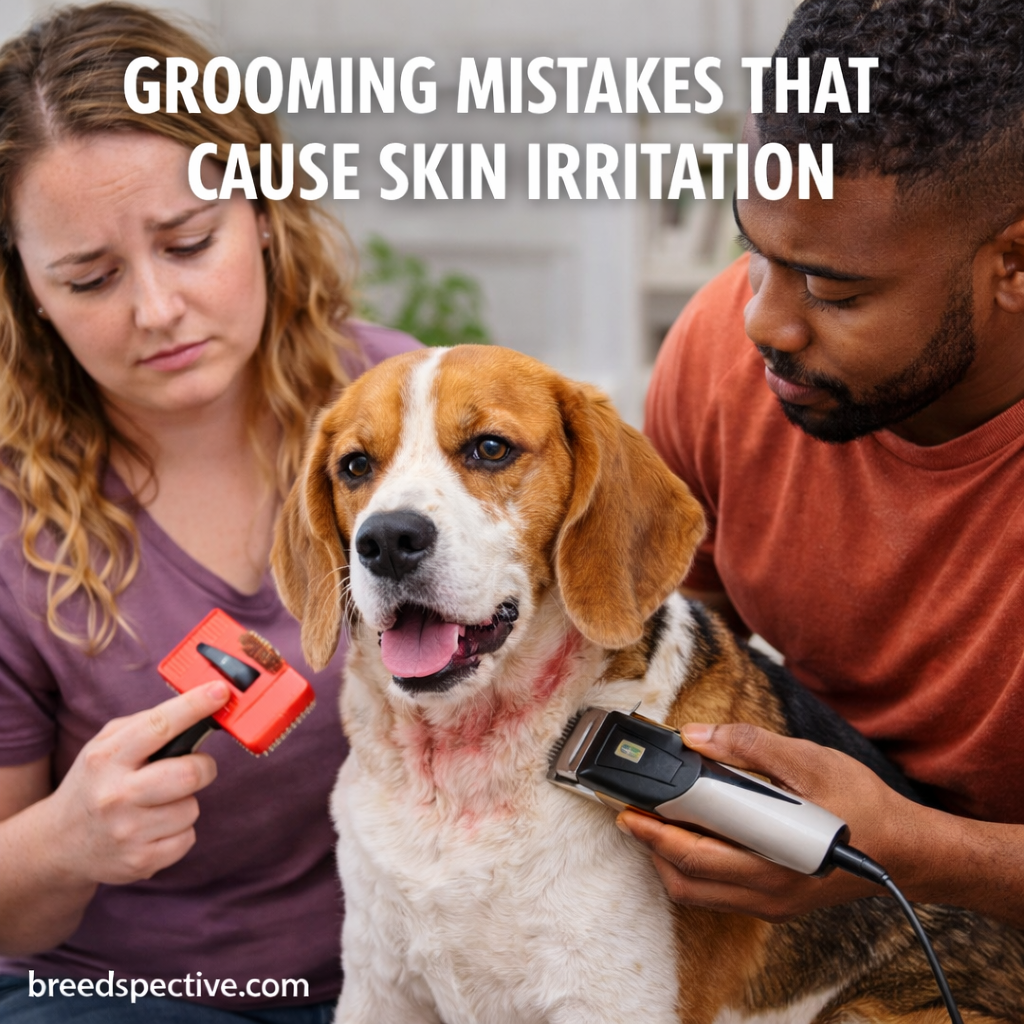
Grooming plays a major role in keeping a pet’s coat healthy and comfortable—but when done incorrectly, it can lead to skin irritation, itching, and long-term discomfort. Many grooming-related skin issues are caused not by neglect, but by well-meaning mistakes made during routine care.
This guide breaks down the most common grooming mistakes that cause skin irritation and explains how to avoid them for healthier skin and a happier pet.
Using the Wrong Grooming Tools
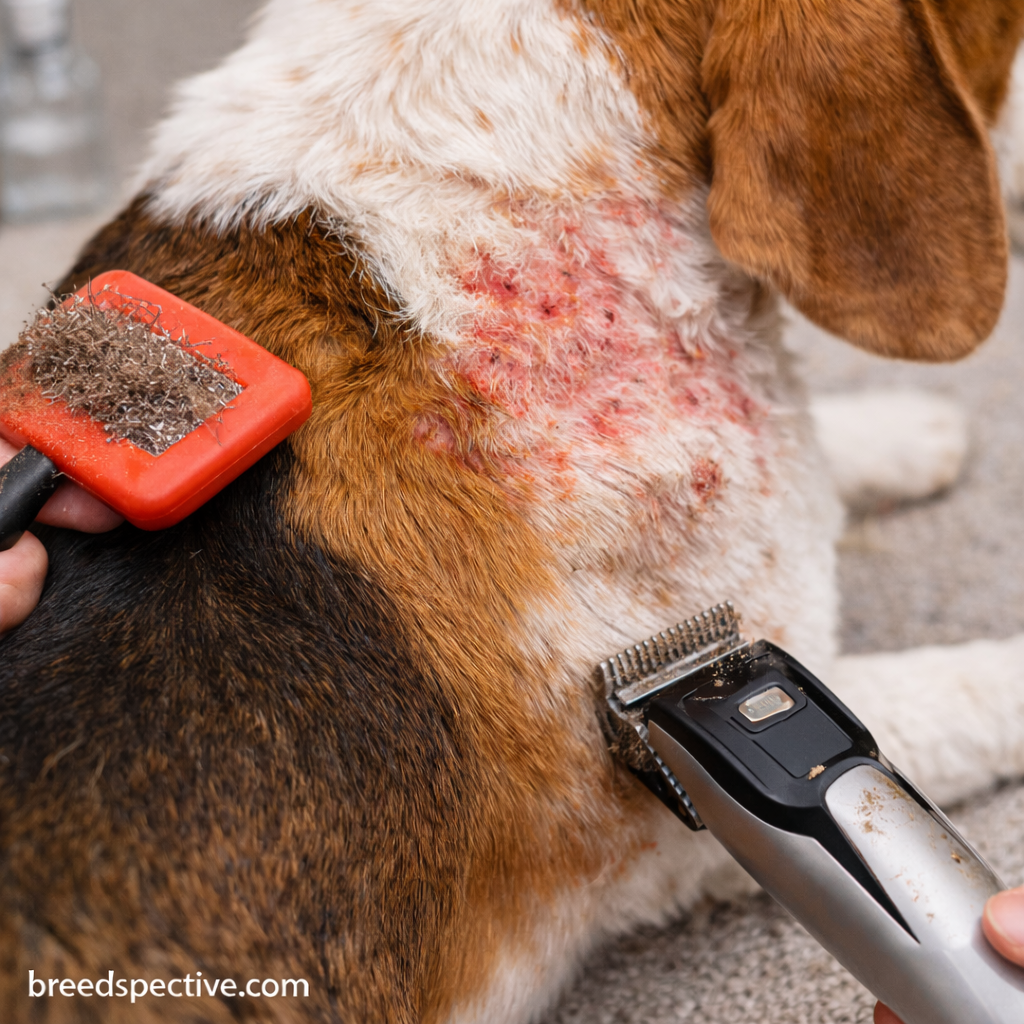
Not all brushes, combs, and clippers are suitable for every coat type. Using the wrong tool can scrape the skin, pull hair painfully, or cause micro-abrasions.
Common tool-related mistakes include:
- Using slicker brushes on sensitive or short coats
- Brushing too aggressively with stiff bristles
- Using dull or poorly maintained clippers
- Applying human grooming tools to pets
Always choose grooming tools designed for your pet’s specific coat type and skin sensitivity.
Over-Brushing the Coat
Brushing removes loose hair and distributes natural oils—but too much brushing can irritate the skin.
Problems caused by over-brushing:
- Redness and inflammation
- Dry, flaky skin
- Increased itching or sensitivity
Most pets only need brushing a few times per week, with frequency adjusted based on coat length and shedding patterns.
Bathing Too Frequently
Frequent bathing strips the skin of natural oils that protect against dryness and irritation.
Signs of over-bathing include:
- Dull or brittle coat
- Persistent itching
- Flaky or scaly skin
Unless medically necessary, bathing should be done only when the coat is visibly dirty or smells unpleasant.
Using Harsh or Incorrect Shampoos
Human shampoos or heavily scented pet products can disrupt the skin’s natural pH balance.
Harmful shampoo mistakes include:
- Using human shampoo or soap
- Choosing products with artificial fragrances or dyes
- Not rinsing shampoo thoroughly
Always use gentle, pet-safe shampoos and rinse completely to prevent residue buildup.
Improper Drying After Baths
Leaving the coat damp can create the perfect environment for skin irritation and infections.
Drying-related issues include:
- Moisture trapped close to the skin
- Hot spots or fungal growth
- Chafing from damp fur
Towel-dry thoroughly and use low-heat air drying when necessary, especially for thick or double coats.
Ignoring Matted or Tangled Fur
Mats pull tightly on the skin and restrict airflow, causing discomfort and irritation beneath the surface.
Risks of untreated matting:
- Skin inflammation
- Reduced circulation
- Hidden sores or infections
Regular brushing and gentle detangling help prevent mat-related skin problems.
Shaving Too Close to the Skin
Shaving can expose delicate skin and increase the risk of irritation, sunburn, or razor burn.
Close-shave mistakes include:
- Shaving breeds that rely on their coat for insulation
- Using clippers without guards
- Repeatedly shaving the same area
When trimming is necessary, leave enough coat length to protect the skin.
Neglecting Tool Hygiene
Dirty grooming tools can transfer bacteria and irritants directly to the skin.
Tool hygiene mistakes include:
- Reusing brushes without cleaning
- Storing damp tools
- Using rusty or damaged equipment
Clean and disinfect grooming tools regularly to prevent infections and skin reactions.
Grooming Sensitive Areas Incorrectly
Areas like the belly, armpits, ears, and groin are more sensitive and prone to irritation.
Common mistakes in sensitive areas:
- Applying too much pressure
- Using sharp tools without caution
- Ignoring signs of discomfort
Take extra care and work slowly when grooming these regions.
Failing to Notice Early Warning Signs
Skin irritation often starts subtly and worsens if ignored.
Early signs to watch for:
- Redness or swelling
- Excessive scratching or licking
- Flaking or small bumps
Catching irritation early allows you to adjust grooming habits before serious issues develop.
How to Groom Without Causing Irritation
Healthy grooming focuses on comfort, consistency, and observation.
Best practices include:
- Matching tools to coat type
- Grooming gently and patiently
- Using pet-safe products only
- Adjusting routines based on skin condition
When in doubt, consult a professional groomer or veterinarian.
Final Thoughts
Grooming should support skin health—not compromise it. Most grooming-related skin irritation comes from simple, preventable mistakes such as over-bathing, harsh products, or improper tools.
By understanding what causes irritation and adjusting your grooming routine accordingly, you can protect your pet’s skin, improve coat health, and make grooming a positive experience for both of you.