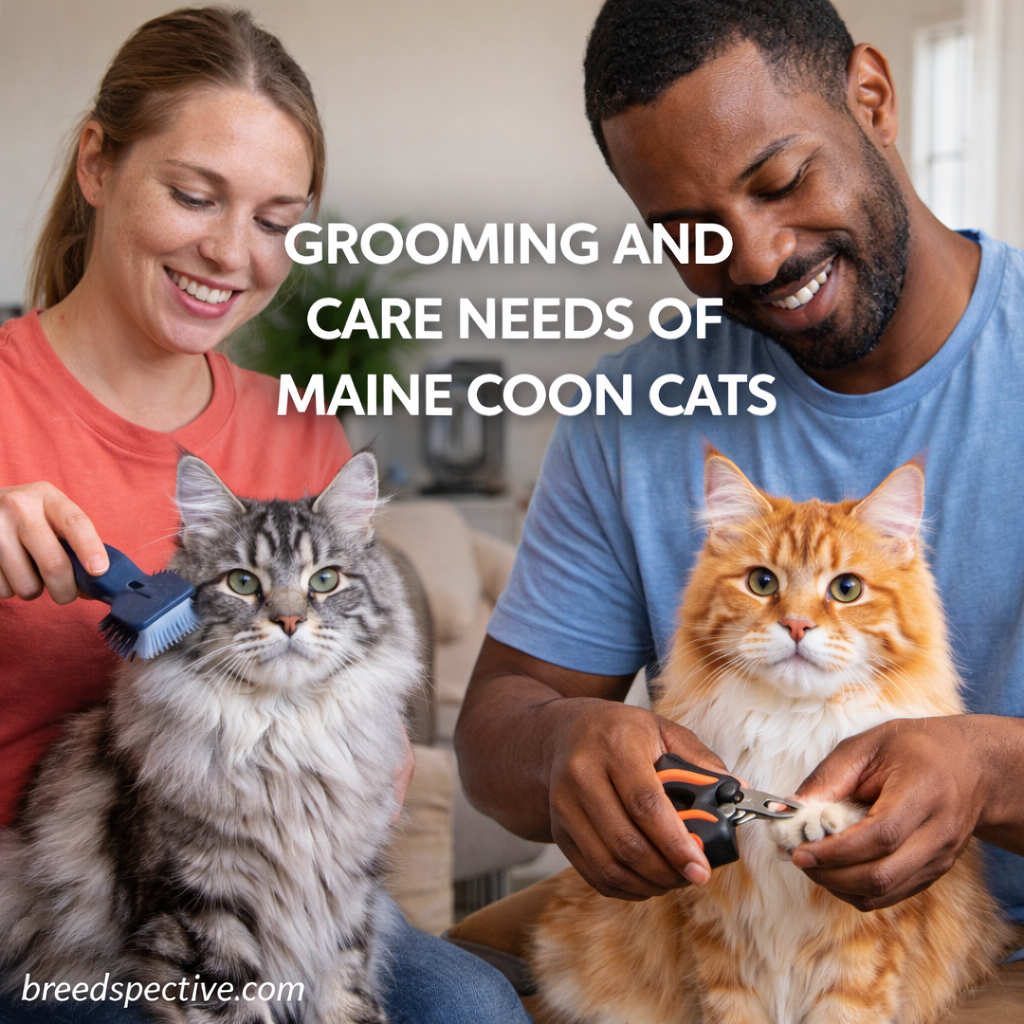
Maine Coon cats are admired for their impressive size, tufted ears, and luxurious coats. While they are often considered relatively low-maintenance for a long-haired breed, Maine Coons still require consistent grooming and care to stay healthy, comfortable, and mat-free.
Understanding their grooming needs helps owners maintain not only their coat, but also their skin, nails, teeth, and overall well-being throughout every life stage.
Understanding the Maine Coon Coat
The Maine Coon’s coat is uniquely adapted to cold climates. Unlike some long-haired breeds, it is not overly fine or prone to constant matting, but it does require regular attention.
Key coat characteristics include:
- Semi-long, shaggy texture
- Water-resistant top layer
- Softer undercoat
- Longer fur around the chest, belly, and tail
- Seasonal shedding patterns
This coat structure influences how often and how intensively grooming is needed.
How Often Maine Coons Need Grooming
Maine Coons benefit from regular grooming rather than occasional intensive sessions.
Recommended grooming frequency:
- Brushing: 2–3 times per week
- During shedding seasons: daily or every other day
- Full grooming check: weekly
Consistent grooming prevents tangles, reduces shedding, and keeps the coat comfortable.
Brushing Techniques and Tools
Using the right tools and techniques makes grooming more effective and enjoyable for both cat and owner.
Helpful grooming tools include:
- Stainless steel combs with wide and narrow teeth
- Slicker brushes designed for long-haired cats
- De-shedding tools used gently and sparingly
- Soft bristle brushes for finishing
Focus brushing on areas prone to matting such as the chest, belly, behind the ears, and under the legs.
Managing Shedding and Seasonal Coat Changes
Maine Coons experience noticeable seasonal shedding, especially in spring and fall.
Ways to manage shedding include:
- Increasing brushing frequency during peak seasons
- Providing proper nutrition for coat health
- Keeping indoor humidity balanced
- Removing loose undercoat regularly
Shedding is normal, but excessive hair loss may signal underlying issues.
Bathing Maine Coon Cats
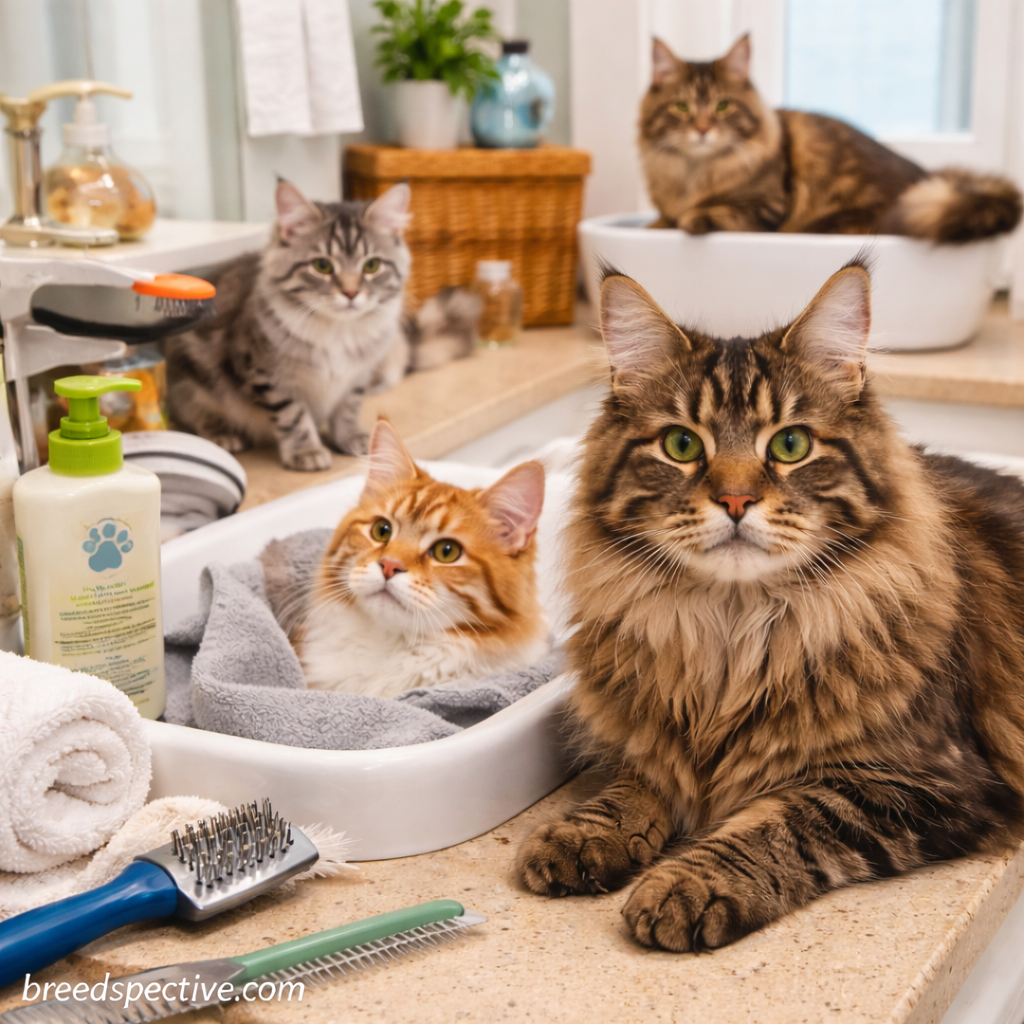
Unlike many cats, some Maine Coons tolerate or even enjoy water. However, bathing is not a frequent necessity.
Bathing guidelines:
- Only bathe when visibly dirty or oily
- Use cat-specific shampoos
- Dry thoroughly to prevent chills
- Avoid over-bathing, which strips natural oils
Most Maine Coons require baths only a few times per year.
Nail Trimming and Paw Care
Regular nail maintenance is essential for indoor and outdoor Maine Coons.
Nail care tips:
- Trim nails every 2–4 weeks
- Use cat-specific nail clippers
- Avoid cutting into the quick
- Provide scratching posts to reduce overgrowth
Also check paws regularly for debris, dryness, or irritation.
Ear Cleaning and Eye Care
Maine Coon ears are large and tufted, which can trap debris if not monitored.
Care recommendations:
- Inspect ears weekly
- Clean only when visible buildup is present
- Use vet-approved ear cleaners
- Wipe eyes gently if discharge appears
Healthy ears and eyes should be mostly clean without strong odor.
Dental Care and Oral Health
Dental care is often overlooked but crucial for long-term health.
Dental maintenance includes:
- Brushing teeth several times per week
- Dental treats or toys designed for cats
- Regular veterinary dental checkups
Good oral hygiene helps prevent gum disease and tooth loss.
Nutrition and Coat Health
A Maine Coon’s coat health is closely tied to diet.
Nutritional considerations:
- High-quality protein sources
- Omega-3 and Omega-6 fatty acids
- Proper hydration
- Balanced vitamins and minerals
Poor nutrition often shows first in coat dullness or excessive shedding.
Grooming Needs by Life Stage
Grooming routines should adapt as your Maine Coon ages.
Life stage considerations:
- Kittens: gentle introduction to brushing
- Adults: consistent routine and coat management
- Seniors: shorter sessions and closer skin monitoring
Older cats may need more assistance due to reduced flexibility.
Common Grooming Challenges
Some Maine Coons may resist grooming or develop specific challenges.
Common issues include:
- Matting in hard-to-reach areas
- Sensitivity during brushing
- Fear of grooming tools
- Excessive shedding due to stress
Patience and positive reinforcement are key to overcoming these challenges.
When to Seek Professional Grooming
While most grooming can be handled at home, professional grooming may be helpful in certain situations.
Consider professional help if:
- Mats become severe
- The cat resists home grooming
- Coat condition declines noticeably
- Medical conditions limit self-care
Professional groomers experienced with long-haired cats can safely manage complex grooming needs.
Final Thoughts
Maine Coon cats require regular but manageable grooming and care. With the right routine, tools, and attention, their beautiful coats and overall health can be maintained comfortably at home.
Consistent grooming not only keeps a Maine Coon looking its best but also strengthens the bond between cat and owner through trust and routine care.