
Great Pyrenees Temperament Overview
The Great Pyrenees is a calm, confident, and deeply independent breed originally developed to guard livestock in mountainous regions. Unlike highly people-focused companion breeds, the Great Pyrenees was bred to think for itself, make decisions without human direction, and remain composed in challenging situations.
As a result, their temperament combines gentleness with quiet authority. They are affectionate with family but not overly needy, protective without being aggressive, and calm even in high-pressure environments.
Key temperament traits include:
- Calm and composed
- Independent and thoughtful
- Loyal to family
- Naturally protective
- Emotionally steady
They are not excitable dogs and tend to move through life at their own deliberate pace.
Personality Traits in Everyday Life
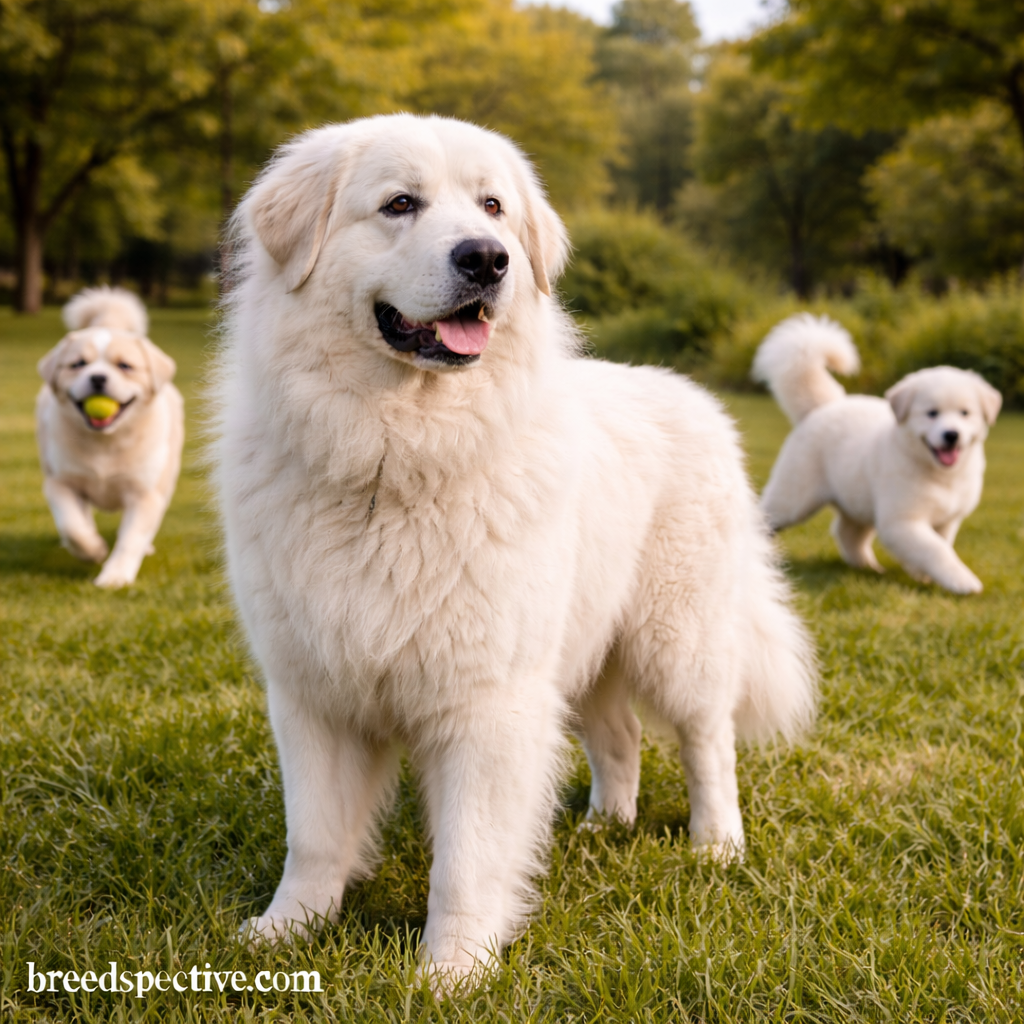
In daily life, Great Pyrenees are observant and watchful. They often choose a vantage point where they can monitor their surroundings and family members rather than constantly seeking interaction.
Common personality characteristics include:
- Quiet presence indoors
- Strong awareness of surroundings
- Affection shown on their own terms
- Low reactivity to everyday noise
- Tendency to patrol or check areas
They are not clingy dogs but form deep, lasting bonds with their household.
Energy Level and Activity Needs
The Great Pyrenees has a low to moderate energy level. They are not built for intense or repetitive exercise and do best with steady, low-impact activity.
Typical energy patterns include:
- Calm behavior indoors
- Short bursts of movement
- Preference for patrolling or walking rather than running
Recommended daily activity:
- 30–60 minutes of gentle exercise
- Leisurely walks
- Time outdoors in secure areas
- Mental stimulation through observation and routine
Overexertion is unnecessary and often counterproductive for this breed.
Great Pyrenees and Family Compatibility
Great Pyrenees can be excellent family dogs in the right environment. They are patient with children and deeply committed to protecting those they consider part of their flock.
Why they can work well in families:
- Calm and tolerant with children
- Protective without being reactive
- Gentle despite large size
- Emotionally steady
Because of their size and independence, supervision around young children is important, but issues are usually related to accidental bumps rather than temperament.
Behavior With Children
Great Pyrenees are typically gentle and patient with children, especially when raised alongside them.
Positive traits around kids include:
- High tolerance for noise and movement
- Protective instincts
- Calm responses to excitement
- Minimal reactivity
They often position themselves between children and perceived threats, reflecting their guardian instincts.
Compatibility With Other Pets
This breed generally coexists well with other animals, particularly when socialized early.
Pet compatibility includes:
- Strong acceptance of animals considered part of their group
- Calm behavior around cats
- Low prey drive in well-socialized individuals
- Protective behavior toward smaller pets
They may attempt to “guard” other animals rather than play with them.
Trainability and Intelligence
Great Pyrenees are intelligent but not eager-to-please in the traditional sense. Their independence is often mistaken for stubbornness.
Training characteristics include:
- Strong problem-solving ability
- Preference for making their own decisions
- Slow response to repetitive commands
- Sensitivity to harsh correction
Training works best when:
- Sessions are short and purposeful
- Positive reinforcement is used
- Trust is built rather than demanded
- Expectations are clear and consistent
They respond poorly to force but well to calm leadership.
Independence and Nighttime Alertness
One of the most defining traits of the Great Pyrenees is their independence, especially at night. Historically bred to guard livestock overnight, many individuals remain more alert after dark.
Common behaviors include:
- Nighttime barking
- Patrolling property boundaries
- Increased alertness during quiet hours
This behavior is instinctive and not a sign of poor training.
Ideal Living Environment
Great Pyrenees thrive in environments that allow space, routine, and purpose.
Ideal living conditions include:
- Homes with large yards or acreage
- Secure fencing
- Quiet or rural settings
- Owners comfortable with independence
Apartment living is generally not recommended due to size, guarding instincts, and vocal tendencies.
Climate Considerations
Great Pyrenees are built for cold climates and struggle in heat.
Climate factors to consider:
- Thick double coat retains heat
- High sensitivity to warm temperatures
- Outdoor access should include shade
- Exercise should be limited in hot weather
They are far more comfortable in cool or cold environments.
Common Behavioral Challenges
While calm and steady, Great Pyrenees can present challenges for unprepared owners.
Common challenges include:
- Excessive barking, especially at night
- Strong independence
- Difficulty with recall
- Territorial behavior
These behaviors are rooted in their guardian heritage rather than poor temperament.
Who Is a Great Pyrenees Best For?
The Great Pyrenees is best suited for owners who respect independence and value calm protection over obedience.
They are a great fit for:
- Rural or semi-rural households
- Owners with livestock or large properties
- Calm families with structure
- People who appreciate quiet companionship
They may not be ideal for:
- Apartment dwellers
- Owners wanting high obedience
- Very busy urban lifestyles
Final Thoughts on Great Pyrenees Lifestyle Fit
The Great Pyrenees is a dignified, calm, and deeply instinctual breed. Their temperament reflects centuries of independent decision-making, protection, and emotional steadiness.
For the right owner and environment, the Great Pyrenees offers unmatched loyalty, quiet confidence, and a sense of calm guardianship that few breeds can replicate.