
The Golden Retriever is one of the most beloved dog breeds in the world, admired for its friendly temperament and versatility. However, the breed was not originally created as a family companion. Golden Retrievers were carefully developed for a specific working role, and their history explains many of the traits owners see today—intelligence, eagerness to please, athleticism, and a love of retrieving.
This article explores the origins of the Golden Retriever, why the breed was created, and how its original purpose still shapes its behavior.
Origins of the Golden Retriever
The Golden Retriever originated in Scotland in the mid-to-late 1800s, during a time when hunting and shooting sports were central to rural life. Hunters needed dogs that could retrieve game efficiently from both land and water without damaging it.
At the time, existing retriever types lacked consistency. Some were strong swimmers but poor on land, while others struggled in wet or rough terrain. The goal was to create a dependable, all-purpose retrieving dog.
Key needs included:
- Soft mouth for carrying game
- Strong swimming ability
- High intelligence and trainability
- Calm, cooperative temperament
- Endurance for long days in the field
Lord Tweedmouth and the Breed’s Creation
The Golden Retriever is credited to Dudley Marjoribanks, later known as Lord Tweedmouth, who began a deliberate breeding program at his estate in the Scottish Highlands.
In 1868, Lord Tweedmouth bred a yellow retriever named Nous with a Tweed Water Spaniel named Belle. The Tweed Water Spaniel is now extinct, but it was known for excellent swimming skills and a gentle mouth.
This pairing produced the foundation of the Golden Retriever breed.
Early Breeding Influences
To refine the breed, Lord Tweedmouth selectively introduced other breeds over time.
These included:
- Tweed Water Spaniel for water skills
- Bloodhound for scenting ability
- Irish Setter for athleticism and coat color
- Flat-Coated Retriever for retrieving instincts
Each addition was carefully chosen to enhance working ability rather than appearance.
Original Purpose: A Skilled Retrieving Dog
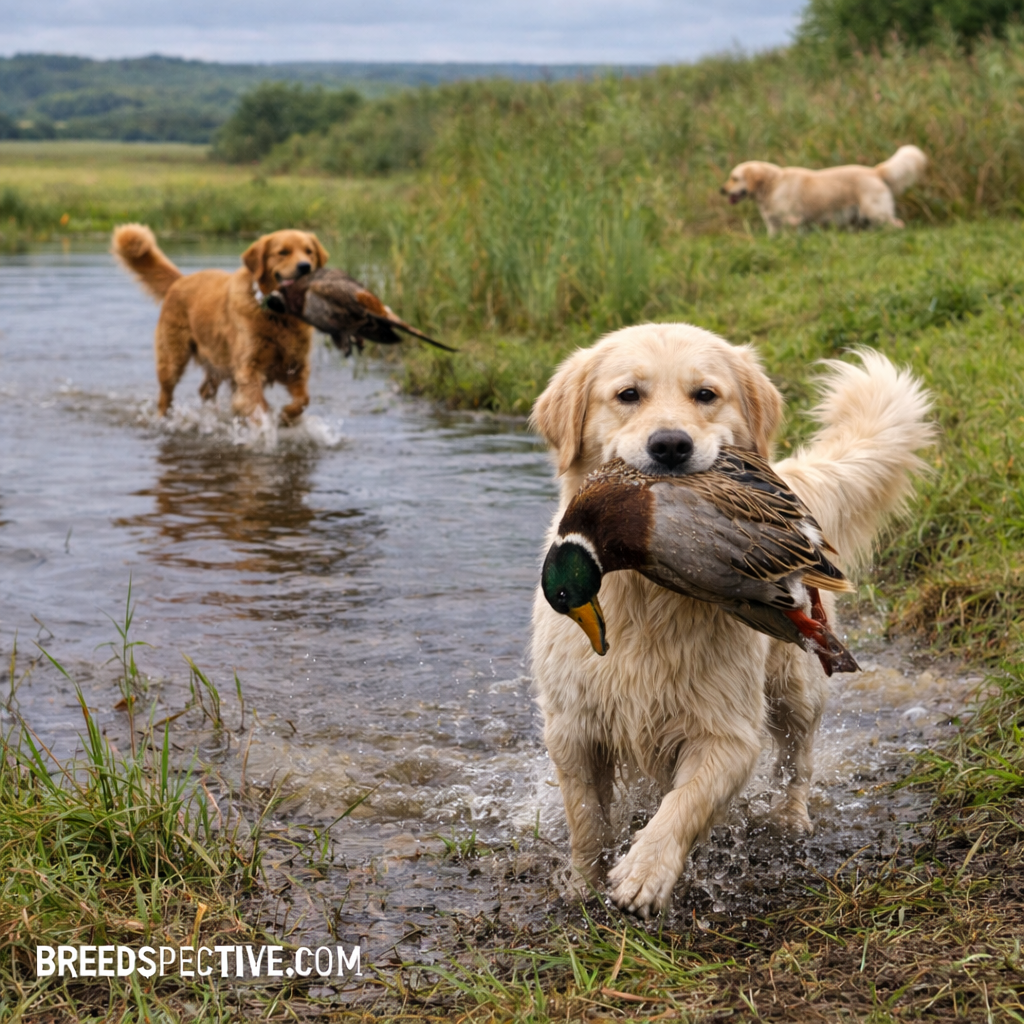
Golden Retrievers were bred primarily to retrieve downed birds during hunts, especially waterfowl.
Their original responsibilities included:
- Retrieving game from lakes, rivers, and marshes
- Navigating uneven and muddy terrain
- Carrying birds gently without damage
- Responding reliably to hand signals and whistles
This work required cooperation, intelligence, and a calm demeanor—traits that remain core to the breed.
Why the “Golden” Coat Mattered
The Golden Retriever’s coat color was not just aesthetic. The golden shade made dogs more visible to hunters in tall grass and water without being overly conspicuous to game.
The coat also provided:
- Water resistance
- Insulation in cold conditions
- Protection against rough terrain
Function always came before form in early Golden Retrievers.
Recognition and Breed Standardization
The breed gained popularity quickly due to its reliability and temperament.
Major milestones include:
- Recognition by the UK Kennel Club in 1911
- Introduction to North America in the early 1900s
- Recognition by the American Kennel Club in 1925
Over time, Golden Retrievers became popular beyond hunting, entering homes as companions and working dogs.
Transition From Hunting Dog to Versatile Companion
While Golden Retrievers remain capable hunting dogs, their temperament allowed them to excel in many other roles.
Modern roles include:
- Service and assistance dogs
- Therapy dogs
- Search and rescue
- Detection and scent work
- Family companionship
Their adaptability is a direct result of their cooperative working origins.
How History Shapes the Modern Golden Retriever
Many modern Golden Retriever traits are rooted in their original purpose.
These include:
- Strong retrieving instincts
- Love of water and swimming
- High trainability
- Gentle mouth and play style
- Desire to work closely with humans
Without sufficient activity and mental stimulation, these instincts can manifest as restlessness or destructive behavior.
Field Lines vs Show Lines
As the breed evolved, two general types emerged.
Field-bred Golden Retrievers tend to be:
- Leaner and more athletic
- Higher energy
- Stronger drive to retrieve
Show-bred Golden Retrievers are often:
- Heavier-boned
- Calmer in temperament
- Bred with appearance as a higher priority
Both share the same historical foundation.
Final Thoughts
The Golden Retriever was never meant to be just a passive pet. It was designed as a hardworking, intelligent, and cooperative retriever capable of long days in demanding environments.
Understanding the breed’s history helps explain why Golden Retrievers thrive with structure, activity, and human connection. When their original instincts are respected and fulfilled, they become some of the most loyal, adaptable, and rewarding dogs in the world.