

The German Shepherd is one of the most influential working dog breeds ever developed. Originally bred for intelligence, endurance, and utility, this breed was never intended to be purely a companion. Understanding the German Shepherd’s history explains why modern dogs of this breed are energetic, driven, loyal, and highly responsive to training.
This article explores where German Shepherds came from, why they were created, and how their original purpose still shapes their behavior today.
Origins of the German Shepherd Breed
The German Shepherd originated in Germany in the late 19th century, during a period when industrialization was changing traditional farming and herding practices. Different regions had their own local sheepdogs, each with varying abilities, appearances, and temperaments.
There was no standardized shepherd dog at the time—just many regional working dogs bred for function rather than looks.
Key early goals included:
- Strong herding instinct
- High intelligence and trainability
- Physical endurance for long working days
- Calm confidence and reliability
The goal was not beauty or companionship, but performance.
Captain Max von Stephanitz and Breed Standardization
The modern German Shepherd breed is largely credited to Captain Max von Stephanitz, a former cavalry officer and dog enthusiast. He believed dogs should be bred strictly for utility and working ability, not appearance.
In 1899, von Stephanitz purchased a dog named Horand von Grafrath, whom he considered the ideal working shepherd. Horand became the first officially registered German Shepherd and the foundation of the breed.
Von Stephanitz emphasized:
- Intelligence over aesthetics
- Stable temperament
- Willingness to work closely with humans
- Adaptability to different tasks
These principles remain central to the breed today.
Original Purpose: Herding and Livestock Management
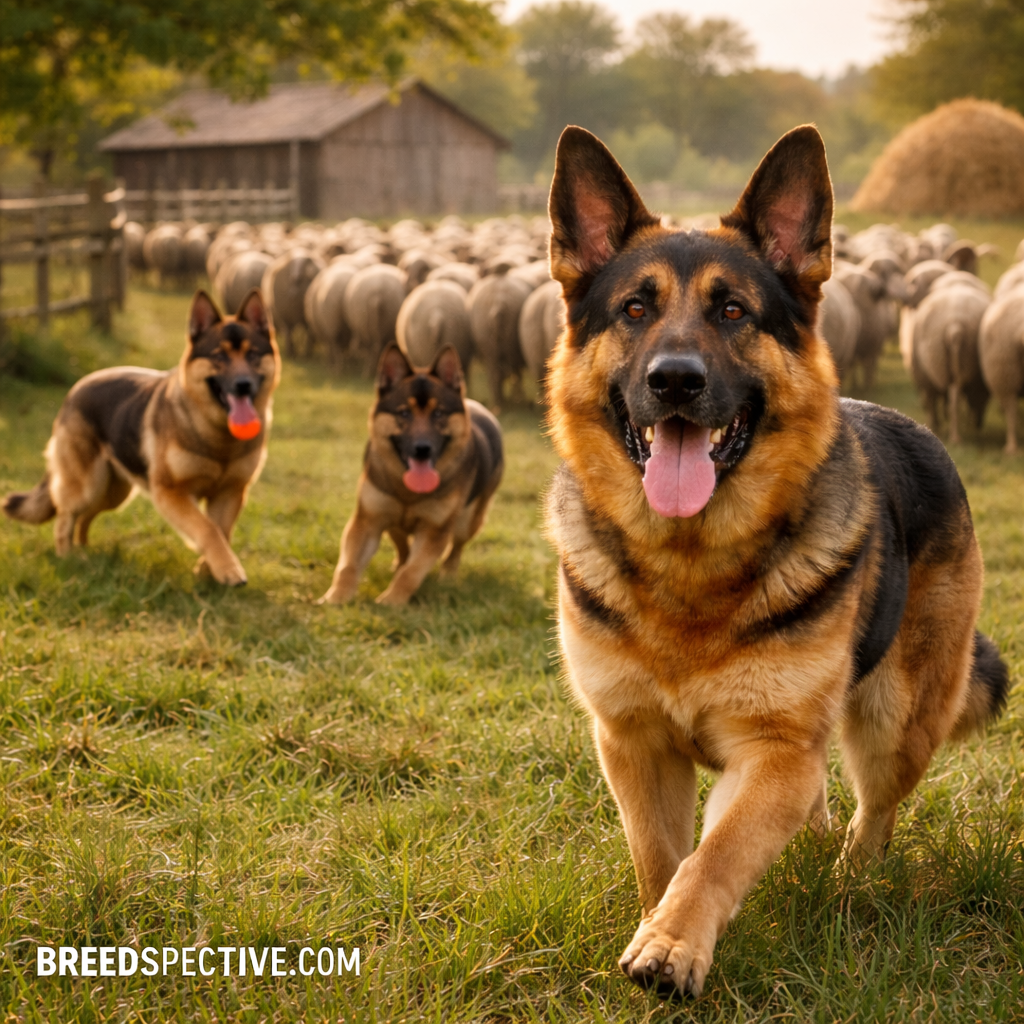
The German Shepherd was originally bred to herd and protect sheep. Unlike passive herding dogs, German Shepherds were expected to think independently, make decisions, and respond instantly to commands.
Their herding duties included:
- Guiding flocks over long distances
- Preventing straying or wandering
- Protecting livestock from predators
- Responding to subtle hand and voice signals
This required mental sharpness, physical stamina, and unwavering focus.
Transition From Farm Dog to Working Dog
As Germany became more industrialized, the need for traditional shepherding declined. However, von Stephanitz recognized that the breed’s intelligence and discipline made it ideal for other forms of work.
German Shepherds were soon adopted for:
- Police and military roles
- Guard and protection work
- Search and rescue missions
- Messenger and supply duties
Their ability to learn complex tasks and remain calm under pressure made them invaluable.
German Shepherds in World War I and II
German Shepherds gained international recognition during World War I, where they were used extensively by the German military.
Their wartime roles included:
- Carrying messages between units
- Guarding military installations
- Locating wounded soldiers
- Delivering medical supplies
Allied soldiers were so impressed by the breed’s abilities that they brought German Shepherds home after the war, accelerating the breed’s global popularity.
Rise in Popularity as a Family and Service Dog
After the wars, German Shepherds became popular worldwide, especially in the United States and Europe. While still used as working dogs, they also began appearing as family companions.
Reasons for their popularity:
- Exceptional loyalty
- Strong protective instincts
- Trainability for service roles
- Emotional sensitivity to handlers
German Shepherds became common as guide dogs, service animals, and therapy dogs—roles that still rely heavily on their original working traits.
How History Shapes the Modern German Shepherd
The German Shepherd’s historical purpose still defines the breed today. These dogs are not naturally sedentary or passive.
Modern traits rooted in history include:
- High energy and stamina
- Strong desire for purpose and structure
- Natural guarding instincts
- Deep loyalty to handlers
- Sensitivity to leadership and training quality
Without mental and physical engagement, many German Shepherds become anxious or destructive—not because they are difficult, but because they were bred to work.
Final Thoughts
The German Shepherd was never meant to be just a pet. From its origins as a herding dog to its evolution into a military, police, and service animal, the breed has always been defined by intelligence, discipline, and purpose.
Understanding German Shepherd history helps owners appreciate why this breed thrives on structure, training, and activity. When their original instincts are respected and fulfilled, German Shepherds become some of the most loyal, capable, and rewarding dogs in the world.