
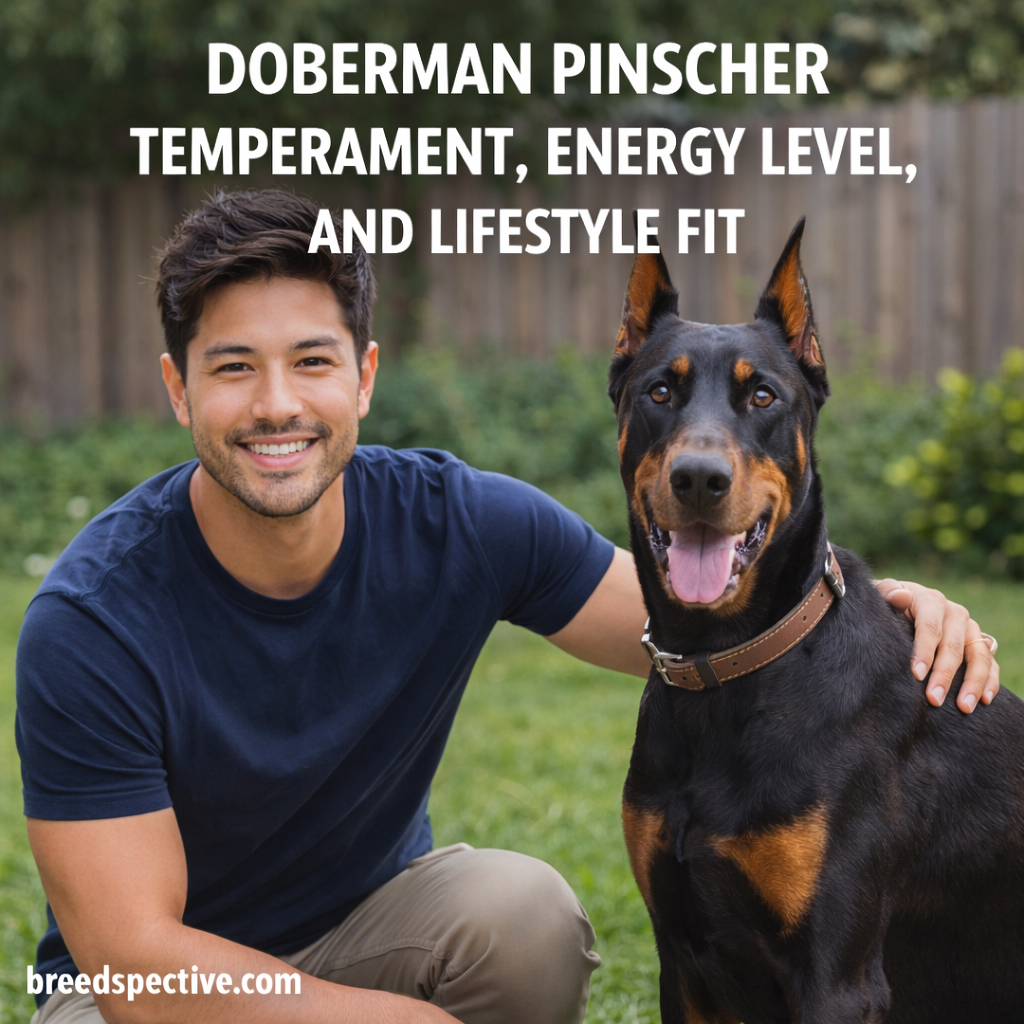
The Doberman Pinscher is a powerful, intelligent, and deeply loyal breed known for its sleek appearance and strong bond with its owners. Often misunderstood due to its protective nature, the Doberman is, at its core, a devoted companion that thrives on structure, activity, and close human connection. Understanding the Doberman’s temperament, energy level, and lifestyle needs is essential for determining whether this breed is the right fit for your home.
Doberman Pinscher Temperament Overview
Dobermans are confident, alert, and highly people-oriented dogs. They form intense bonds with their families and often prefer staying close to their owners rather than acting independently.
Core temperament traits include:
- Loyal and protective
- Intelligent and perceptive
- Affectionate with family members
- Naturally alert and watchful
When properly socialized, Dobermans are stable, trustworthy, and emotionally attuned to their households.
Intelligence and Trainability
The Doberman Pinscher is one of the most intelligent dog breeds. This intelligence makes them highly trainable but also means they require consistent mental engagement.
Training-related traits include:
- Quick learning and strong memory
- High responsiveness to commands
- Desire to work closely with owners
- Sensitivity to tone and correction
Dobermans excel in obedience, protection sports, agility, and advanced training when guided with positive reinforcement and clear leadership.
Energy Level and Exercise Needs
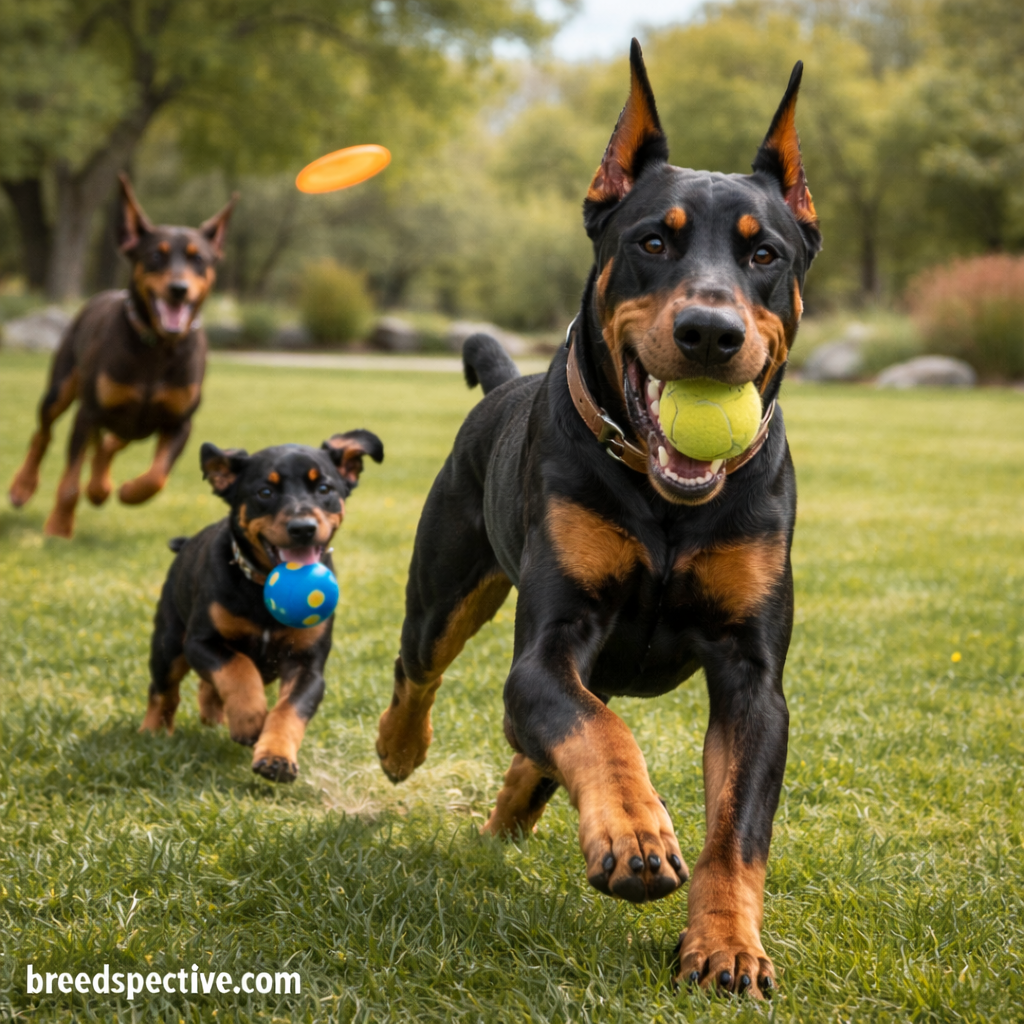
Dobermans are high-energy dogs that require daily physical and mental exercise. They were bred for stamina and responsiveness, not inactivity.
Typical exercise needs include:
- At least 1–2 hours of activity daily
- Structured walks, runs, or hikes
- Interactive play and training sessions
- Mental stimulation through tasks or puzzles
Without adequate exercise, Dobermans may become restless, anxious, or destructive.
Emotional Sensitivity and Attachment
One defining trait of the Doberman is its emotional closeness to its owner. This breed thrives on companionship and does not do well in isolation.
Emotional characteristics include:
- Strong attachment to primary caregivers
- Sensitivity to household stress
- Desire for physical closeness
- Discomfort with prolonged separation
Dobermans are often described as “velcro dogs” because of their need to stay near their people.
Social Behavior With People and Pets
With proper socialization, Dobermans are polite and confident around people and other animals. Their protective instincts are usually reserved for perceived threats.
Social traits include:
- Reserved but respectful with strangers
- Loyal and playful with family
- Can coexist with other dogs when socialized early
- Usually tolerant with respectful children
Early exposure to different environments, people, and pets is essential for balanced behavior.
Protective Instincts and Guarding Behavior
Dobermans were originally bred for personal protection, and this instinct remains strong today. However, true Doberman guarding behavior is controlled and intelligent rather than aggressive.
Protection-related traits include:
- Natural alertness
- Strong territorial awareness
- Calm confidence rather than reactivity
- Ability to assess situations
Well-bred Dobermans should not be excessively aggressive or fearful.
Behavior at Home
Inside the home, Dobermans are typically calm, affectionate, and attentive when their needs are met.
Common at-home behaviors include:
- Following owners from room to room
- Enjoying structured routines
- Relaxing quietly after exercise
- Seeking physical contact
They are not suited for being left alone in a yard or confined without interaction.
Lifestyle Fit: Who Is a Doberman Best For?
The Doberman Pinscher is best suited for owners who are active, engaged, and committed to training and companionship.
Ideal lifestyles include:
- Active individuals or families
- Owners with time for daily exercise
- Homes that value training and structure
- People seeking a loyal, protective companion
Less suitable situations:
- Sedentary households
- Long workdays with little interaction
- Owners wanting a low-maintenance dog
- Homes lacking consistent leadership
Common Challenges to Consider
While deeply rewarding, Dobermans are not an easy breed for everyone.
Potential challenges include:
- Separation-related behaviors
- High mental and physical demands
- Sensitivity to harsh training methods
- Need for ongoing socialization
Most challenges stem from unmet needs rather than temperament flaws.
Final Thoughts on Doberman Pinscher Temperament and Lifestyle
The Doberman Pinscher is a devoted, intelligent, and powerful companion that thrives in the right environment. When provided with structure, exercise, training, and affection, Dobermans are calm, confident, and deeply loyal dogs.
For owners willing to invest time and energy into their care, the Doberman offers unmatched companionship, reliability, and emotional connection. Understanding their temperament and lifestyle needs is the key to a successful and fulfilling partnership.