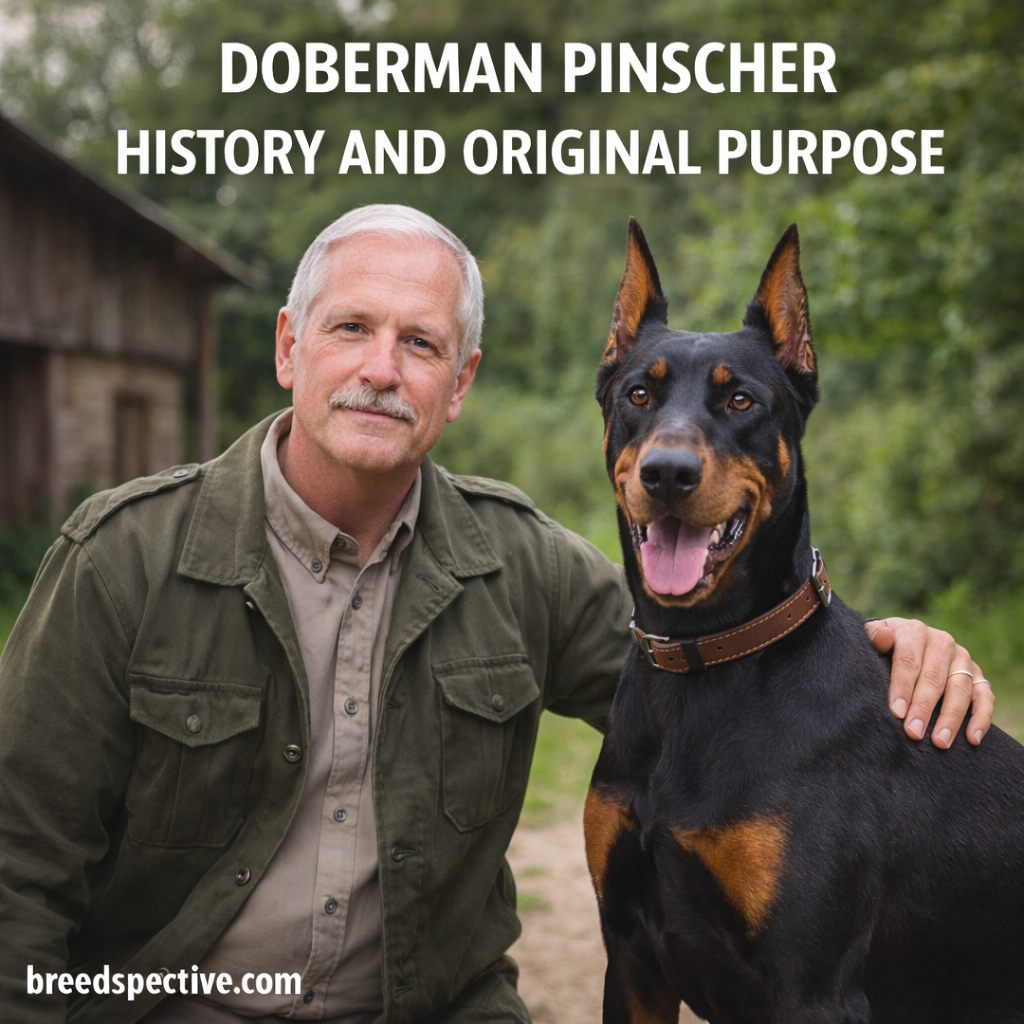
The Doberman Pinscher is a relatively modern breed with a clear, intentional purpose behind its creation. Unlike many ancient working dogs, the Doberman was developed in response to specific real-world needs—protection, reliability, intelligence, and loyalty. Understanding the breed’s history helps explain its alert temperament, athletic build, and deep bond with its owners today.
The Origins of the Doberman Pinscher
The Doberman Pinscher originated in Germany in the late 19th century. The breed was developed by Louis Dobermann, who sought a dog that could provide personal protection while he worked in dangerous environments.
Key factors that shaped the breed’s creation include:
- Need for a reliable guard and companion dog
- Desire for intelligence and trainability
- Requirement for courage without uncontrolled aggression
- Preference for a dog loyal to one primary handler
The Doberman was designed from the beginning to be both a working protector and a trustworthy companion.
The Breed’s Original Purpose
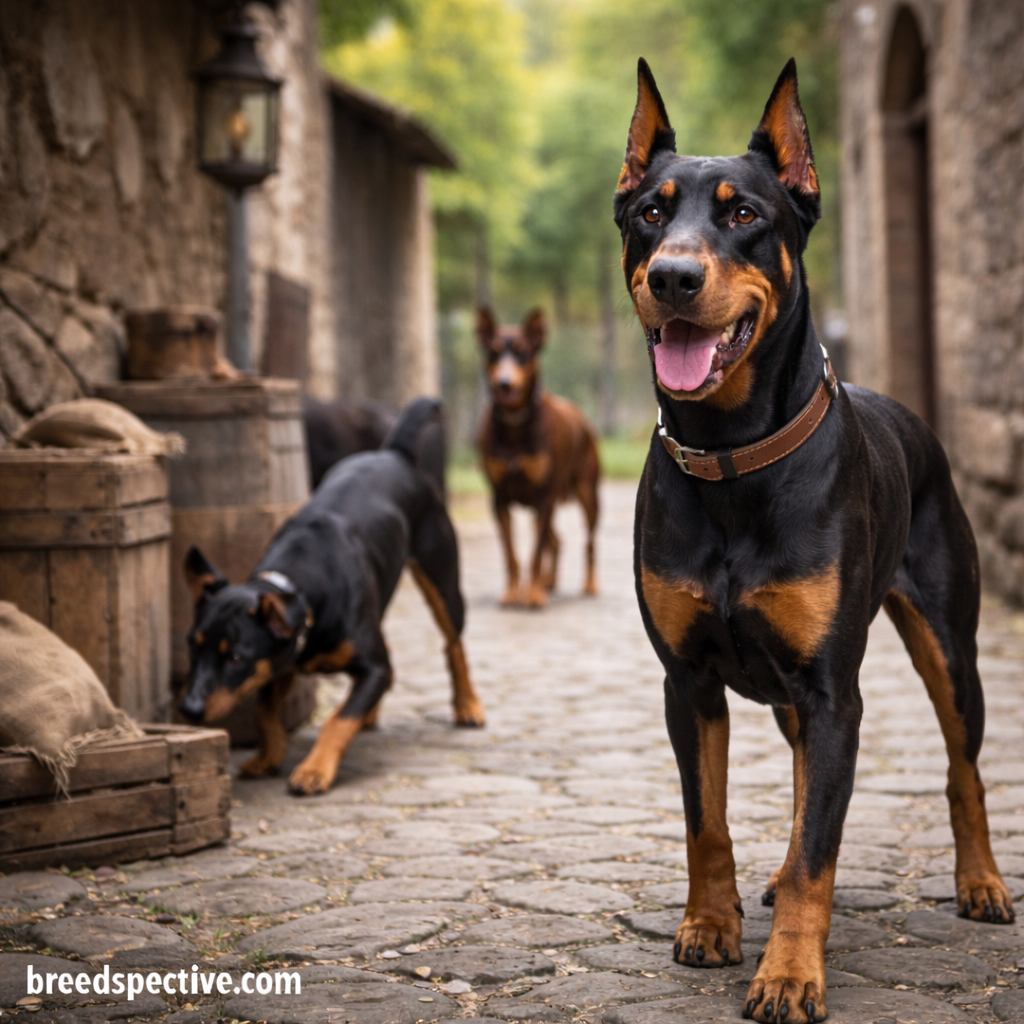
The Doberman Pinscher was originally bred as a personal protection dog. Its role was to guard its handler, deter threats, and respond decisively if danger arose.
Primary original purposes included:
- Personal protection
- Guarding valuables and property
- Escorting individuals in risky situations
- Acting as a deterrent through presence alone
This purposeful breeding explains the Doberman’s natural alertness and strong protective instincts.
Development Through Selective Breeding
Because the Doberman is a relatively new breed, its development involved deliberate selection rather than natural evolution. Breeders focused on combining traits from several working breeds to achieve the desired result.
Traits prioritized during development included:
- Athleticism and endurance
- Intelligence and problem-solving ability
- Stable temperament
- Strong loyalty to humans
The result was a sleek, powerful dog capable of both physical performance and emotional connection.
Early Roles in Society
As the breed gained recognition, Dobermans quickly proved their value beyond personal protection. Their intelligence and obedience made them suitable for various working roles.
Early uses included:
- Police and military service
- Guarding industrial facilities
- Personal security dogs
- Search and patrol work
Their ability to follow commands, assess situations, and remain focused under pressure made them highly respected working dogs.
Dobermans in Military and Law Enforcement History
Doberman Pinschers were widely used during the early and mid-20th century, particularly in military and police roles. Their speed, courage, and responsiveness were highly valued.
Notable contributions included:
- Messenger and sentry duties
- Patrol and detection work
- Guarding personnel and equipment
These roles further cemented the breed’s reputation as a dependable working dog.
Evolution of the Breed’s Reputation
Over time, the Doberman’s image shifted from purely functional to both functional and companion-oriented. While still respected for protection work, the breed increasingly entered family homes.
Changes in public perception included:
- Recognition of loyalty and affection
- Appreciation of intelligence and trainability
- Increased emphasis on temperament stability
Responsible breeding played a major role in shaping the modern Doberman’s balanced personality.
How History Influences Modern Doberman Behavior
Many modern Doberman traits are direct reflections of the breed’s original purpose.
Examples include:
- Strong attachment to owners due to handler-focused breeding
- High energy and stamina from working-dog roots
- Natural guarding instincts without constant aggression
- Desire for structure and mental engagement
Understanding these traits helps owners meet the breed’s needs more effectively.
Common Misconceptions About Doberman History
Dobermans are sometimes misunderstood due to their protective nature and confident appearance. Historically, aggression was never the goal.
Important clarifications include:
- Dobermans were bred for controlled protection, not hostility
- Stable temperament was always a priority
- Fearfulness and unpredictability are not breed traits
Well-bred Dobermans are calm, discerning, and deeply loyal.
Transition From Working Dog to Companion
As security needs evolved, Dobermans increasingly became companion dogs while still excelling in modern working roles like sport, obedience, and service.
Modern roles include:
- Family guardians
- Competitive obedience and agility dogs
- Service and therapy dogs
- Active lifestyle companions
Despite this transition, the breed has retained its working-dog mindset.
Why Doberman History Still Matters Today
Knowing the Doberman Pinscher’s history is essential for responsible ownership. The breed thrives when its instincts are acknowledged and guided rather than ignored.
Key lessons for owners include:
- Provide daily physical and mental stimulation
- Offer structure and consistent leadership
- Maintain close human interaction
- Respect the breed’s protective instincts
History explains why the Doberman needs engagement, purpose, and companionship.
Final Thoughts on Doberman Pinscher History and Purpose
The Doberman Pinscher is a breed born from intention, not chance. Developed to protect, serve, and bond closely with humans, it remains one of the most loyal and intelligent dog breeds today.
By understanding the Doberman’s origins and original purpose, owners gain insight into the breed’s behavior, needs, and remarkable devotion. When respected and properly guided, the Doberman continues to fulfill its historic role—as a steadfast protector and trusted companion.