
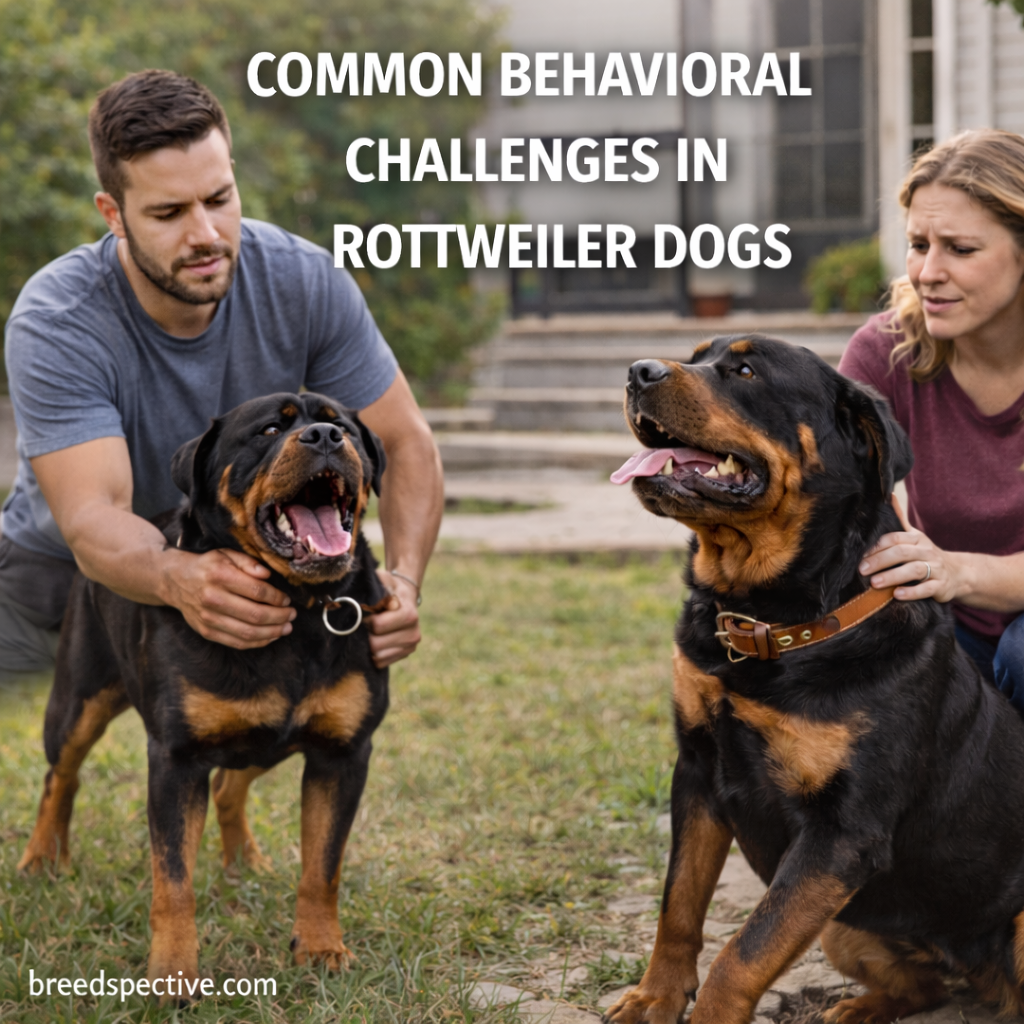
Rottweilers are intelligent, loyal, and confident dogs—but like all breeds, they can develop behavioral challenges if their needs aren’t properly met. Many issues associated with Rottweilers are not the result of aggression or stubbornness, but rather lack of structure, insufficient training, or unmet physical and mental needs.
This guide explores the most common behavioral challenges in Rottweiler dogs, why they occur, and how owners can address them responsibly and effectively.
Understanding Rottweiler Behavior at Its Core
Rottweilers were bred as working dogs, originally tasked with guarding, herding, and protecting valuable resources. Because of this background, they tend to be:
- Highly alert and observant
- Naturally protective
- Confident decision-makers
- Strongly bonded to their family
When these traits are not guided through training and structure, they can sometimes manifest as behavioral problems.
Overprotectiveness and Guarding Behavior
One of the most common challenges in Rottweilers is excessive guarding behavior.
Why It Happens
- Strong protective instincts
- Lack of early socialization
- Reinforcement of suspicious behavior
- Inconsistent leadership
How It May Appear
- Blocking strangers from approaching family members
- Excessive barking at visitors
- Stiff posture or intense staring
- Difficulty relaxing around unfamiliar people
How to Address It
- Early and ongoing socialization
- Calm, confident leadership
- Teaching neutrality rather than friendliness
- Structured exposure to new people and environments
Balanced training helps protective instincts remain controlled rather than reactive.
Leash Reactivity and Dog Aggression
Some Rottweilers may display reactivity toward other dogs, especially on leash.
Common Triggers
- Frustration from restricted movement
- Poor early social experiences
- Lack of controlled dog-to-dog exposure
- Handler tension transferred through the leash
Signs of Reactivity
- Lunging or pulling
- Barking or growling at other dogs
- Stiff body language
- Difficulty disengaging
Management Strategies
- Loose-leash walking training
- Gradual desensitization to other dogs
- Rewarding calm focus on the handler
- Avoiding overcrowded or overwhelming environments
Not all Rottweilers need to be social butterflies—neutral behavior is the goal.
Separation Anxiety and Over-Attachment
Rottweilers form strong bonds with their families, which can sometimes lead to separation-related issues.
Signs of Separation Anxiety
- Destructive behavior when left alone
- Excessive barking or whining
- Pacing or drooling
- Clingy behavior when owners are home
Why It Develops
- Constant companionship without independence training
- Sudden schedule changes
- Emotional sensitivity paired with strong loyalty
Helpful Solutions
- Gradual independence training
- Predictable routines
- Mental enrichment when alone
- Avoiding dramatic departures and arrivals
Teaching independence early is key to preventing long-term anxiety.
Destructive Behavior From Boredom
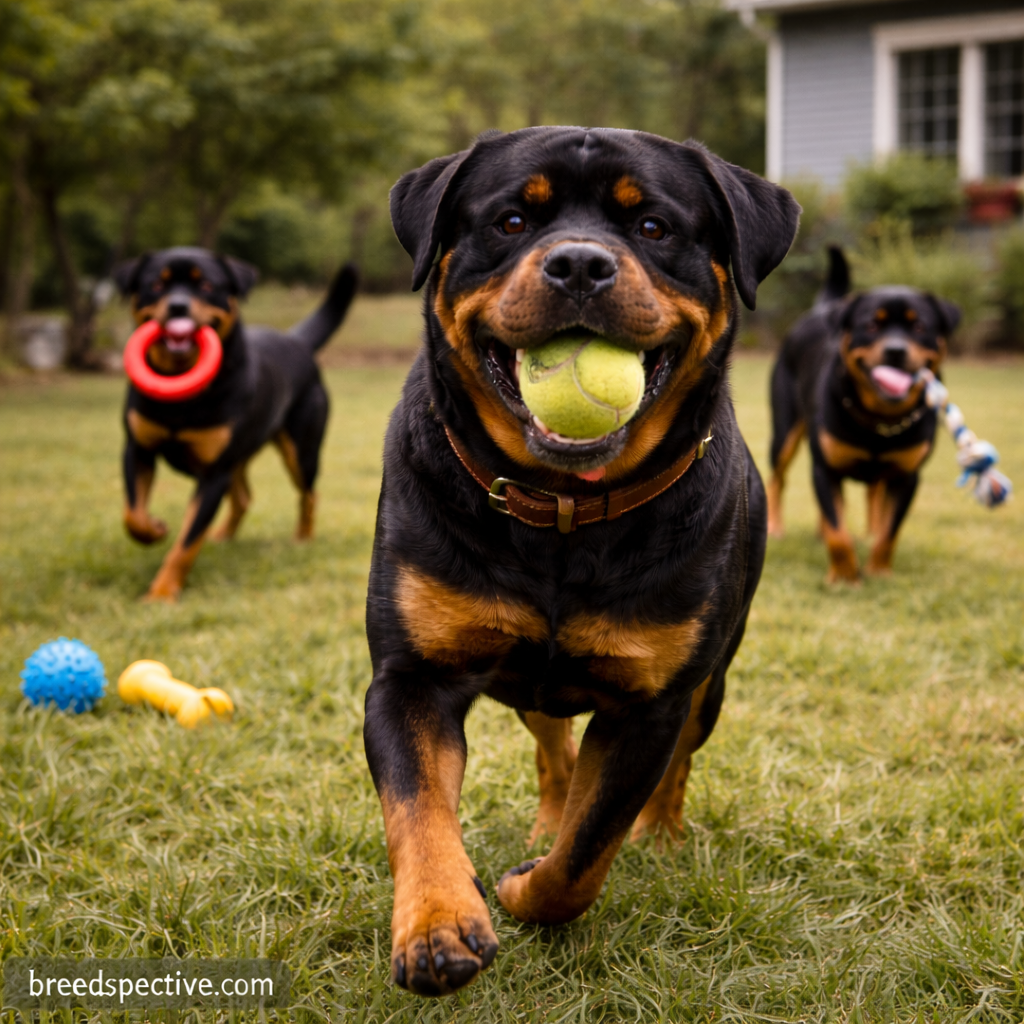
Rottweilers are intelligent dogs that need a job, even in a family home.
Common Destructive Behaviors
- Chewing furniture or household items
- Digging
- Excessive pacing
- Attention-seeking misbehavior
Root Causes
- Insufficient physical exercise
- Lack of mental stimulation
- Long periods of inactivity
Prevention Tips
- Daily structured exercise
- Obedience or skill training
- Puzzle toys and enrichment games
- Giving the dog clear responsibilities
A mentally fulfilled Rottweiler is far less likely to become destructive.
Jumping and Impulse Control Issues
Because Rottweilers are large and powerful, poor impulse control can quickly become a problem.
Common Scenarios
- Jumping on people
- Rushing through doors
- Ignoring commands when excited
Why It Matters
Even friendly behavior can be unsafe if the dog lacks self-control due to size and strength.
Training Focus
- Teaching sit and wait commands
- Rewarding calm behavior
- Consistent rules for greetings
- Avoiding reinforcement of jumping
Impulse control is essential for safe, polite behavior.
Stubbornness or Selective Listening
Rottweilers are sometimes labeled as stubborn, but this is often a misunderstanding.
What’s Really Happening
- High intelligence leads to independent thinking
- Inconsistent training causes confusion
- Lack of motivation or clarity
Improving Responsiveness
- Use clear, consistent commands
- Keep training sessions engaging
- Reward desired behavior generously
- Avoid harsh or repetitive drilling
Rottweilers respond best to confident, fair leadership rather than force.
Fear-Based Behaviors
Poor socialization or negative experiences can lead to fear-driven behaviors.
Signs to Watch For
- Cowering or avoidance
- Growling when approached
- Freezing or shaking
- Defensive reactions
Addressing Fear Issues
- Slow, positive exposure to triggers
- Building confidence through success-based training
- Avoiding punishment for fear responses
- Seeking professional guidance when needed
Fear should always be handled with patience, not pressure.
The Role of Training and Socialization
Most behavioral challenges in Rottweilers are preventable or manageable with the right approach.
Key foundations include:
- Early socialization during puppyhood
- Consistent training throughout life
- Clear boundaries and routines
- Adequate exercise and mental stimulation
Responsible ownership makes the biggest difference in long-term behavior.
When to Seek Professional Help
If behavioral issues escalate or feel unmanageable, professional support can be invaluable.
Consider help from:
- Certified professional dog trainers
- Behavior specialists with large-breed experience
- Trainers who emphasize positive, structured methods
Early intervention often prevents problems from becoming ingrained.
Final Thoughts on Rottweiler Behavioral Challenges
Rottweilers are not inherently difficult dogs—but they require structure, engagement, and leadership. Most behavioral challenges stem from unmet needs rather than bad temperament.
With consistent training, proper socialization, and an understanding of the breed’s working roots, Rottweilers can grow into calm, confident, and well-mannered companions.
Understanding these common challenges allows owners to address issues proactively and build a stronger, more balanced relationship with their dog.