Grooming Mistakes That Cause Skin Irritation

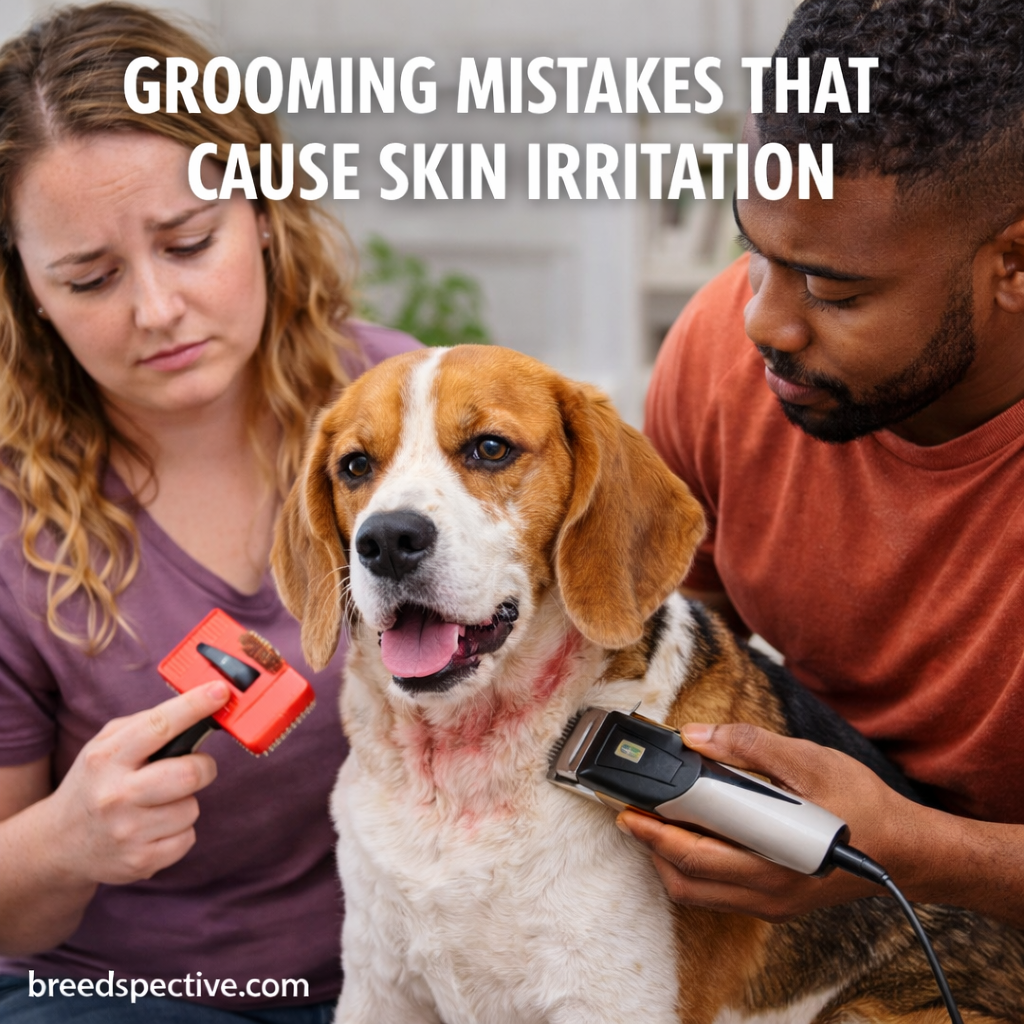
Dog experiencing skin irritation during improper grooming, illustrating common grooming mistakes that cause discomfort.
A dog showing skin irritation during grooming, highlighting common mistakes that can harm skin health. breedspective.com.

Grooming plays a major role in keeping a pet’s coat healthy and comfortable—but when done incorrectly, it can lead to skin irritation, itching, and long-term discomfort. Many grooming-related skin issues are caused not by neglect, but by well-meaning mistakes made during routine care.

This guide breaks down the most common grooming mistakes that cause skin irritation and explains how to avoid them for healthier skin and a happier pet.

Continue reading “Grooming Mistakes That Cause Skin Irritation”
Seasonal Shedding Cycles in Dogs and Cats

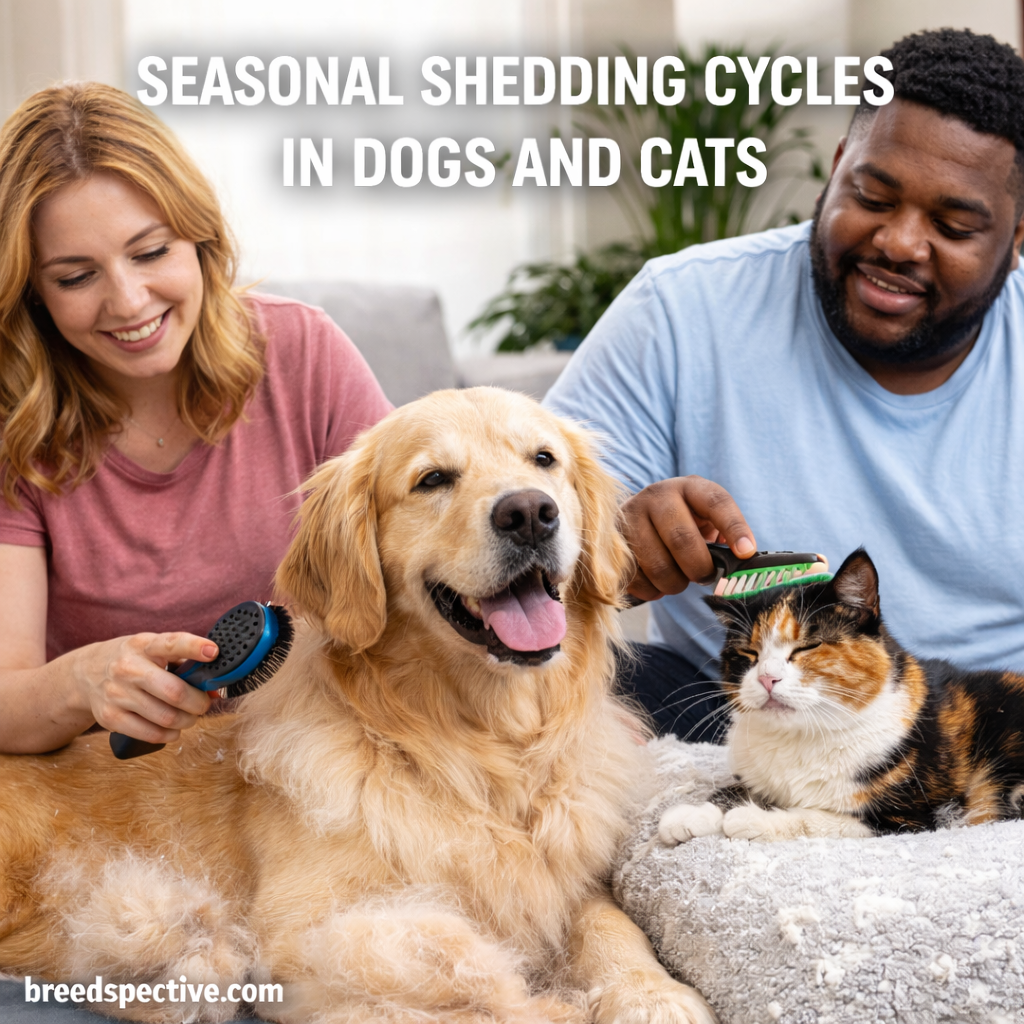
People grooming a dog and a cat indoors during shedding season, illustrating seasonal coat changes and routine grooming care.
Seasonal shedding affects both dogs and cats, making regular grooming essential for maintaining healthy coats year-round. breedspective.com.

Shedding is a natural and healthy process for both dogs and cats. While some pets shed lightly year-round, many experience noticeable seasonal shedding cycles that can catch owners off guard. Understanding why shedding happens, when it peaks, and how to manage it can make coat care far easier and less stressful for both pets and their families.

This guide explains seasonal shedding cycles in dogs and cats, what influences them, and how to adjust grooming routines throughout the year.

Continue reading “Seasonal Shedding Cycles in Dogs and Cats”

Grooming Needs by Cat Coat Length

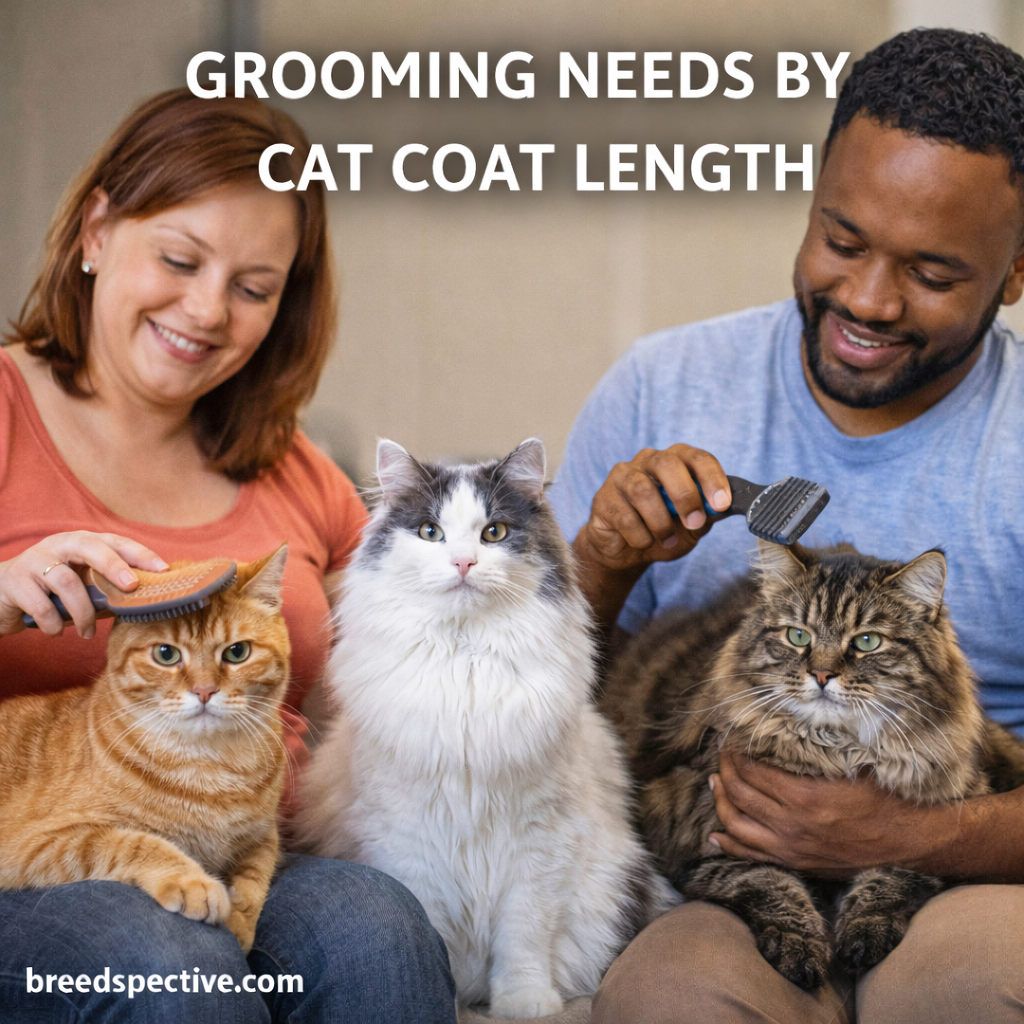
Cats with short, medium, and long coats being groomed by owners, illustrating different grooming needs by coat length.
Owners grooming cats with different coat lengths, highlighting varied grooming and coat care needs. breedspective.com.

A cat’s coat length plays a major role in how much grooming and maintenance they need. While all cats groom themselves naturally, differences in fur length, density, and texture affect shedding, matting, hairballs, and overall coat health. Understanding grooming needs by coat length helps owners create routines that keep cats comfortable, healthy, and looking their best.

This article breaks down grooming requirements for short-haired, medium-haired, and long-haired cats, along with practical tips for each coat type.

Continue reading “Grooming Needs by Cat Coat Length”

Low-Shedding Dog Breeds Explained

Low-shedding dog breeds pictured with owners, showing different coat types commonly associated with reduced shedding.
Low-shedding dog breeds shown with owners, illustrating coat types that shed less and require regular grooming. breedspective.com.

Low-shedding dog breeds are often sought after by people who want a cleaner home, reduced allergens, or easier coat maintenance. While no dog is completely shed-free, some breeds shed far less than others due to coat type, hair growth cycles, and grooming needs.

This guide explains what “low-shedding” really means, why some dogs shed less, and which types of breeds fall into this category—along with the care they require.

Continue reading “Low-Shedding Dog Breeds Explained”

High-Shedding Dog Breeds and How to Manage Fur

High-shedding dog breeds being brushed indoors by people, showing coat shedding and fur management.
High-shedding dog breeds receiving grooming to illustrate shedding control and coat management routines. breedspective.com.

Some dogs shed a little. Others seem to release an endless supply of fur year-round. High-shedding dog breeds are completely normal—but without the right grooming routine, shedding can quickly overwhelm your home, furniture, and clothing.

This guide explains which dog breeds shed the most, why shedding happens, and how to manage fur effectively with daily habits, grooming tools, and lifestyle adjustments.

Continue reading “High-Shedding Dog Breeds and How to Manage Fur”

Grooming Needs by Dog Coat Type

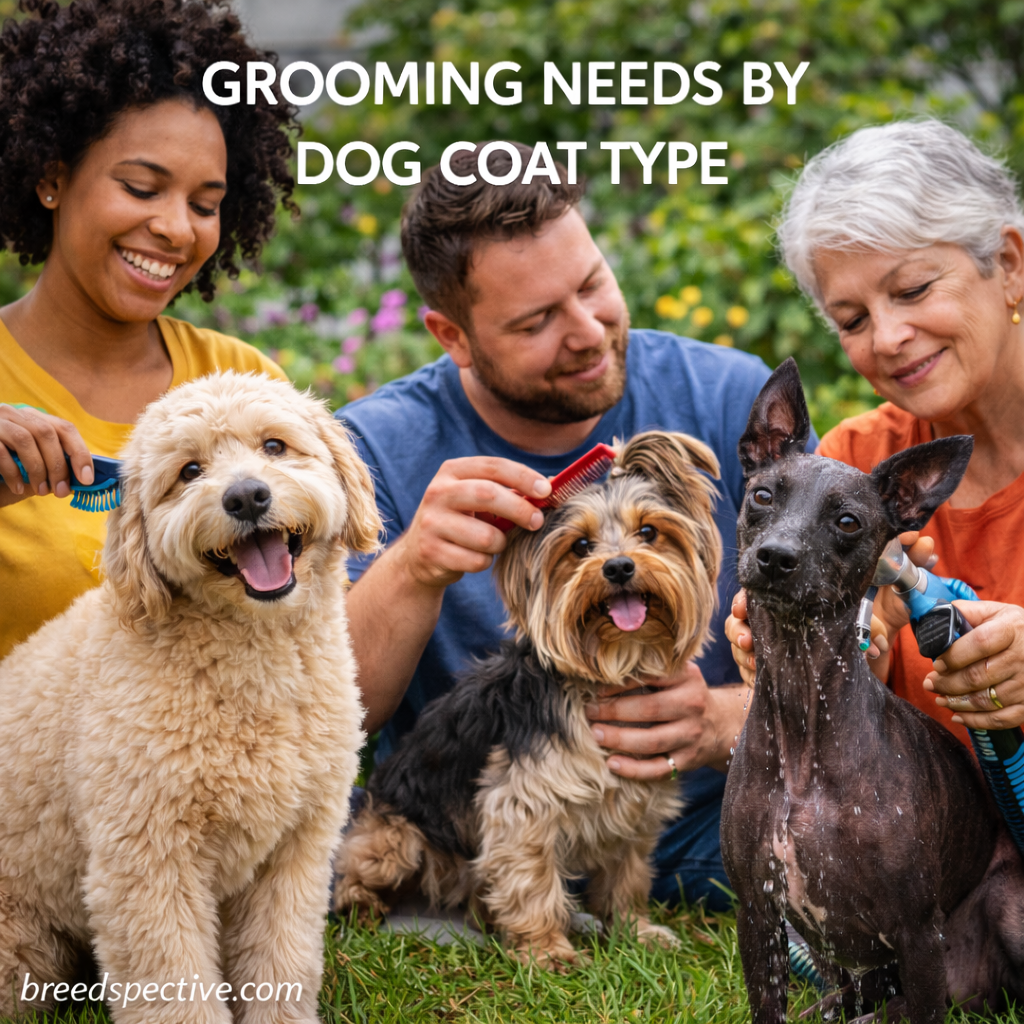
People grooming dogs with different coat types, including curly, long-haired, and hairless coats, demonstrating coat-specific grooming needs.
Dogs with different coat types being groomed, illustrating how grooming needs vary by coat structure. breedspective.com.

Not all dogs have the same grooming needs. A dog’s coat type plays a major role in how often it needs brushing, bathing, trimming, and professional grooming. Understanding coat-specific care helps owners keep their dogs comfortable, healthy, and looking their best — while avoiding common grooming mistakes.

This guide breaks down grooming needs by dog coat type so you can build the right routine for your dog’s unique coat.

Continue reading “Grooming Needs by Dog Coat Type”