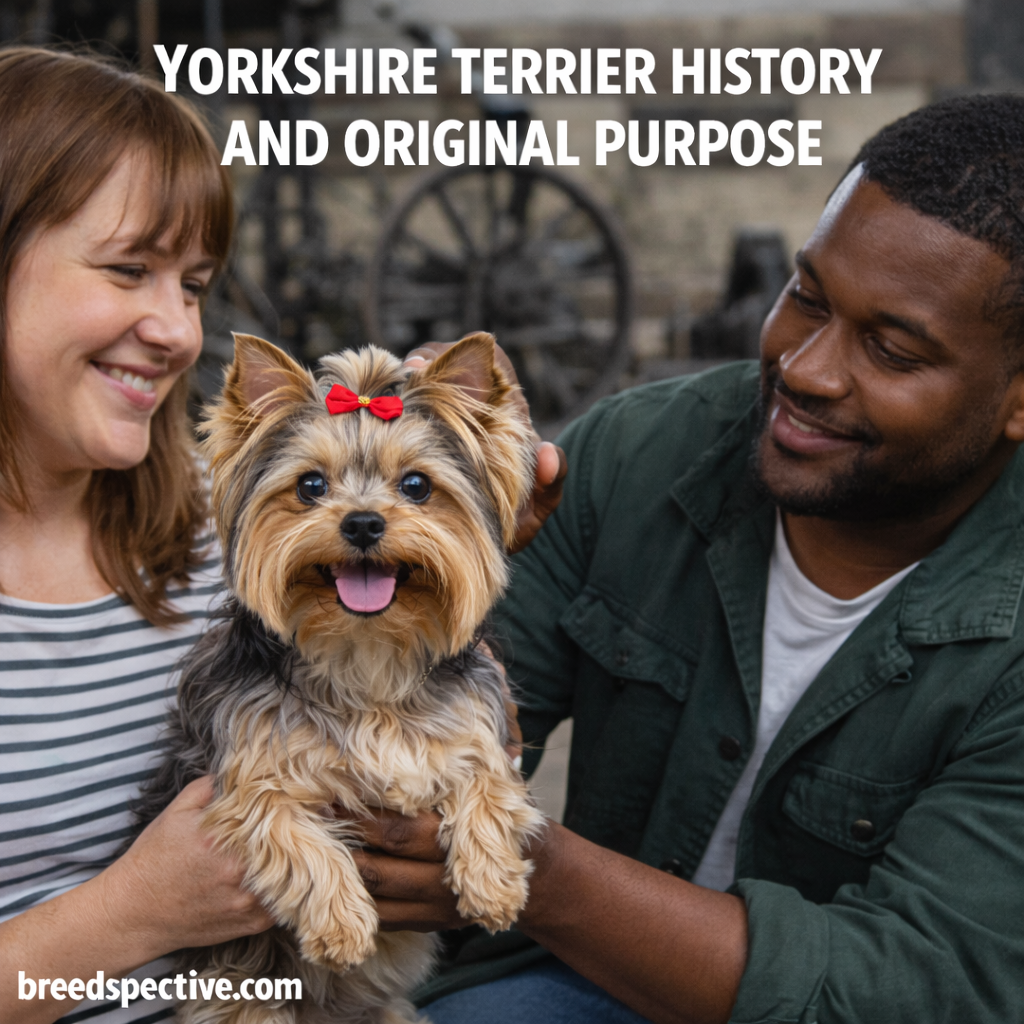
The Yorkshire Terrier is one of the most recognizable toy breeds in the world, known today for its silky coat and confident personality. However, this small companion dog has surprisingly rugged roots. Originally bred for work rather than luxury, the Yorkshire Terrier’s history reveals a practical purpose shaped by industrial life and working-class needs.
Understanding where the breed came from helps explain its bold temperament, alert nature, and strong prey drive.
Origins of the Yorkshire Terrier
The Yorkshire Terrier originated in northern England during the mid-19th century, particularly in the counties of Yorkshire and Lancashire.
Key historical influences include:
- Industrial Revolution-era working communities
- Textile mills and factories
- Crowded urban housing conditions
- The need for compact but effective pest control
Workers required small dogs that were easy to keep yet capable of hunting vermin in tight spaces.
Ancestral Breeds Behind the Yorkshire Terrier
The Yorkshire Terrier did not develop from a single breed but rather from several small terrier types brought together over time.
Breeds believed to contribute to the Yorkshire Terrier include:
- Skye Terrier
- Paisley Terrier
- Waterside Terrier (now extinct)
- Clydesdale Terrier
These dogs were selectively bred for size, agility, and determination rather than appearance.
Original Purpose as a Working Dog
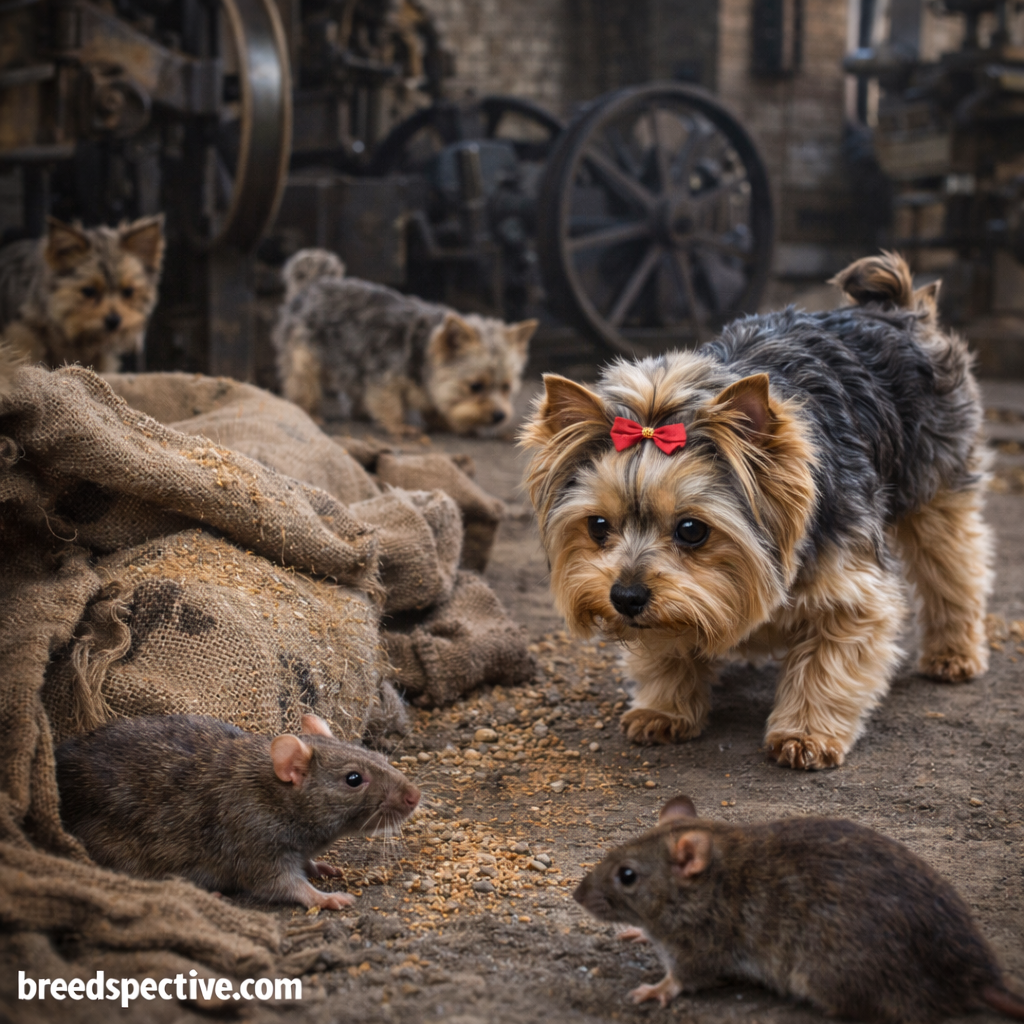
Despite its modern image, the Yorkshire Terrier was originally a working-class dog.
Its primary roles included:
- Hunting rats and mice in mills and mines
- Controlling vermin in homes and businesses
- Navigating narrow spaces where larger dogs could not
Their small size allowed them to be carried easily, while their courage and speed made them effective hunters.
Ratting and Terrier Instincts
Yorkshire Terriers were highly valued for their ratting ability, a trait common among terriers.
Key working traits included:
- Strong prey drive
- Fearlessness despite small size
- Quick reflexes
- High alertness
These instincts remain part of the breed’s temperament today, often showing up as chasing behavior or strong curiosity.
Transition From Working Dog to Companion
As industrial conditions improved and vermin control became less necessary, the Yorkshire Terrier’s role began to change.
Factors that influenced this transition:
- Victorian-era interest in dog breeding and showing
- Growing appreciation for small companion dogs
- Selective breeding for appearance and coat texture
The breed’s size gradually decreased, and its coat became longer and silkier as companionship replaced labor as its main purpose.
Rise in Popularity Among Upper Classes
By the late 1800s, Yorkshire Terriers had gained attention beyond the working class.
Reasons for their rising popularity:
- Elegant appearance
- Portable size
- Confident and lively personality
- Suitability as a lapdog
They became fashionable companions, particularly among women, and began appearing in dog shows.
Early Breed Standards and Recognition
Formal breed standards helped solidify the Yorkshire Terrier’s identity.
Key milestones include:
- Establishment of size and coat standards
- Recognition by kennel clubs
- Increased consistency in appearance
These standards emphasized the long, straight coat and compact build still associated with the breed today.
How History Shaped the Modern Yorkshire Terrier
The Yorkshire Terrier’s working origins still influence its behavior.
Historical traits reflected today include:
- Alert watchdog tendencies
- Vocal nature
- Confidence and boldness
- Strong attachment to owners
While no longer used for ratting, the breed retains the instincts of a determined terrier.
Yorkshire Terriers in the Modern World
Today, Yorkshire Terriers are primarily companion dogs, but their adaptability keeps them popular.
Modern roles include:
- Family pets
- Apartment companions
- Show dogs
- Therapy and emotional support animals
Their blend of history and modern refinement makes them both charming and resilient.
Common Misconceptions About the Breed’s History
Many people assume Yorkshire Terriers were always lapdogs, but this is far from the truth.
Common myths include:
- They were bred solely for companionship
- They lack toughness or courage
- Their size limits their intelligence or drive
In reality, the breed’s small stature hides a strong working heritage.
Final Thoughts
The Yorkshire Terrier’s history is a story of transformation — from gritty factory floors to refined living rooms. Originally bred as a fearless vermin hunter, this small dog evolved into one of the world’s most beloved companion breeds without losing its confidence or determination.
Understanding the Yorkshire Terrier’s original purpose provides valuable insight into its temperament, energy, and behavior today. Beneath the silky coat lies the heart of a true terrier.