
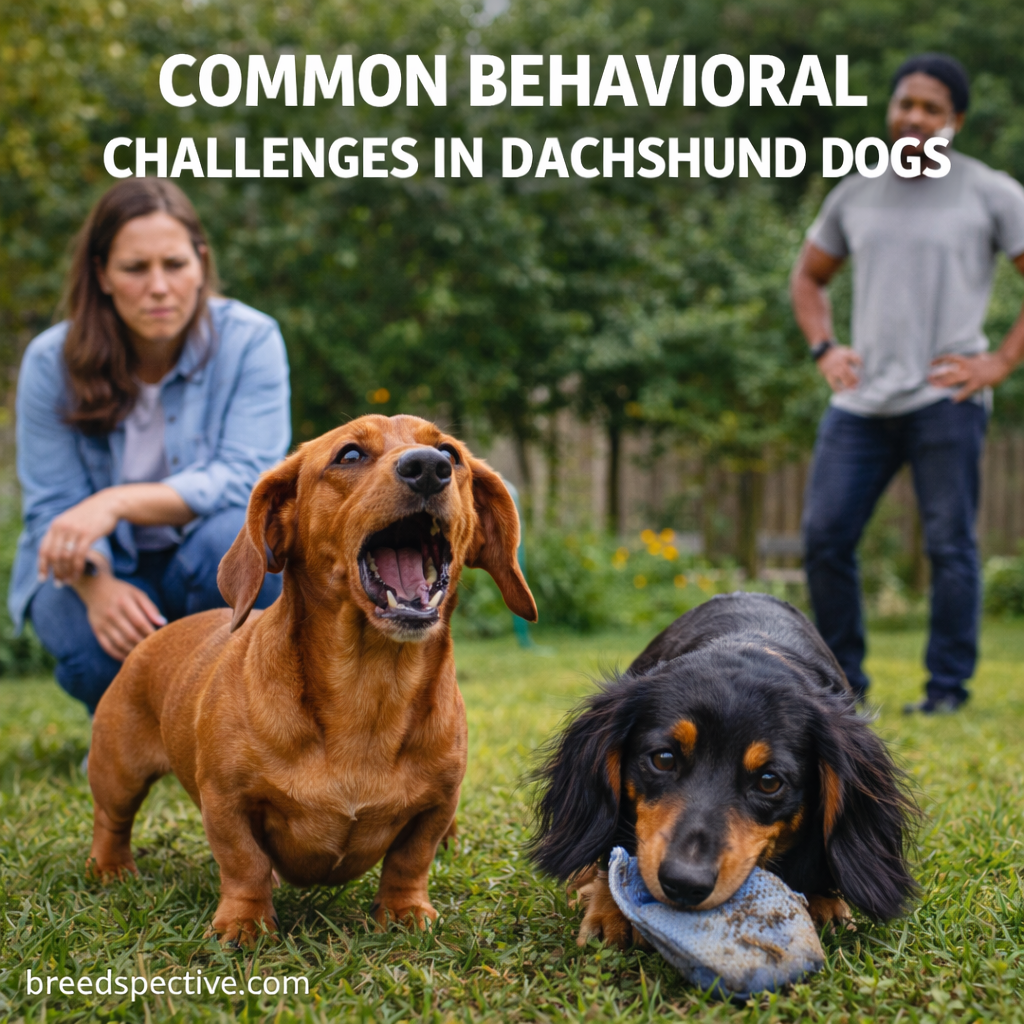
Dachshunds are intelligent, loyal, and full of personality—but like any breed, they come with behavioral challenges that can surprise unprepared owners. Many of these behaviors are not flaws, but natural expressions of instincts shaped by the breed’s hunting history. Understanding common behavioral challenges in Dachshund dogs makes it easier to manage them effectively and build a happier relationship.
This guide explains the most frequent Dachshund behavior issues, why they happen, and how owners can address them in a healthy, constructive way.
Why Dachshunds Are Prone to Behavioral Challenges
Dachshunds were bred to hunt independently underground, often out of sight and earshot of humans. This background shaped a dog that is confident, persistent, and comfortable making its own decisions.
Key traits influencing behavior include:
- Strong independence
- High prey drive
- Alert, vocal nature
- Deep attachment to owners
When these traits are misunderstood or under-managed, behavioral issues can develop.
Excessive Barking

Barking is one of the most common complaints among Dachshund owners. This behavior is deeply rooted in their role as alert hunting dogs.
Common barking triggers include:
- Strangers approaching the home
- Noises outside doors or windows
- Boredom or lack of stimulation
- Separation anxiety
Dachshunds were bred to bark loudly to signal their location underground, so silence does not come naturally. Teaching a quiet command, managing triggers, and providing adequate mental stimulation can significantly reduce excessive barking.
Stubbornness and Training Resistance
Dachshunds are intelligent but independent thinkers. They often understand commands perfectly but choose whether or not to comply.
Training challenges often include:
- Ignoring commands they find unnecessary
- Becoming bored with repetitive training
- Testing boundaries with owners
Positive reinforcement, short training sessions, and clear consistency work far better than punishment. Once trust and motivation are established, Dachshunds can be very capable learners.
Separation Anxiety
Because Dachshunds form strong bonds with their owners, they may struggle when left alone for long periods.
Signs of separation anxiety include:
- Excessive barking or whining when alone
- Destructive behavior
- Pacing or restlessness
- Accidents indoors despite being house-trained
Gradual desensitization, predictable routines, and providing comfort items can help. In severe cases, professional training support may be necessary.
Digging Behavior
Digging is a natural Dachshund instinct tied directly to their original purpose as burrow hunters.
Common digging targets include:
- Gardens and flower beds
- Couch cushions or blankets
- Carpets or rugs
Rather than trying to eliminate digging entirely, it is often more effective to redirect it. Designated digging areas, scent games, and outdoor exploration help satisfy this instinct safely.
Prey Drive and Chasing
Dachshunds were bred to track and confront animals such as badgers, rabbits, and foxes. This makes chasing behavior very common.
Prey-driven behaviors may include:
- Chasing squirrels, birds, or cats
- Pulling strongly on the leash
- Fixating on scents
Strong leash control, recall training, and secure fencing are essential for safety. Off-leash freedom should only be allowed in controlled environments.
Possessiveness and Resource Guarding
Some Dachshunds may become possessive of food, toys, beds, or even people.
Signs of resource guarding include:
- Growling when approached
- Snapping when items are removed
- Tension around other pets
Early training, trading exercises, and teaching positive associations with sharing can help prevent escalation. Addressing this behavior early is important for household harmony.
Sensitivity to Handling
Dachshunds can be sensitive to physical handling, especially rough or unexpected touch.
Common issues include:
- Discomfort with being picked up incorrectly
- Resistance to nail trimming or grooming
- Snapping when startled
Their long backs also make proper handling critical. Teaching children and visitors how to handle Dachshunds gently reduces stress and defensive reactions.
House Training Difficulties
House training can take longer with Dachshunds compared to some other breeds.
Contributing factors include:
- Small bladder size
- Sensitivity to cold or wet weather
- Strong-willed temperament
Consistency, frequent potty breaks, and positive reinforcement are essential. Punishment-based approaches often delay progress.
Fearfulness or Reactivity
Without proper socialization, Dachshunds may become fearful or reactive toward new situations.
This can appear as:
- Barking or lunging at unfamiliar dogs
- Nervousness around strangers
- Avoidance of new environments
Early exposure to different people, sounds, and environments helps build confidence and emotional resilience.
How to Reduce Behavioral Problems in Dachshunds
Most Dachshund behavioral challenges can be improved with the right approach.
Effective strategies include:
- Daily mental and physical stimulation
- Positive reinforcement training
- Consistent routines and boundaries
- Early socialization
- Respect for breed instincts
Understanding why a behavior exists is often the key to managing it successfully.
When to Seek Professional Help
If behavioral issues become intense, persistent, or unsafe, professional support can be invaluable.
Consider seeking help if:
- Aggression escalates
- Anxiety interferes with daily life
- Training progress stalls
- Household safety is at risk
Certified trainers or behavior specialists experienced with small, independent breeds can offer tailored solutions.
Final Thoughts
Dachshunds are bold, intelligent dogs with deeply ingrained instincts. While they may present behavioral challenges, most issues stem from their history as fearless, independent hunters—not from stubbornness or defiance.
With patience, understanding, and proper training, Dachshund behavioral challenges can be managed successfully. When their needs are met, Dachshunds reward their owners with loyalty, affection, and an endlessly entertaining personality.