
The Dachshund is one of the most recognizable dog breeds in the world, known for its long body, short legs, and confident personality. While today they are beloved companion dogs, Dachshunds were originally bred for a very specific and demanding job. Understanding Dachshund history and original purpose helps explain many of the breed’s modern traits, from their bravery and stubborn streak to their strong prey drive and loyalty.
This article explores where the Dachshund came from, what it was bred to do, and how its working past still shapes the breed today.
Origins of the Dachshund Breed
The Dachshund originated in Germany, with records of similar dogs dating back to at least the 15th century. The breed’s name comes directly from its purpose.
- “Dachs” means badger
- “Hund” means dog
Literally translated, Dachshund means badger dog.
German hunters needed a dog that could track, chase, and confront badgers in underground burrows. These dogs had to be fearless, persistent, and physically designed to work below ground in tight spaces.
Early Dachshunds were developed by selectively breeding short-legged scent hounds with strong chests, powerful forelegs, and elongated bodies. This unique structure allowed them to dig efficiently and maneuver through tunnels.
Original Purpose: Hunting Badgers Underground
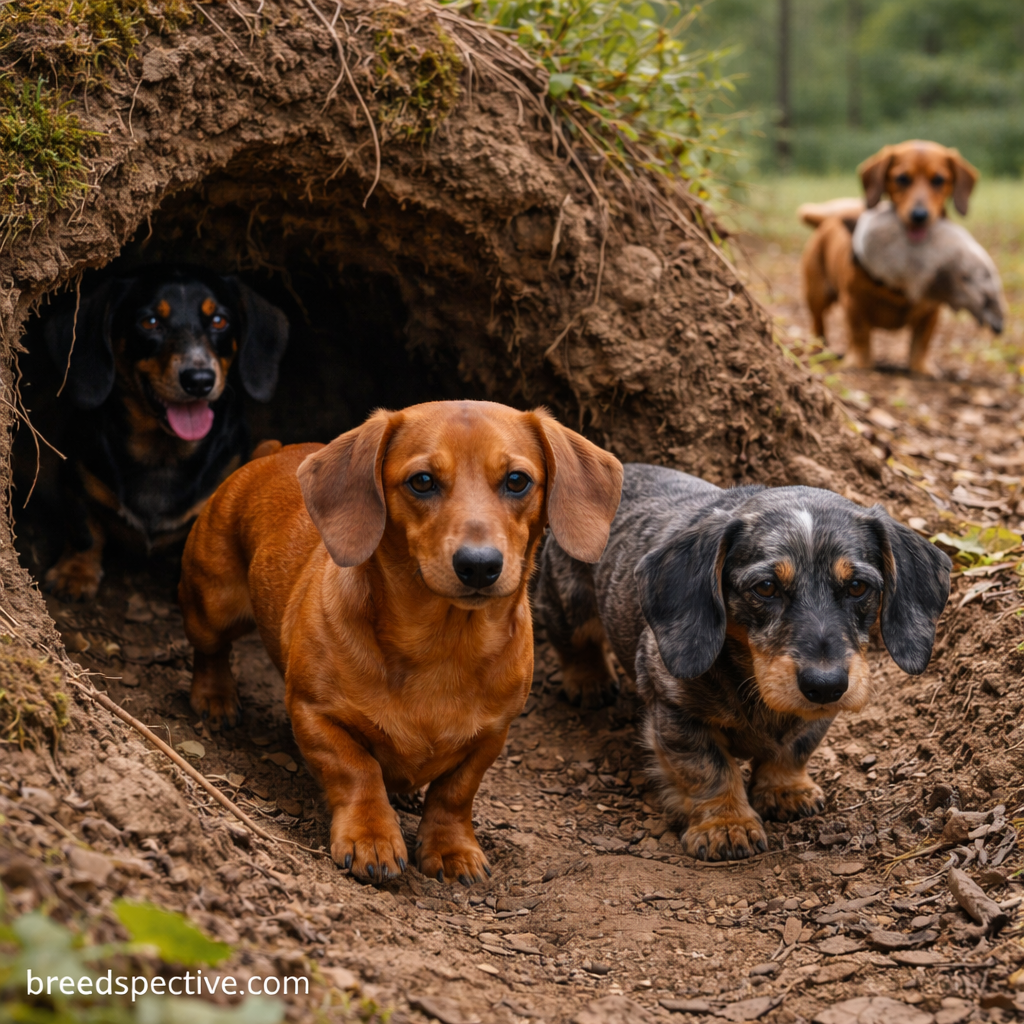
The primary role of the Dachshund was to hunt badgers, a dangerous and aggressive animal capable of inflicting serious injuries. This job required a dog with exceptional courage and determination.
Key tasks Dachshunds were bred to perform included:
- Tracking badger scent above ground
- Entering underground burrows
- Forcing badgers out or holding them at bay
- Alerting hunters through barking
Unlike pack-hunting dogs, Dachshunds often worked independently. Once underground, they had to rely on their own judgment, which contributed to the breed’s strong-willed and independent nature.
Physical Traits Shaped by Function
Every major physical characteristic of the Dachshund served a purpose tied to hunting.
Functional traits include:
- Long, narrow body to navigate tunnels
- Short, powerful legs for digging
- Broad chest for lung capacity and strength
- Loose skin to reduce injury from bites
- Strong paws with thick pads
Even their loud, deep bark was intentional. Hunters needed to hear their dog from underground to track its location and progress.
These physical features remain defining characteristics of the breed today, even though most Dachshunds no longer hunt.
Development of Coat Types
As Dachshunds spread across different regions and hunting needs evolved, breeders developed multiple coat varieties.
The three recognized coat types include:
- Smooth-coated Dachshunds, the earliest and most common type
- Long-haired Dachshunds, likely influenced by spaniel-type dogs
- Wire-haired Dachshunds, developed for tougher terrain and colder climates
Each coat type offered advantages depending on environment and game, allowing the breed to adapt to various hunting conditions.
Expansion Beyond Badger Hunting
While badgers were the original target, Dachshunds proved versatile hunters. Over time, they were used to hunt a variety of animals.
Other traditional hunting roles included:
- Tracking foxes
- Flushing rabbits
- Hunting wild boar in packs using larger Dachshund types
- Trailing wounded game
In some regions, different sizes of Dachshunds were developed to suit different prey. Smaller Dachshunds were used for rabbits, while larger varieties assisted with bigger game.
From Working Dog to Companion
By the 19th century, Dachshunds began gaining popularity beyond hunting circles. Their distinctive appearance and lively personality made them appealing as companion dogs.
Key milestones in their transition include:
- Formal breed standards established in Germany
- Exportation to England and the United States
- Inclusion in dog shows and registries
- Growing popularity among royalty and artists
Despite this shift, Dachshunds retained many of their working instincts, which is why modern Dachshunds may still dig, bark, chase small animals, and display fearless behavior.
Dachshunds in Modern Times
Today, Dachshunds are primarily companion dogs, but their historical purpose continues to influence their behavior.
Modern traits rooted in history include:
- Strong prey drive toward small animals
- Independence and problem-solving ability
- Vocal tendencies and alertness
- Deep loyalty to their owners
Some Dachshunds still participate in earthdog trials, scent work, and tracking activities that tap into their original skills.
How History Explains Dachshund Temperament
Understanding Dachshund history helps explain why they behave the way they do today.
Historical influences on temperament include:
- Independence developed from working alone underground
- Confidence built through confronting dangerous prey
- Persistence shaped by tracking and digging tasks
- Strong bonding from close cooperation with hunters
These traits can be strengths or challenges, depending on the home environment and training approach.
Why Dachshund History Still Matters Today
Knowing the Dachshund’s original purpose allows owners to better meet their needs and appreciate their unique personality.
Benefits of understanding breed history include:
- More effective training strategies
- Better exercise and enrichment choices
- Reduced frustration with instinct-driven behaviors
- Stronger human-dog bonds
Activities like scent games, puzzle toys, and controlled digging outlets help satisfy instincts that have been shaped over centuries.
Final Thoughts
The Dachshund is far more than a cute, elongated companion dog. Its history as a fearless badger hunter is deeply ingrained in its body, mind, and temperament. From underground tunnels to modern living rooms, the breed has adapted remarkably while retaining its bold spirit.
Understanding Dachshund history and original purpose provides valuable insight into what makes this breed so unique and why it continues to charm, challenge, and captivate dog lovers around the world.