
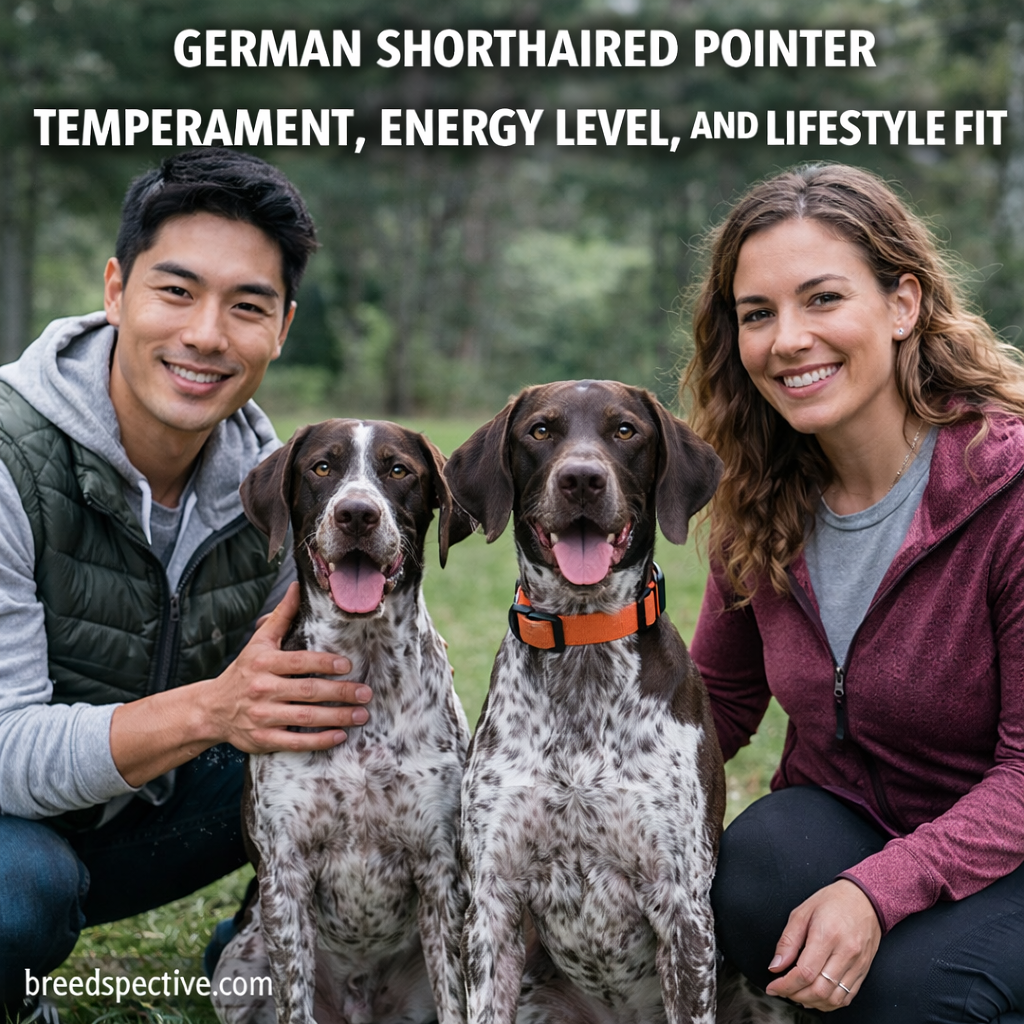
The German Shorthaired Pointer (GSP) is an athletic, intelligent, and highly driven dog originally bred for versatile hunting work. Known for stamina, focus, and loyalty, this breed thrives in active households that can meet its physical and mental needs.
This guide explores the German Shorthaired Pointer’s temperament, typical energy level, and the type of lifestyle that best supports a happy, well-balanced GSP.
Temperament overview of the German Shorthaired Pointer
German Shorthaired Pointers are best described as enthusiastic, confident, and people-oriented. They form strong bonds with their families and prefer being involved in daily activities rather than left alone.
Common temperament traits include:
- Friendly and outgoing
- Highly intelligent and alert
- Loyal and affectionate with family
- Curious and driven
- Confident without being aggressive
GSPs are not aloof dogs—they enjoy companionship and often want to be wherever their people are.
Affection level and family bonding
German Shorthaired Pointers are deeply attached to their families.
You can expect them to:
- Follow owners from room to room
- Seek physical closeness and interaction
- Be emotionally responsive to household moods
- Thrive on shared activities
They tend to bond closely with active owners who include them in daily routines.
Energy level and activity requirements

This breed has very high energy levels and is not well-suited to sedentary lifestyles.
Daily activity needs typically include:
- 1–2 hours of vigorous exercise
- Running, hiking, or cycling
- Off-leash play in secure areas
- Structured training or working activities
Without enough physical output, GSPs can become restless, destructive, or anxious.
Intelligence and trainability
German Shorthaired Pointers are highly intelligent and learn quickly, but their energy can make training challenging without structure.
Training traits include:
- Fast learners with good memory
- Strong problem-solving ability
- High motivation when engaged
- Easily bored by repetition
They respond best to positive reinforcement, variety, and training that feels purposeful.
Prey drive and instinctual behavior
Because they were bred as hunting dogs, GSPs have a strong prey drive.
This may show up as:
- Chasing birds, squirrels, or small animals
- Strong interest in scents
- Intense focus when outdoors
Reliable recall training and secure fencing are essential, especially in open environments.
Social behavior with people
German Shorthaired Pointers are typically social and welcoming with people.
They are often:
- Friendly toward guests
- Comfortable in social settings
- Confident without being pushy
Early socialization helps ensure they remain polite and well-mannered in busy environments.
Compatibility with children
GSPs can do well with children, especially in active families.
Important considerations:
- Best suited for homes with older or dog-savvy children
- High energy may overwhelm toddlers
- Supervision is important due to size and enthusiasm
Their playful nature can make them excellent companions for active kids.
Getting along with other pets
Compatibility with other pets depends largely on early exposure.
They often do best when:
- Raised alongside other dogs
- Properly introduced to cats early
- Given clear boundaries and supervision
Small animals may trigger prey instincts if not managed carefully.
Separation anxiety and boredom issues
German Shorthaired Pointers do not tolerate long periods of isolation well.
Potential issues include:
- Separation anxiety
- Excessive barking or whining
- Destructive behavior when bored
Mental enrichment, exercise before alone time, and gradual independence training help reduce problems.
Ideal home and lifestyle fit
German Shorthaired Pointers thrive in homes that offer:
- High daily activity levels
- Outdoor access or frequent outings
- Consistent training and structure
- Owners who enjoy an active lifestyle
They are poorly suited for low-energy households or owners with limited time.
Apartment living vs. homes with yards
Apartment living is possible but challenging.
Important factors:
- Daily high-intensity exercise is non-negotiable
- Mental stimulation must be consistent
- Access to open space is highly beneficial
Homes with yards or easy access to outdoor areas are ideal.
Common misconceptions about GSP temperament
Some people mistake GSP energy for hyperactivity or poor behavior.
In reality:
- Excess energy is normal for the breed
- Behavior issues often stem from under-exercise
- Proper outlets lead to calm indoor behavior
When their needs are met, GSPs are surprisingly relaxed at home.
Is a German Shorthaired Pointer right for you?
This breed may be a great fit if you:
- Enjoy daily exercise and outdoor activities
- Want a loyal, interactive companion
- Can commit time to training and engagement
- Prefer an energetic, involved dog
They may not be ideal for first-time dog owners or very busy households.
Final thoughts on German Shorthaired Pointer temperament
German Shorthaired Pointers are energetic, intelligent, and deeply bonded to their families. Their temperament is shaped by centuries of working partnership with humans, making them happiest when they have a purpose and plenty of activity.
With the right lifestyle, structure, and commitment, a GSP becomes a devoted, enthusiastic companion capable of excelling both as a family dog and an athletic partner.