

The Beagle is one of the oldest and most recognizable scent hounds in the world. Known today for its friendly personality and family-friendly nature, the breed’s origins are deeply rooted in hunting and pack work. Understanding the Beagle’s history and original purpose helps explain its strong nose, energetic temperament, and love of exploration.
This article explores where Beagles came from, how they were used historically, and how their working roots still influence modern Beagles today.
Early Origins of the Beagle
The exact origins of the Beagle are not perfectly documented, but small scent hounds resembling Beagles existed in England as early as Roman times. These early dogs were bred specifically for their ability to track scents over long distances.
Key early influences include:
- Small hunting hounds used by the Romans
- Medieval English scent hounds
- Compact dogs bred for foot hunters rather than horseback hunters
These early hounds laid the foundation for what would eventually become the modern Beagle.
Beagles in Medieval England
During the Middle Ages, hunting was a major part of English culture, especially among nobles and landowners. Smaller hounds were favored for hunting small game such as rabbits and hares.
Why Beagles became popular:
- Their size made them easy to keep
- They could hunt in dense brush and tight terrain
- They worked well in packs
- Hunters could follow them on foot
Early Beagles were sometimes referred to as “foot hounds” because they moved at a pace humans could follow.
The Beagle’s Original Purpose: Scent Hunting
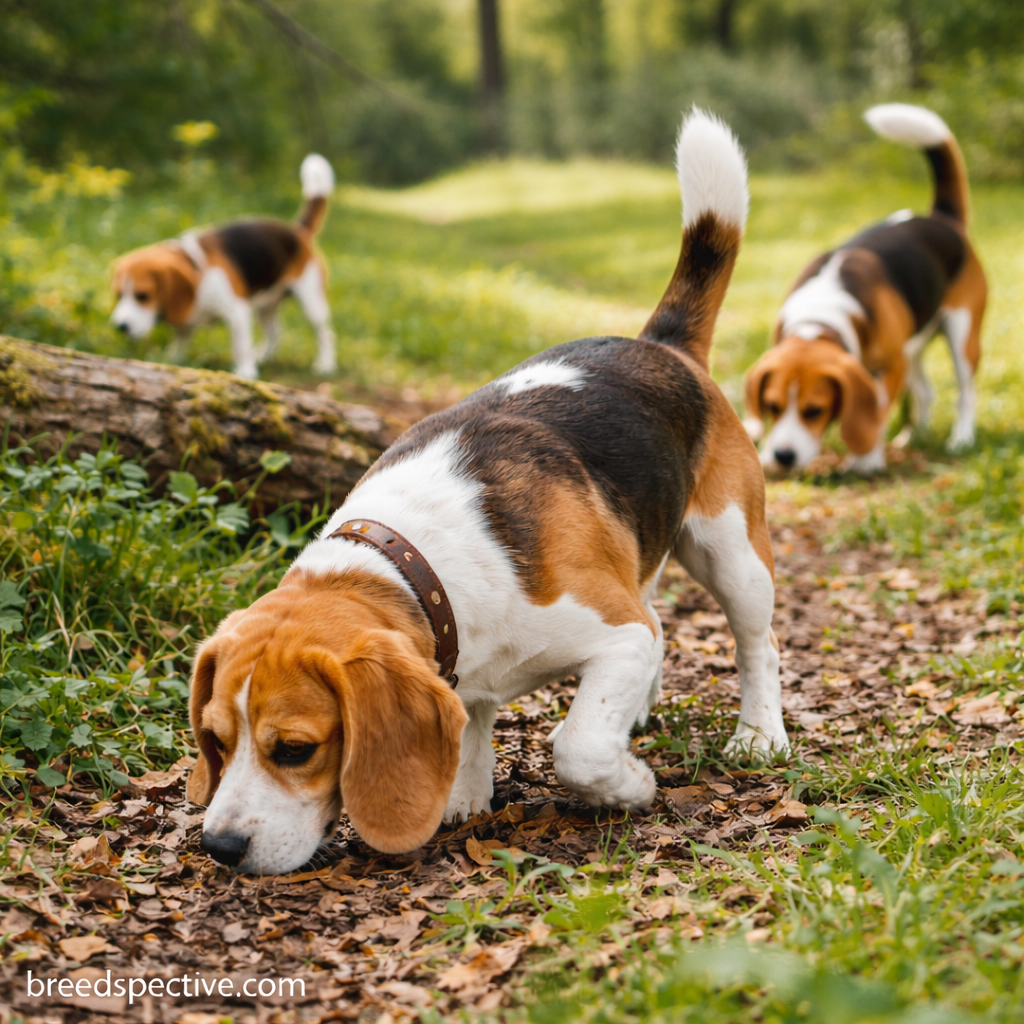
Beagles were bred primarily for one task—tracking scent.
Their original hunting purpose focused on:
- Following rabbit and hare trails
- Working cooperatively in packs
- Maintaining a strong, consistent scent trail
- Vocalizing to alert hunters
Their famous baying allowed hunters to track the pack by sound, even when the dogs were out of sight.
Development of Breed Characteristics
Over time, breeders refined Beagles for specific traits that enhanced their hunting ability.
Traits intentionally developed include:
- An exceptional sense of smell
- High stamina and endurance
- Strong prey drive
- Compact, athletic build
- Friendly, non-aggressive temperament
These traits allowed Beagles to hunt effectively while remaining manageable and cooperative.
Standardization of the Modern Beagle
By the 18th and 19th centuries, Beagles became more standardized in size and appearance. Two general sizes emerged:
- Smaller Beagles under 13 inches
- Larger Beagles up to 15 inches
Formal breed standards helped solidify the Beagle’s appearance and temperament, making them more recognizable and consistent.
Beagles in the United States
Beagles were brought to the United States in the 19th century, where they quickly gained popularity.
In America, Beagles were used for:
- Rabbit hunting
- Field trials and scent competitions
- Companion animals for active families
The breed’s adaptability helped it transition easily from working dog to household companion.
Transition From Working Dog to Family Companion
While many Beagles still participate in hunting and scent work, most modern Beagles are kept primarily as pets.
Reasons for their popularity as companions:
- Friendly, social personality
- Compatibility with children
- Manageable size
- Playful but affectionate nature
Despite this transition, their hunting instincts remain strong.
How Beagle History Influences Behavior Today
Many modern Beagle behaviors can be traced directly to their original purpose.
Historical traits still visible today:
- Strong desire to follow scents
- Tendency to wander if off-leash
- Vocalization through barking or baying
- High energy and curiosity
Understanding this history helps owners manage training, exercise, and expectations.
Beagles in Modern Roles
Beyond companionship, Beagles are still used for specialized tasks today.
Modern roles include:
- Detection dogs at airports
- Search and scent work
- Competitive tracking and field trials
Their noses remain one of their greatest assets.
Final Thoughts
The Beagle’s history as a scent hound and pack hunter shaped every aspect of the breed—from its nose and voice to its temperament and energy level. While today’s Beagles are beloved family pets, they still carry the instincts of their ancestors.
Understanding the Beagle’s original purpose provides valuable insight into how to care for, train, and appreciate this curious, energetic, and enduring breed.