
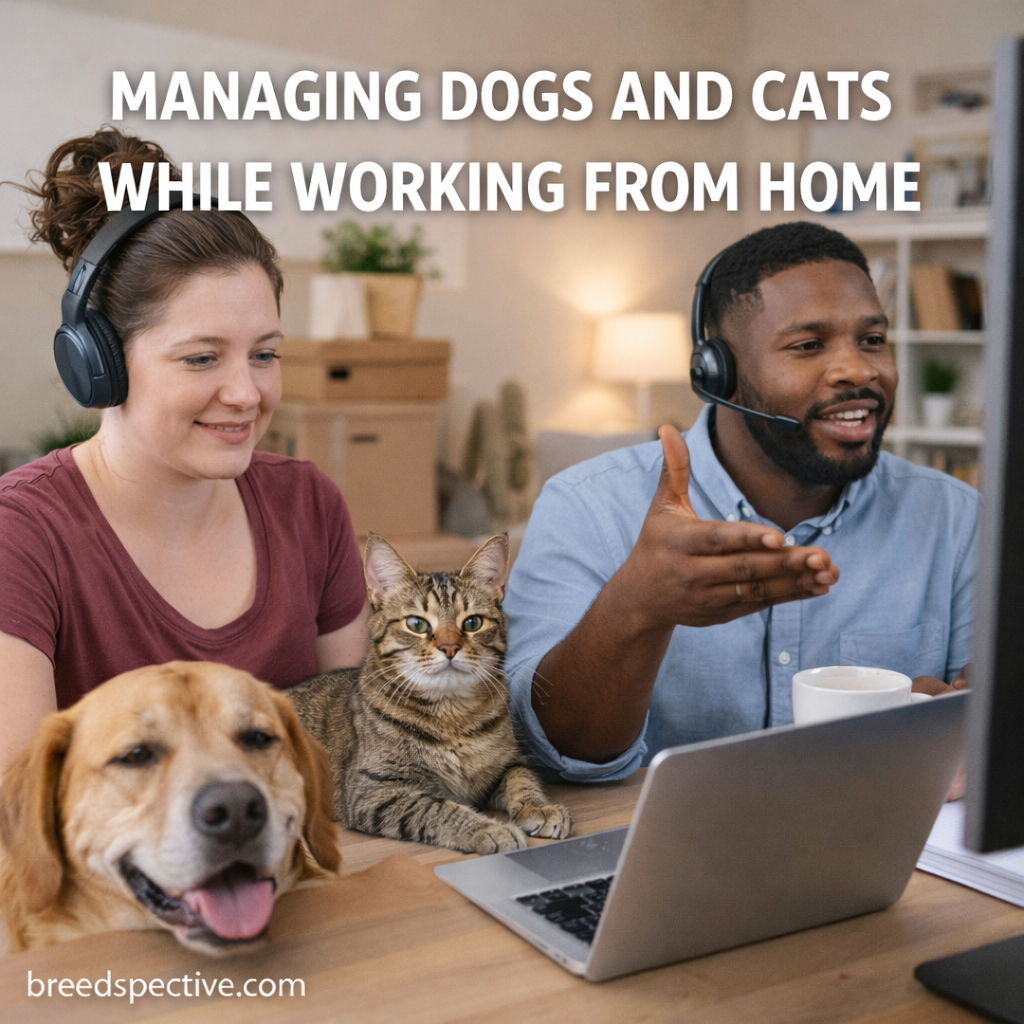
Working from home has become a long-term lifestyle for many pet owners. While sharing your day with dogs and cats can be rewarding, it also introduces unique challenges—from distractions during meetings to unmet pet needs when routines blur together.
Creating a balanced system helps pets feel secure and allows you to stay productive without guilt or constant interruptions. This guide covers practical ways to manage dogs and cats while working from home, keeping both your workflow and your pets’ well-being protected.
Why Pets Struggle With Work-From-Home Routines
Pets thrive on predictability. When owners are suddenly home all day but unavailable for attention, pets may become confused or anxious.
Common issues include:
- Increased attention-seeking behavior
- Restlessness or boredom
- Separation anxiety when routines change
- Disrupted feeding or walking schedules
Clear boundaries and consistent routines help reduce confusion.
Establishing Clear Daily Schedules
Pets benefit from structure—even when you’re home all day.
Helpful scheduling practices:
- Feed pets at consistent times
- Schedule walks and play breaks
- Keep start-and-end-of-work rituals consistent
- Maintain regular sleep routines
Predictable patterns help pets relax and self-settle.
Creating Dedicated Pet Spaces
Designating specific areas for pets encourages independence and calm behavior.
Effective pet space ideas:
- Comfortable beds near—but not under—your desk
- Quiet rooms for daytime naps
- Window perches or lookout spots for cats
- Crates or playpens for dogs who prefer enclosed spaces
These spaces act as safe zones during work hours.
Managing Interruptions During Work Hours
Pets often interrupt because they’ve learned that attention is available.
Ways to reduce interruptions:
- Ignore attention-seeking behaviors during meetings
- Reward calm behavior with scheduled breaks
- Use interactive toys to occupy pets
- Close doors when necessary to reinforce boundaries
Consistency teaches pets when attention is and isn’t available.
Balancing Exercise and Mental Stimulation
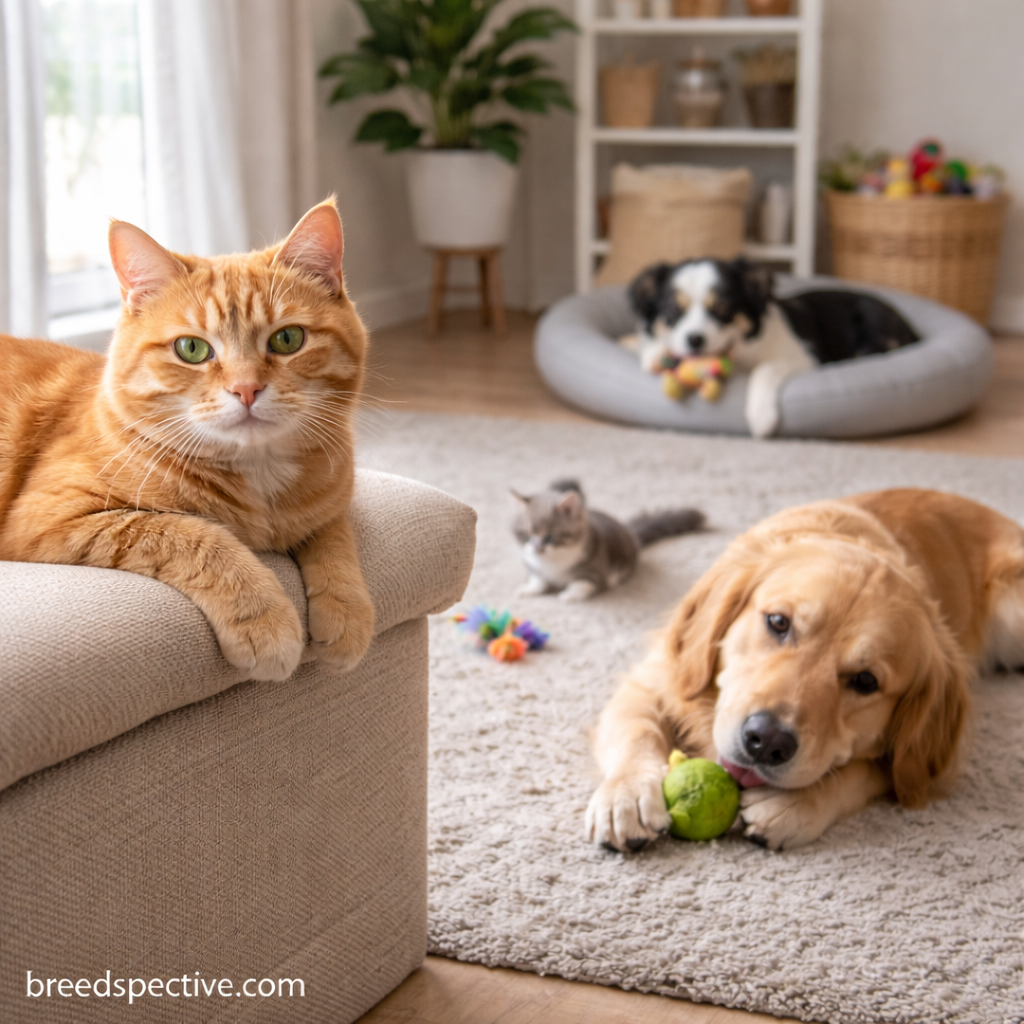
Physical and mental enrichment reduces disruptive behavior.
Daily enrichment ideas:
- Morning walks or play sessions before work
- Puzzle toys during peak work hours
- Short training sessions during breaks
- Rotating toys to prevent boredom
A mentally engaged pet is far less likely to demand constant attention.
Protecting Pets From Household Hazards
Working from home often means cords, equipment, and office supplies are within reach.
Safety considerations include:
- Securing electrical cords
- Keeping small objects out of reach
- Blocking access to unsafe rooms
- Using pet-safe cleaning products
Pet-proofing protects animals and prevents costly accidents.
Managing Noise and Meeting Interruptions
Barking, meowing, or play noise can disrupt meetings.
Noise management tips:
- Schedule exercise before important calls
- Use white noise machines
- Close blinds to reduce visual triggers
- Redirect pets with enrichment during calls
Planning ahead minimizes interruptions.
Handling Separation Anxiety While You’re Home
Some pets develop anxiety because owners are home—but unavailable.
Signs include:
- Vocalizing outside closed doors
- Pacing or restlessness
- Destructive behavior
Solutions:
- Practice short separations even at home
- Avoid constant interaction during work hours
- Encourage independent play
Gradual independence builds emotional resilience.
Supporting Multi-Pet Households
Multiple pets can amplify distractions if not managed properly.
Helpful strategies:
- Separate pets during work hours if needed
- Provide individual enrichment activities
- Monitor resource sharing (beds, toys, food)
Balanced environments reduce tension and competition.
Setting End-of-Work Transitions
Pets need clarity when the workday ends.
End-of-day routines might include:
- A walk or play session
- Feeding time
- Calm interaction and bonding
- Moving work equipment out of sight
Clear transitions help pets understand when attention returns.
Common Work-From-Home Pet Mistakes
Avoiding these mistakes improves harmony:
- Responding to every interruption
- Skipping exercise because you’re “home all day”
- Allowing inconsistent schedules
- Ignoring signs of stress
Small changes make a big difference.
Final Thoughts
Managing dogs and cats while working from home is about balance—not perfection. With structured routines, clear boundaries, and thoughtful enrichment, pets can thrive alongside your workday rather than disrupt it.
By protecting both your productivity and your pets’ emotional needs, working from home becomes a lifestyle that benefits everyone in the household.