

Bengal cats are known for their sleek coats, athletic bodies, and high energy—but caring for this breed goes beyond basic grooming. While Bengals are relatively low-maintenance compared to long-haired cats, their intelligence and activity level mean their care needs are unique.
This guide covers Bengal cat grooming, hygiene, health routines, and daily care requirements so you can keep your cat healthy, comfortable, and thriving.
Bengal Coat Type and Grooming Needs
Bengals have a short, dense coat that lies close to the body. Their fur often has a glossy or “glittered” appearance, which requires surprisingly little upkeep.
Key coat characteristics:
- Short and smooth texture
- Minimal shedding compared to many breeds
- Naturally clean and low-odor
Because of this, Bengals rarely need professional grooming and usually manage their coat well on their own.
How Often to Brush a Bengal Cat
Brushing a Bengal once a week is usually sufficient. Regular brushing helps remove loose hair, reduces shedding, and distributes natural oils for a healthy shine.
Recommended brushing routine:
- Once per week for most Bengals
- Twice weekly during seasonal shedding
- Use a soft-bristle brush or rubber grooming mitt
Over-brushing is unnecessary and may irritate the skin.
Bathing Requirements
Unlike many cats, Bengals are often fascinated by water. Some even enjoy shallow baths or running faucets.
Bathing guidelines:
- Only bathe when visibly dirty or greasy
- Use a cat-safe, gentle shampoo
- Rinse thoroughly to avoid residue
Routine bathing is not required and should be kept occasional to protect skin oils.
Nail Trimming and Paw Care
Because Bengals are highly active climbers and jumpers, their nails grow quickly and need regular attention.
Best practices:
- Trim nails every 2–3 weeks
- Use proper cat nail clippers
- Trim only the clear tip, avoiding the quick
Providing scratching posts and climbing surfaces helps naturally wear down nails and protects furniture.
Ear Cleaning and Eye Care
Bengal cats typically have clean ears, but regular checks help prevent infections.
Ear and eye care tips:
- Check ears weekly for redness or odor
- Clean only when debris is visible
- Use vet-approved ear cleaners
- Gently wipe eye corners with a damp cloth if discharge appears
Never insert anything deep into the ear canal.
Dental Care for Bengal Cats
Dental health is often overlooked but critical for Bengals, as they can be prone to plaque buildup.
Dental care recommendations:
- Brush teeth 2–3 times per week if tolerated
- Use cat-specific toothpaste only
- Provide dental treats or toys as supplements
Routine veterinary dental checks help prevent gum disease and tooth loss.
Litter Box Hygiene
Bengals are clean, particular cats and may avoid a dirty litter box.
Litter box care essentials:
- Scoop daily
- Fully change litter weekly
- Use large boxes to accommodate their size
- Place boxes in quiet, accessible areas
A neglected litter box can lead to stress-related behavior issues.
Exercise and Enrichment as Part of Care
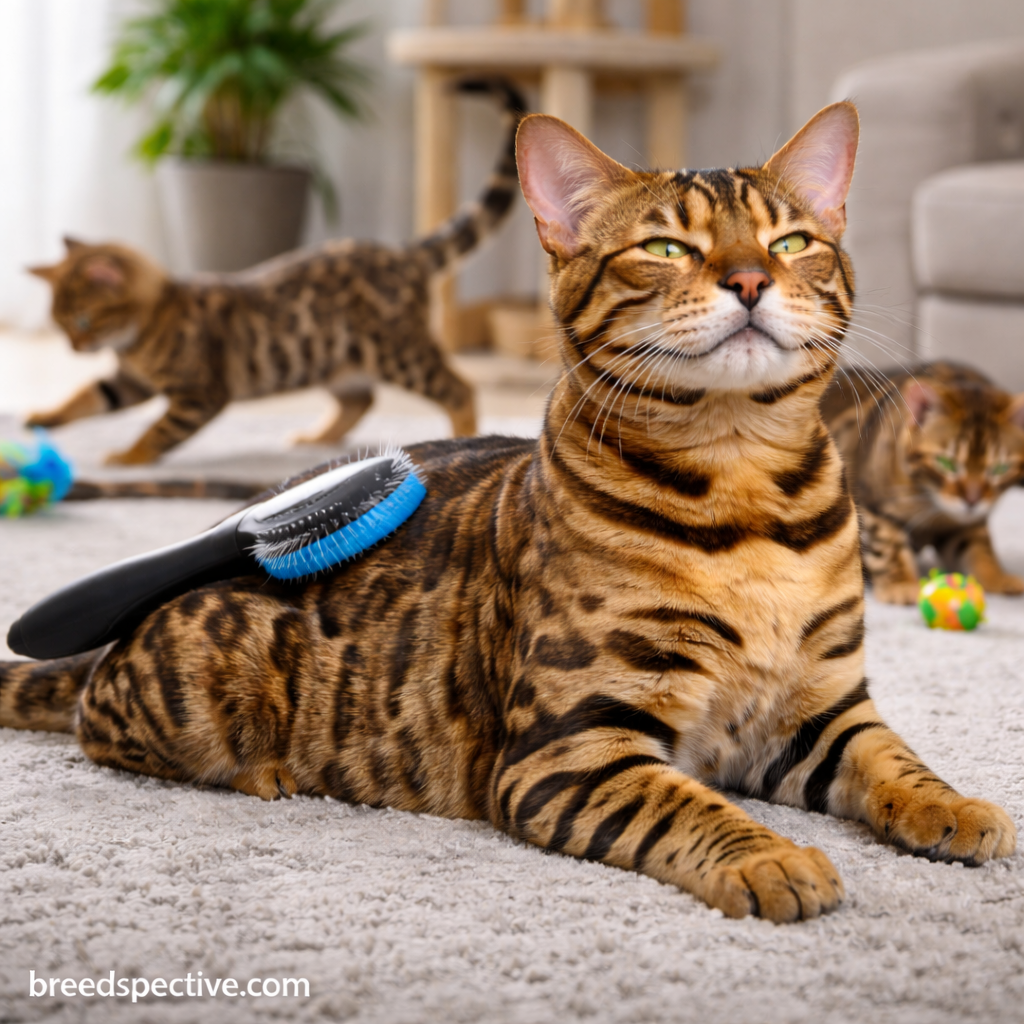
While not traditional grooming, daily exercise is essential to a Bengal’s overall health.
Enrichment needs include:
- Daily interactive play sessions
- Climbing trees or wall-mounted shelves
- Puzzle feeders and rotating toys
Mental stimulation reduces stress, prevents destructive behaviors, and supports emotional well-being.
Nutrition and Coat Health
A Bengal’s coat condition is closely tied to diet quality.
Nutrition tips:
- Feed high-quality, protein-rich food
- Avoid fillers and excessive carbohydrates
- Ensure access to fresh water at all times
Proper nutrition supports skin health, coat shine, and overall vitality.
Health Monitoring and Routine Vet Care
Routine care also includes monitoring for breed-related health concerns.
Basic health care checklist:
- Annual veterinary exams
- Vaccinations as recommended
- Parasite prevention
- Monitoring weight and activity changes
Early detection helps prevent small issues from becoming serious problems.
Is the Bengal a Low-Maintenance Breed?
In terms of grooming, Bengals are relatively low-maintenance. However, their care needs extend into mental stimulation, exercise, and daily interaction.
They are ideal for owners who:
- Want minimal coat grooming
- Enjoy daily engagement and play
- Can provide an enriched environment
They may not suit owners seeking a hands-off or low-interaction pet.
Final Thoughts
Bengal cats are clean, sleek, and easy to groom—but they demand attention in other areas. Regular brushing, nail care, dental hygiene, and enrichment are essential to keeping this intelligent breed healthy and happy.
With proper grooming and thoughtful daily care, a Bengal cat will not only look stunning but thrive as an active, confident companion.