
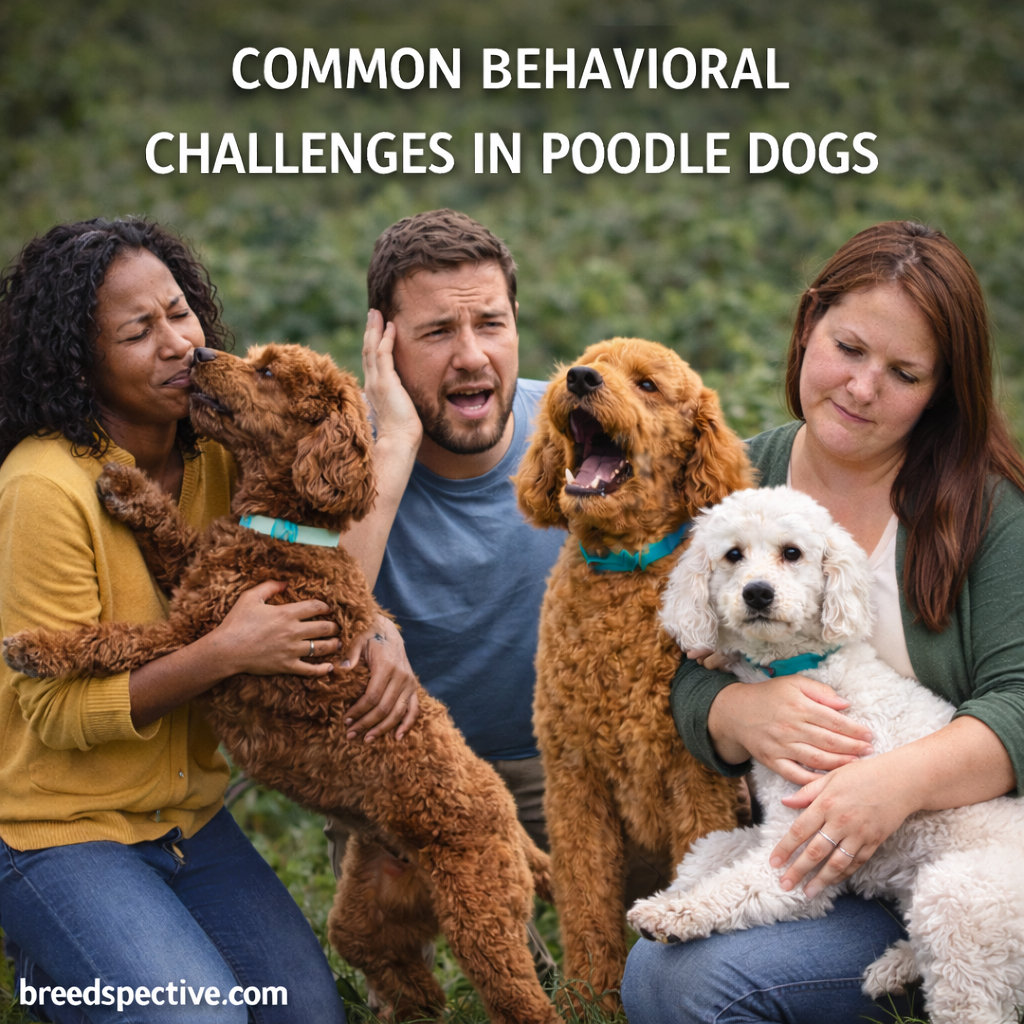
Poodles are widely known for their intelligence, trainability, and affectionate nature. While these qualities make them excellent companions, they can also contribute to specific behavioral challenges if a Poodle’s physical, mental, and emotional needs are not fully met.
Understanding common behavioral issues in Poodles helps owners address problems early and create a balanced, confident, and well-adjusted dog.
Why Behavioral Issues Develop in Poodles
Most behavioral challenges in Poodles are not signs of disobedience. Instead, they stem from unmet needs or environmental factors.
Common Contributing Factors
- Insufficient mental stimulation
- Lack of daily exercise
- Inconsistent training or routines
- Emotional sensitivity
- Extended periods of isolation
Because Poodles are highly intelligent and people-focused, they are more likely to develop issues when bored or stressed.
Excessive Barking

One of the most common behavioral complaints among Poodle owners is excessive barking.
Why Poodles Bark
- Alerting to sounds or movement
- Boredom or frustration
- Anxiety or insecurity
- Attention-seeking behavior
Without proper outlets, barking can become a habit rather than a response.
Separation Anxiety
Poodles form strong emotional bonds with their owners, making them prone to separation-related behaviors.
Signs of Separation Anxiety
- Whining or barking when left alone
- Destructive behavior near doors or windows
- Pacing or restlessness
- Excessive licking or grooming
Gradual independence training and structured routines can help reduce anxiety.
Destructive Chewing and Digging
When under-stimulated, Poodles may redirect their energy into destructive behaviors.
Common Triggers
- Lack of exercise
- Limited mental challenges
- Long periods of confinement
Providing appropriate chew toys and enrichment reduces destructive tendencies.
Overdependence and Velcro Behavior
Poodles often prefer being close to their owners at all times.
Potential Issues With Overdependence
- Difficulty relaxing alone
- Increased anxiety when routines change
- Excessive attention-seeking
Teaching calm independence is essential for emotional balance.
Nervousness and Sensitivity
Poodles are emotionally sensitive dogs that may react strongly to changes or stress.
Signs of Sensitivity
- Startling easily
- Avoidance behaviors
- Fear of loud noises
- Hesitation in new environments
Early socialization and positive exposure help build confidence.
Reactivity Toward Strangers or Other Dogs
Some Poodles may develop reactive behaviors if not properly socialized.
Reactivity May Appear As
- Barking or lunging on leash
- Tension around unfamiliar dogs
- Overexcitement or withdrawal
Consistent social experiences and training reduce reactive tendencies.
Difficulty Settling Indoors
Despite their intelligence, Poodles may struggle to relax without guidance.
Why This Happens
- High mental energy
- Lack of structured downtime
- Overstimulation
Teaching “settle” behaviors and creating calm routines encourages relaxation.
Attention-Seeking Behaviors
Poodles thrive on interaction and may act out to gain attention.
Common Attention-Seeking Actions
- Pawing or nudging
- Vocalizing
- Interrupting activities
Ignoring unwanted behavior while reinforcing calm actions helps redirect attention.
Behavioral Differences by Poodle Size
Behavioral challenges can vary slightly depending on size.
Standard Poodles
- Higher physical energy
- May need more outdoor activity
Miniature and Toy Poodles
- Often more vocal
- More prone to nervousness if under-socialized
All sizes benefit from consistent training and enrichment.
Preventing Behavioral Issues in Poodles
Prevention is easier than correction.
Effective Prevention Strategies
- Daily mental stimulation
- Consistent exercise routines
- Positive reinforcement training
- Early socialization
- Structured schedules
Meeting both physical and emotional needs significantly reduces behavioral challenges.
When to Seek Professional Help
Some behaviors require additional support.
Signs Professional Help May Be Needed
- Persistent anxiety
- Aggressive reactions
- Self-harming behaviors
- Escalating destructive actions
Working with a qualified trainer or behaviorist can improve outcomes.
Final Thoughts
Poodles are intelligent, emotionally aware dogs that thrive with engagement, structure, and connection. Most behavioral challenges arise when these needs are unmet, not because of stubbornness or defiance.
With proper training, enrichment, and understanding, Poodles develop into confident, calm, and deeply loyal companions.