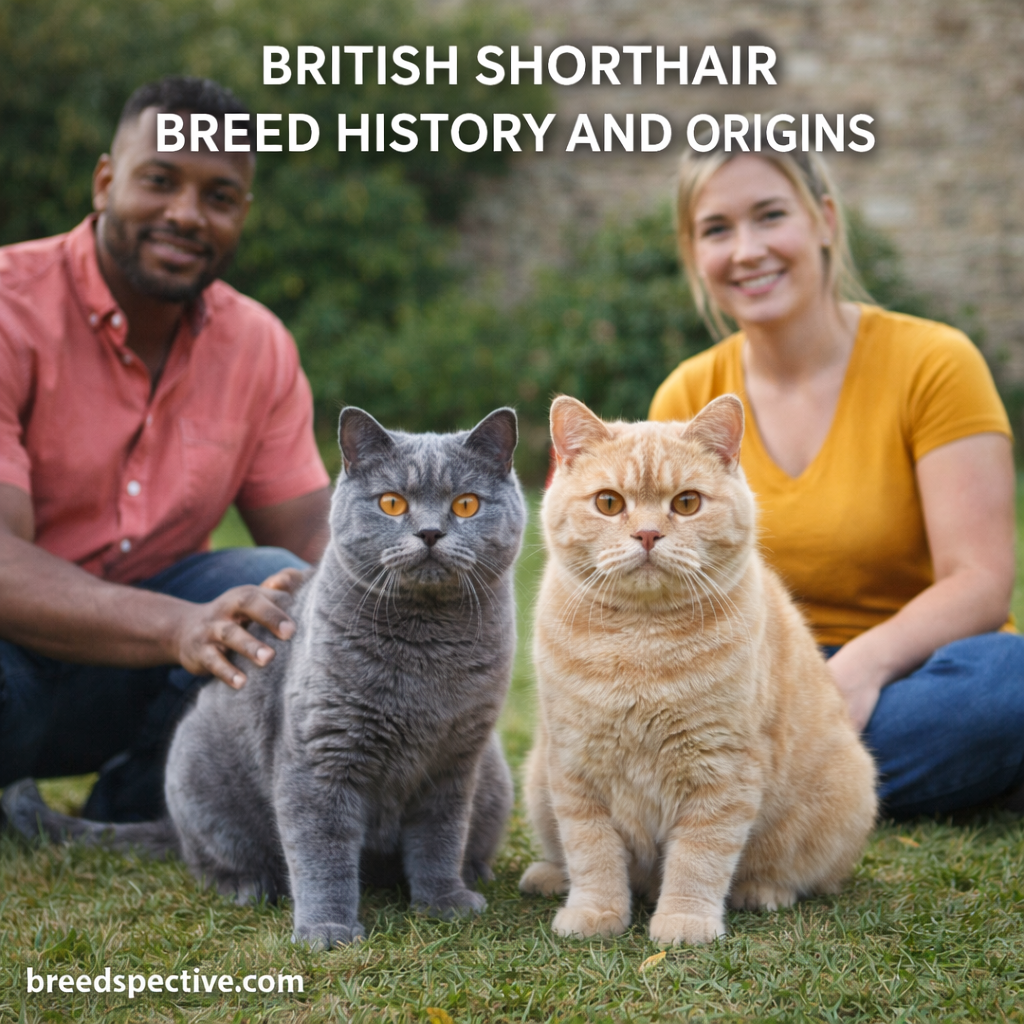
The British Shorthair is one of the oldest and most historically significant cat breeds in the world. Long before it became known for its plush coat and calm demeanor, this breed developed as a hardy working cat valued for strength, resilience, and adaptability. Over centuries, natural selection and careful breeding shaped the British Shorthair into the iconic companion cat we recognize today.
This article explores the British Shorthair’s history, early origins, and how its past continues to influence the breed’s appearance and personality.
Early Origins of the British Shorthair
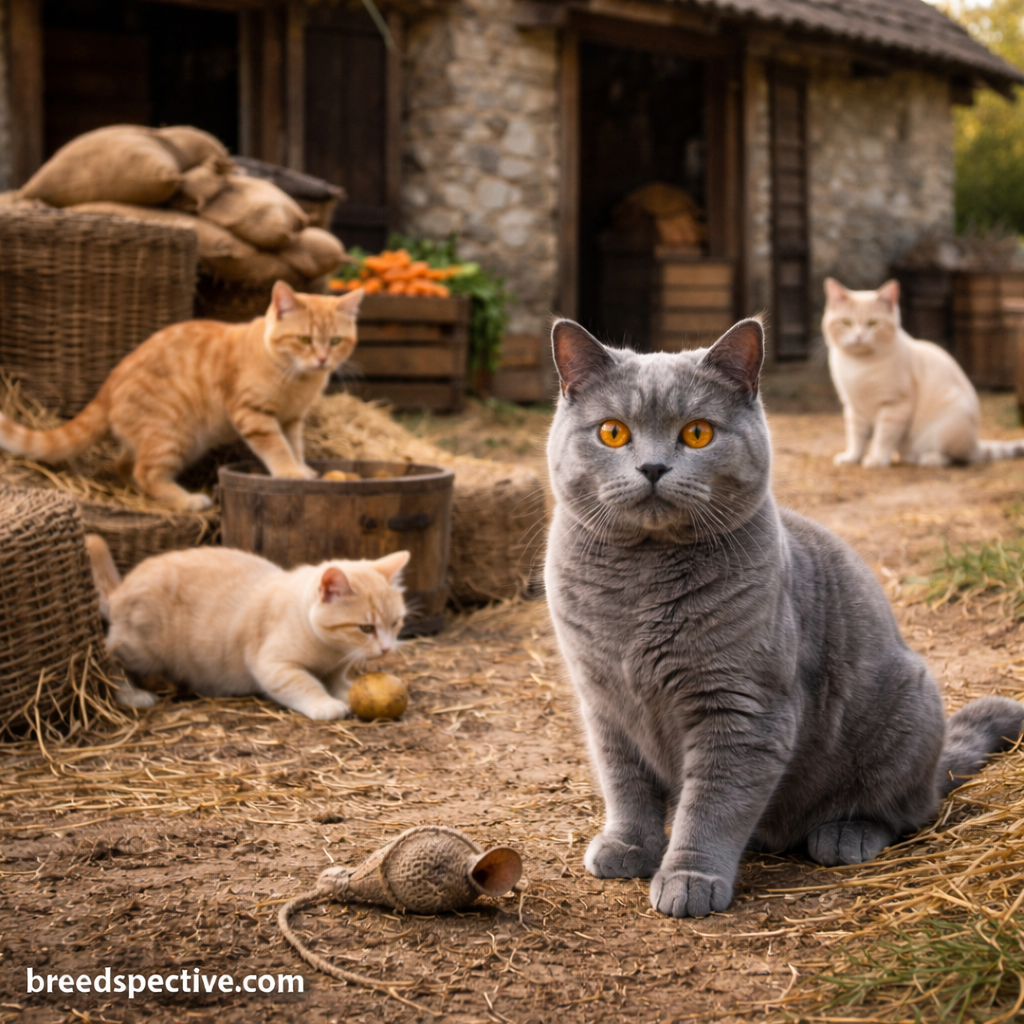
The roots of the British Shorthair can be traced back nearly 2,000 years to Roman Britain. When Roman armies invaded the British Isles, they brought domestic cats with them to protect food stores and camps from rodents.
These early cats were:
- Strong, muscular, and resilient
- Short-haired for easier survival
- Skilled hunters and pest controllers
- Well adapted to harsh climates
Over generations, Roman cats bred with native European wildcats, producing a thicker coat and sturdier body suited to Britain’s cold, damp environment.
Development as a Working Cat in Britain
For centuries, British Shorthairs existed primarily as working cats rather than pets. They were commonly found on farms, in barns, warehouses, and family homes.
Their main roles included:
- Controlling rodents
- Protecting stored food
- Living independently alongside humans
Natural selection favored cats that were healthy, adaptable, and efficient hunters, establishing the breed’s powerful build and dense coat.
Early Breed Recognition and Cat Shows
By the late 19th century, interest in pedigree cats began to rise in Britain. Cat enthusiasts recognized the value of preserving native British cats and began formal breeding programs.
Key developments during this period included:
- Early participation in organized cat shows
- Recognition of the breed’s round features and solid frame
- Growing popularity among cat fanciers
The British Shorthair became one of the first officially recognized cat breeds in the United Kingdom.
Impact of the World Wars on the Breed
World War I and World War II had a severe impact on British Shorthair populations. Food shortages and economic hardship nearly wiped out established breeding lines.
To save the breed, breeders introduced controlled outcrossing with other cats, including:
- Persian cats to improve coat density
- Russian Blues for color refinement
- Other European shorthaired cats for genetic diversity
These efforts ensured survival but temporarily altered the breed’s appearance.
The Modern British Shorthair Takes Shape
After World War II, breeders worked carefully to restore the British Shorthair’s traditional look while maintaining genetic health.
Standardized traits included:
- Broad chest and muscular body
- Round head with full cheeks
- Large, round eyes
- Dense, plush short coat
Although the blue-gray coat became the most famous, the breed now appears in many colors and patterns.
Transition From Working Cat to Companion
As urban living increased and pest control improved, the British Shorthair gradually transitioned from working cat to companion animal.
This shift influenced:
- A calmer, more reserved temperament
- Reduced hunting drive compared to working lines
- Strong but quiet bonds with humans
Despite this change, the breed retained its independence and self-sufficient nature.
Global Recognition and Popularity
Throughout the 20th century, the British Shorthair gained recognition around the world.
Today, the breed is:
- Recognized by major cat associations
- Popular across Europe, North America, and Asia
- Valued for health, stability, and temperament
Its timeless appearance and adaptable personality have helped maintain lasting popularity.
How History Shaped the British Shorthair’s Personality
The British Shorthair’s long history as a working and semi-independent cat directly shaped its modern behavior.
Historical influences contributed to:
- Calm, composed temperament
- Low neediness and emotional independence
- Strong adaptability to routine
- Quiet confidence rather than clinginess
These traits make the breed especially appealing to owners seeking a low-maintenance companion.
Common Myths About British Shorthair History
Several misconceptions surround the breed’s origins.
- They were always lap cats
Originally, they were working cats first. - They are a modern breed
Their history spans nearly two millennia. - They were created from Persians
Persians were used later only to help preserve the breed.
Final Thoughts on British Shorthair History and Origins
The British Shorthair’s journey from Roman-era pest controller to beloved modern companion reflects centuries of adaptation and careful breeding. Strength, resilience, and independence remain central to the breed’s identity, even as its role has shifted toward companionship.
Understanding the British Shorthair’s history provides valuable insight into its calm demeanor, sturdy build, and enduring appeal.