
The Akita is a powerful, dignified dog breed known for its deep loyalty, quiet confidence, and strong sense of independence. Originally bred in Japan for guarding and hunting large game, the Akita retains many instinct-driven traits that make it both a rewarding and demanding companion.
This guide breaks down Akita temperament, energy level, and overall lifestyle fit to help you decide whether this breed aligns with your home, experience level, and expectations.
Akita Temperament Overview
Akitas are best described as calm, courageous, and intensely loyal to their family. They tend to form deep bonds with one or two people rather than spreading affection widely.
Key temperament traits include:
- Loyal and devoted to their owners
- Naturally protective and watchful
- Quiet, reserved, and dignified
- Independent and strong-willed
- Confident, sometimes stubborn
Unlike many highly social breeds, Akitas are not typically “people-pleasers.” They think independently and prefer mutual respect over constant praise or attention.
Loyalty and Bonding Style
One of the Akita’s defining characteristics is unwavering loyalty. Once bonded, an Akita is deeply committed to its family and often chooses a primary person.
What this looks like in daily life:
- Stays close without being clingy
- Watches over the household quietly
- May follow one person from room to room
- Shows affection subtly rather than exuberantly
Akitas are emotionally sensitive to their owners but do not always show it in obvious ways. Their loyalty is steady, calm, and protective.
Independence and Trainability
Akitas are intelligent, but their intelligence comes with independence. They are capable learners, yet they may question commands rather than automatically obey them.
Training considerations:
- Respond best to calm, confident leadership
- Require consistency and structure
- Do poorly with harsh corrections or repetitive drills
- Learn quickly but may choose when to comply
This breed is not ideal for owners seeking instant obedience. Training an Akita is about building trust, respect, and clear boundaries rather than dominance or force.
Protective Instincts and Guarding Behavior
Akitas have strong natural guarding instincts. They are alert, aware of their surroundings, and cautious around strangers.
Common protective behaviors include:
- Standing between family members and unfamiliar people
- Watching entrances and windows
- Remaining reserved rather than aggressive
- Rarely barking unless there is a reason
Early socialization is critical to ensure protective instincts do not turn into excessive suspicion or territorial behavior.
Social Behavior With People and Animals
With Strangers
Akitas are typically aloof with strangers. They are not aggressive by default, but they are rarely outgoing.
- May ignore guests rather than greet them
- Warms up slowly, if at all
- Observes before engaging
With Children
With proper upbringing, Akitas can be gentle and tolerant with children in their own household. However:
- Supervision is always recommended
- They may not tolerate rough handling
- Better suited for homes with older children
With Other Dogs
Akitas are known for same-sex aggression and strong dominance tendencies.
- Often do best as the only dog
- May not tolerate unfamiliar dogs
- Require careful introductions and management
They are generally not ideal for dog parks or multi-dog households without extensive experience.
Energy Level and Exercise Needs
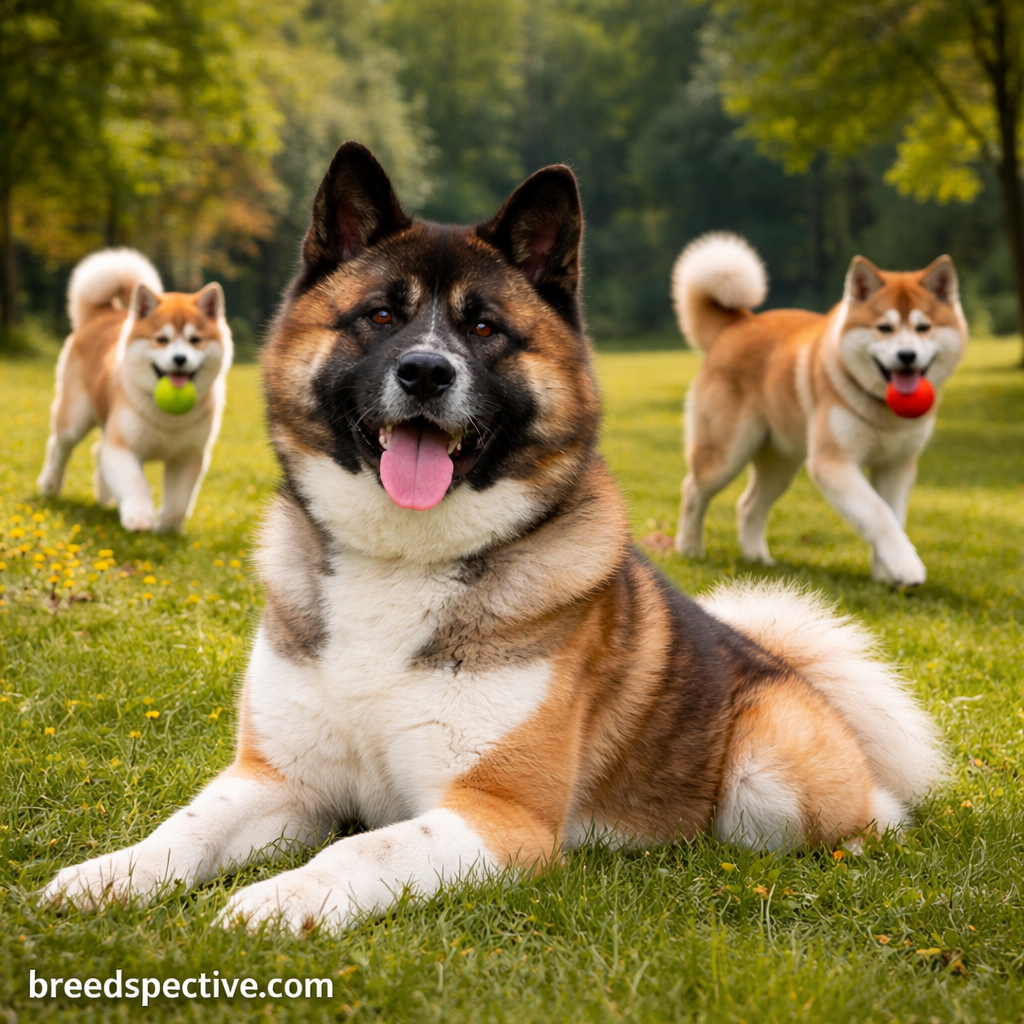
Akitas have a moderate energy level. They are not hyperactive, but they do require daily physical and mental stimulation.
Typical energy profile:
- Calm indoors when exercised properly
- Enjoy structured activity over chaotic play
- Can become bored without outlets
Daily exercise needs include:
- One to two solid walks per day
- Leash walks rather than off-leash roaming
- Mental stimulation through training or puzzle toys
They are not endurance athletes, but they do need consistent activity to stay balanced and healthy.
Mental Stimulation Requirements
Akitas are thinkers. Without mental engagement, they may become stubborn, withdrawn, or destructive.
Effective mental outlets include:
- Obedience training with variety
- Nose work or scent-based games
- Structured routines
- Short training sessions with clear goals
They thrive on predictability paired with purposeful activity.
Living Environment Suitability
Apartment Living
Akitas can live in apartments under the right conditions:
- Owners must commit to daily exercise
- Strict leash control is essential
- Quiet demeanor works well indoors
However, apartments with heavy foot traffic or shared dog spaces may be challenging.
House With Yard
An ideal setup includes:
- Secure, tall fencing
- Controlled outdoor time
- Supervision to prevent roaming
Akitas should never be left to free-roam or guard unattended.
Grooming and Seasonal Shedding Impact
While not directly a temperament trait, grooming impacts lifestyle fit significantly.
Akitas have a thick double coat and shed heavily, especially seasonally.
Owners should expect:
- Daily brushing during shedding seasons
- Regular grooming year-round
- Large amounts of loose fur
Shedding intensity may surprise first-time owners.
Ideal Owner Profile for an Akita
Akitas are best suited for owners who value independence and calm companionship over constant interaction.
Ideal owners typically:
- Have prior large-breed or working-dog experience
- Are confident, consistent, and patient
- Prefer a loyal, quiet companion
- Can manage strong boundaries and training
They are not recommended for first-time dog owners or highly social households with frequent visitors and pets.
Common Behavioral Challenges
Without proper training and structure, Akitas may develop issues such as:
- Stubborn refusal to follow commands
- Overprotectiveness
- Dog aggression
- Resource guarding
Most challenges stem from insufficient socialization, inconsistent leadership, or unmet mental needs.
Akita Lifestyle Fit Summary
Akitas are not universally adaptable dogs, but in the right environment, they are exceptional companions.
They are best for:
- Single-dog households
- Owners seeking loyalty and protection
- Calm, structured homes
- People who respect independence
They are not ideal for:
- Busy social homes
- Multi-dog households
- First-time dog owners
- Those seeking a playful, outgoing breed
Final Thoughts
The Akita is a breed defined by dignity, loyalty, and quiet strength. When matched with the right owner and lifestyle, they form one of the deepest bonds possible between dog and human.
Understanding Akita temperament and energy needs before committing is essential. This is not a breed that adapts to every home—but for the right person, an Akita is a once-in-a-lifetime companion.