
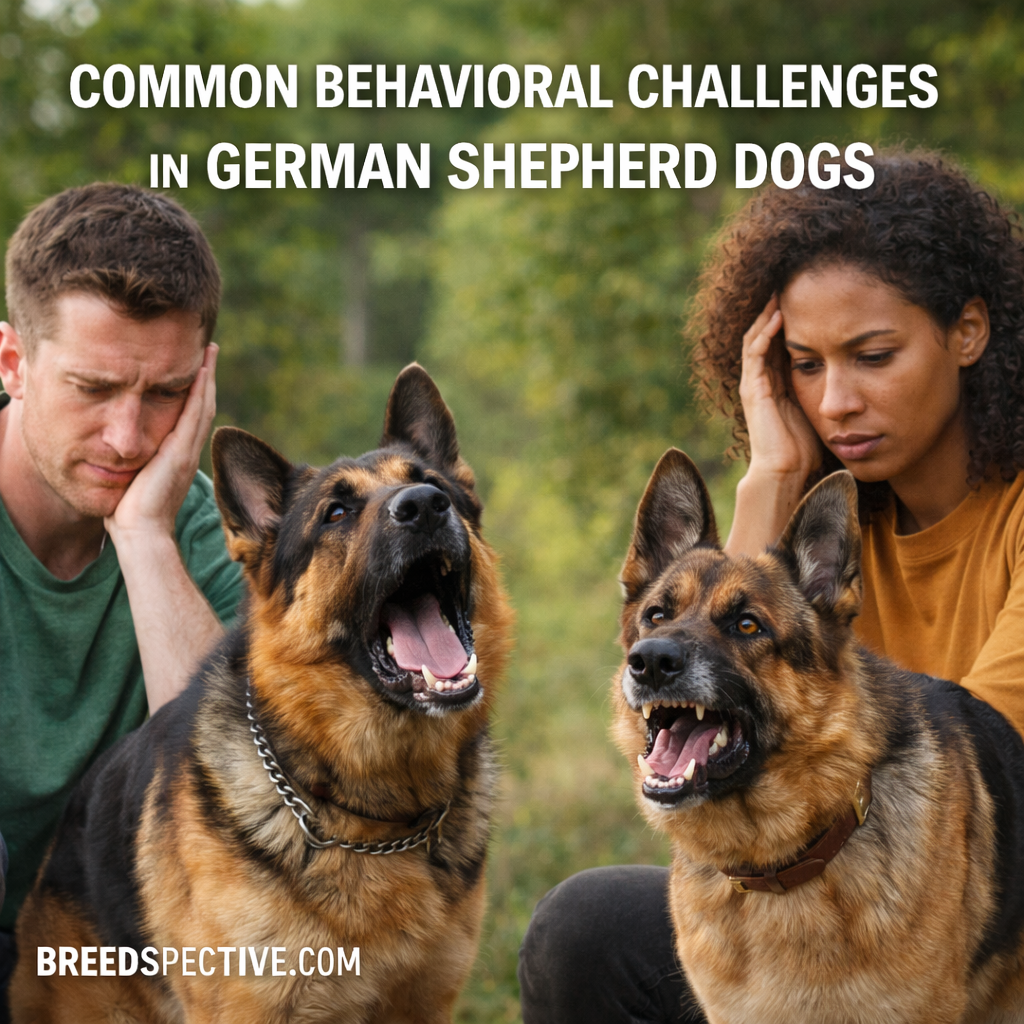
German Shepherds are intelligent, loyal, and highly capable dogs—but they are not behaviorally “easy.” Many of the challenges owners experience are not flaws in the breed, but predictable outcomes of unmet needs, inconsistent training, or misunderstanding the breed’s working background.
This article covers the most common behavioral challenges in German Shepherd dogs, why they occur, and how owners can manage or prevent them effectively.
Why German Shepherds Develop Behavioral Issues
German Shepherds were bred to work closely with humans, make decisions, and stay mentally engaged for long periods. When those instincts are ignored, behavioral problems often emerge.
Common underlying causes include:
- Insufficient physical exercise
- Lack of mental stimulation
- Inconsistent leadership or rules
- Poor early socialization
- Long periods of isolation or boredom
Understanding the “why” behind behaviors is the first step toward correcting them.
Excessive Barking and Vocalization
German Shepherds are naturally alert and vocal. Barking is part of their guarding and communication instincts, but it can become excessive without guidance.
Why it happens:
- Boredom or pent-up energy
- Alerting to sounds, people, or movement
- Anxiety or territorial behavior
- Reinforced barking (owner unintentionally rewards it)
How to manage it:
- Increase daily exercise and structured activity
- Teach a “quiet” command using positive reinforcement
- Avoid yelling, which often escalates barking
- Address the root trigger rather than the noise itself
Controlled alert barking is normal; nonstop barking is usually a sign of unmet needs.
Destructive Chewing and Digging
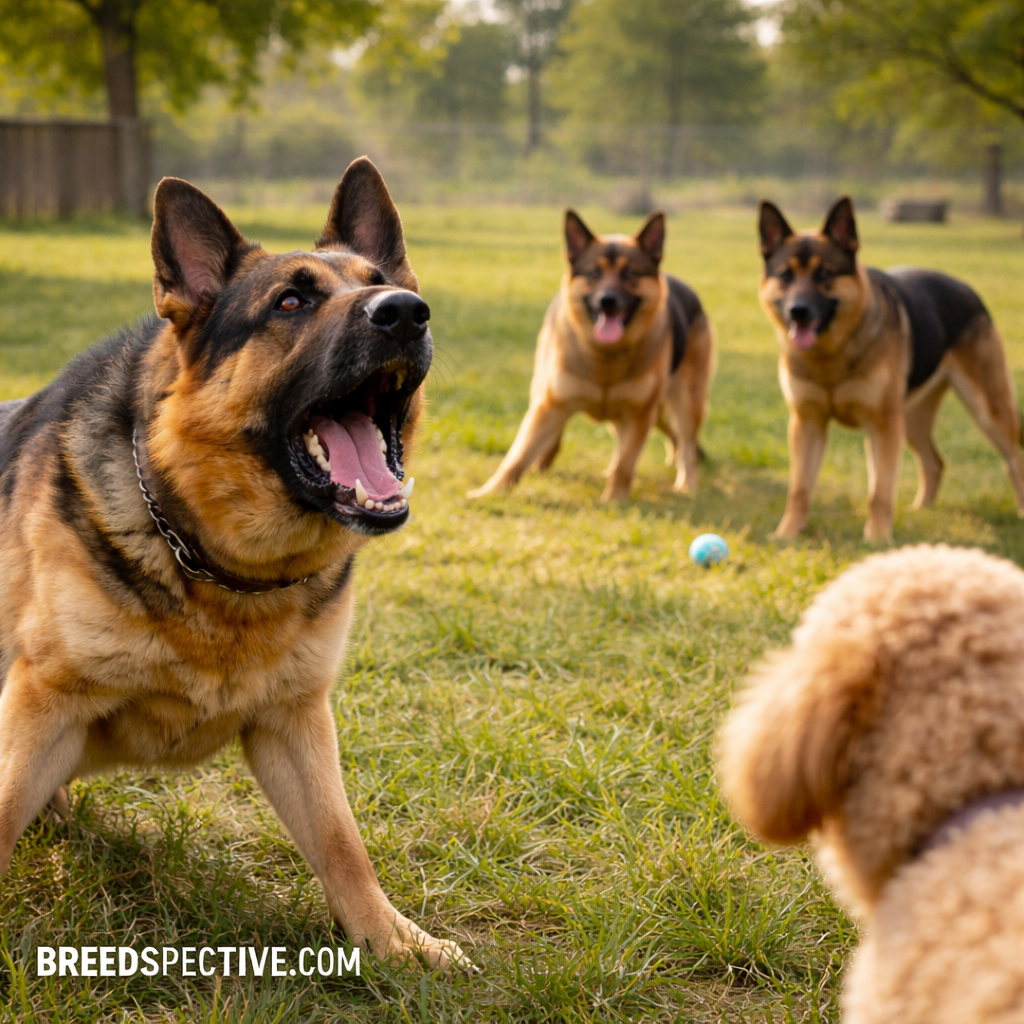
Chewing and digging are common complaints, especially in young German Shepherds.
Common causes:
- Teething (puppies and adolescents)
- Lack of mental stimulation
- Anxiety or frustration
- Too much unsupervised freedom
Prevention and solutions:
- Provide durable, appropriate chew toys
- Rotate toys to maintain novelty
- Crate train responsibly to limit access
- Pair freedom with exercise, not boredom
Destruction is rarely “bad behavior”—it’s often an outlet for excess energy or stress.
Separation Anxiety
German Shepherds form strong emotional bonds with their owners, which can lead to separation anxiety when left alone.
Signs include:
- Excessive barking or howling when alone
- Destructive behavior near doors or windows
- Pacing, drooling, or escape attempts
- Accidents despite being house-trained
Ways to reduce anxiety:
- Gradually build independence with short absences
- Avoid dramatic departures and reunions
- Provide enrichment toys when alone
- Ensure adequate exercise before alone time
Severe cases may require professional training or behavioral support.
Overprotectiveness and Guarding Behavior
Protectiveness is a defining trait of the German Shepherd, but without boundaries it can escalate into problematic behavior.
Common issues:
- Reactivity toward strangers
- Territorial aggression
- Excessive guarding of home, car, or owner
Why it develops:
- Lack of early socialization
- Reinforced suspicion or fear-based responses
- Owner unintentionally rewarding guarding behavior
Healthy management includes:
- Early and ongoing social exposure
- Teaching neutrality, not friendliness, toward strangers
- Calm, confident handling in new situations
- Clear rules about acceptable behavior
A well-trained German Shepherd should be observant—not aggressive.
Reactivity Toward Other Dogs
Some German Shepherds struggle with leash reactivity or dog-to-dog tension.
Triggers often include:
- Poor early social experiences
- Fear-based responses
- Frustration on leash
- Overstimulation
Improvement strategies:
- Controlled, positive dog exposures
- Avoid forcing greetings
- Reward calm behavior around other dogs
- Use distance to reduce stress during training
Reactivity is not dominance—it’s often anxiety or overstimulation.
Jumping and Impulse Control Issues
German Shepherds are powerful dogs, and jumping can become a serious issue if not addressed early.
Why it happens:
- Excitement and poor impulse control
- Inconsistent rules from owners
- Reinforced behavior (attention equals reward)
Correction tips:
- Teach alternative greetings like sit or place
- Ignore jumping while rewarding calm behavior
- Ensure consistency among all family members
- Pair training with adequate daily exercise
Impulse control improves significantly with structured training.
Fearfulness and Sensitivity
Despite their confident image, German Shepherds can be emotionally sensitive.
Signs include:
- Startling easily
- Avoidance of new environments
- Shutting down under harsh training
- Nervous body language
Contributing factors:
- Genetics
- Poor early socialization
- Harsh or punitive training methods
Supportive approaches:
- Positive reinforcement training
- Gradual exposure to new experiences
- Calm, predictable routines
- Building confidence through success-based tasks
A confident German Shepherd is built through trust, not force.
How Training Prevents Most Behavioral Problems
Training is not optional for this breed—it’s foundational.
Effective training focuses on:
- Clear communication
- Consistent rules and expectations
- Mental engagement, not just obedience
- Relationship-building between dog and handler
German Shepherds thrive when they understand their role and feel useful.
When to Seek Professional Help
Some behaviors require expert guidance.
Consider professional help if:
- Aggression is present
- Anxiety is severe or worsening
- Behavior interferes with daily life
- Training progress has stalled
Early intervention is always more effective than waiting.
Final Thoughts
German Shepherd behavioral challenges are rarely random. They are usually the result of unmet physical, mental, or emotional needs. This breed was designed to work, think, and engage deeply with humans—and when those needs are honored, most behavior problems fade dramatically.
With proper exercise, consistent training, and thoughtful leadership, German Shepherds become stable, confident, and deeply rewarding companions.