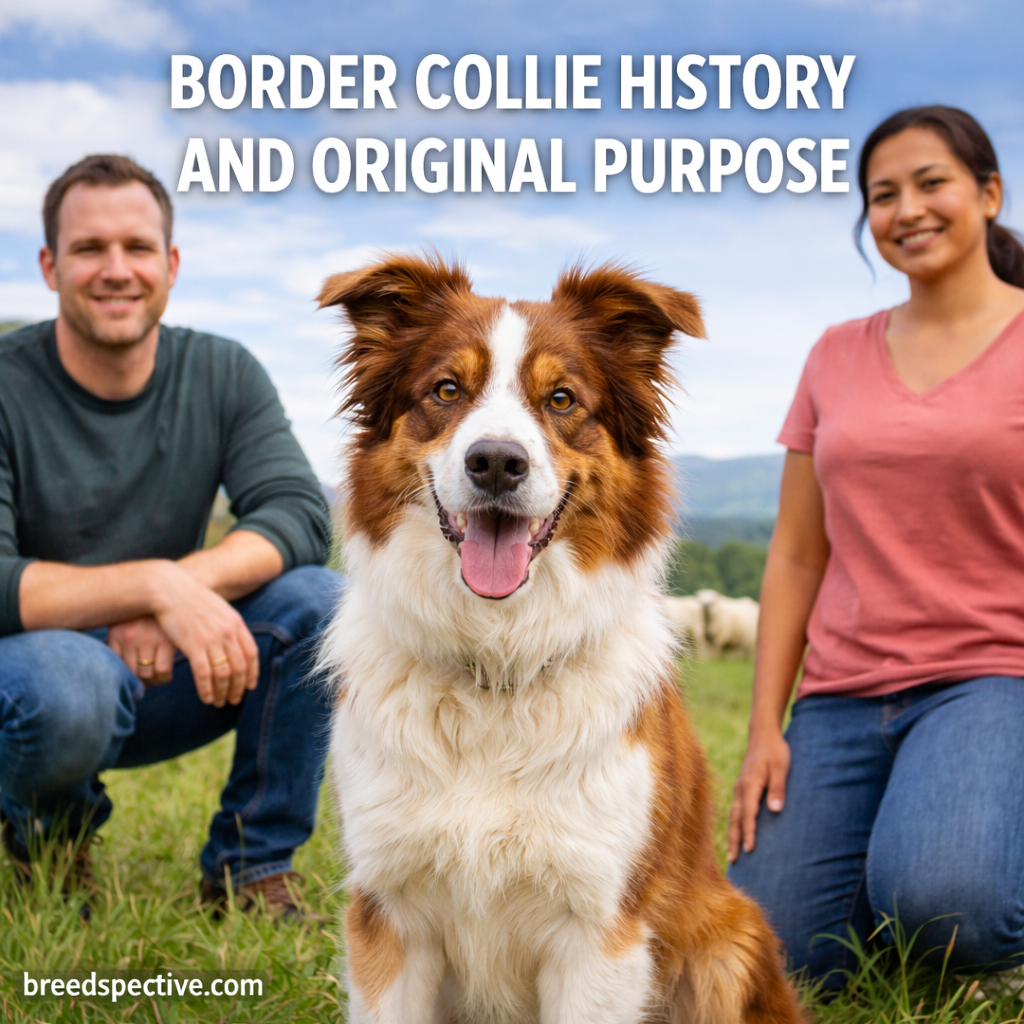
The Border Collie is widely recognized today for its intelligence, athleticism, and intense focus—but these traits didn’t develop by chance. This breed was shaped over centuries by practical working needs, not appearance or companionship alone. Its original purpose as a herding dog still strongly influences how Border Collies think, move, and behave today.
Understanding the breed’s history provides valuable insight into why Border Collies require structure, activity, and mental engagement to truly thrive.
Origins of the Border Collie
The Border Collie developed in the border region between Scotland and England, an area known for rugged hills, open grazing land, and unpredictable weather. Sheep farming dominated the region, and shepherds relied heavily on dogs to manage large flocks across challenging terrain.
Key influences on the breed’s early development included:
- The need for dogs that could work long hours with minimal direction
- Large, scattered flocks requiring distance control
- Harsh conditions that favored endurance and resilience
Dogs that demonstrated intelligence, responsiveness, and calm control were bred again, while others were excluded. This strict selection process produced a highly specialized working dog.
Why the Breed Is Called “Border Collie”
The name “Border Collie” reflects both geography and function.
- “Border” refers to the Anglo-Scottish borderlands where the breed originated
- “Collie” comes from traditional Scottish terms associated with sheepdogs
Before the name became standardized, these dogs were commonly referred to as working collies or sheepdogs. The modern name helped distinguish them from other collie-type breeds that were increasingly bred for appearance rather than performance.
The Original Purpose: Herding Livestock
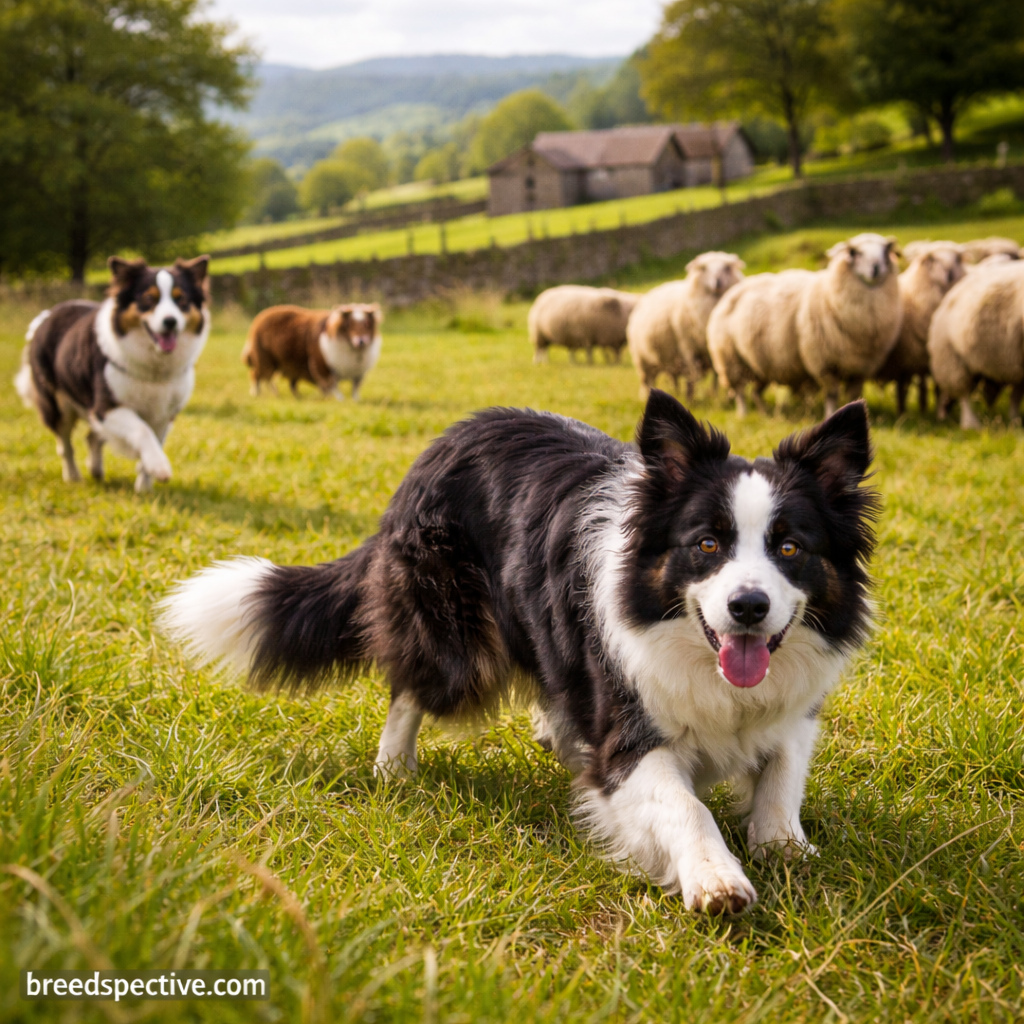
Border Collies were bred specifically for herding sheep with efficiency and precision. Their role required far more than physical strength—it demanded intelligence, strategy, and restraint.
Their core responsibilities included:
- Gathering sheep spread across wide areas
- Driving flocks calmly without causing panic
- Holding animals in position when needed
- Responding instantly to whistles, voice commands, and hand signals
Rather than forcing livestock through aggression, Border Collies were bred to influence movement through positioning, timing, and focus.
The Development of the Herding Eye
One of the most distinctive traits of the Border Collie is its intense stare, often referred to as “the eye.” This behavior was intentionally reinforced through generations of breeding.
The herding eye allows the dog to:
- Control livestock using body language rather than noise
- Apply pressure without physical contact
- Maintain authority while remaining calm
This silent method of control was ideal for sheep, which are highly sensitive to stress. Even modern Border Collies often display this instinct during play or when observing movement.
Selective Breeding for Performance
Unlike many modern dog breeds, Border Collies were never bred to meet visual standards. Early shepherds prioritized function above all else.
Traits that were consistently selected for included:
- Intelligence and problem-solving ability
- Endurance and stamina
- Responsiveness to subtle cues
- Calm, controlled working style
As a result, early Border Collies varied widely in appearance. Coat color, length, and body size were secondary to working ability, which remains true in many working lines today.
The Influence of Old Hemp
One dog is widely regarded as foundational to the modern Border Collie: Old Hemp, born in the late 1800s.
Old Hemp was known for:
- A calm, efficient herding style
- Natural control over sheep with minimal effort
- Passing his traits consistently to his offspring
Because of his success, Old Hemp was bred extensively, and many modern Border Collies can trace their lineage back to him.
The Role of Sheepdog Trials
Sheepdog trials became popular in the 19th century and played a significant role in refining the breed. These competitions tested real-world herding skills rather than appearance.
Trials evaluated:
- Long-distance control
- Precision and obedience
- Ability to manage livestock through complex courses
Border Collies quickly dominated these events, reinforcing selective breeding for intelligence, responsiveness, and endurance.
Separation From Show-Bred Collies
As dog shows gained popularity, many collie-type breeds were increasingly bred for appearance. Border Collies largely avoided this trend.
Key differences included:
- Continued emphasis on working ability
- Minimal focus on physical uniformity
- Preservation of instinct-driven behavior
This separation helped maintain the Border Collie as a true working breed while other collies became more ornamental.
Expansion Beyond Herding Work
As farming practices changed, Border Collies began taking on roles outside traditional livestock management.
Modern roles include:
- Competitive dog sports
- Search and rescue work
- Detection and scent-based tasks
- Service and assistance roles
Their adaptability is a direct result of their original purpose, which required independence, learning, and decision-making.
How History Shapes the Modern Border Collie
Many behaviors seen in Border Collies today are direct reflections of their working past.
These include:
- Extremely high physical and mental energy
- A strong desire for tasks and structure
- Sensitivity to movement and environment
- Natural tendencies to control or herd
When these instincts are not given appropriate outlets, behavioral challenges often emerge.
Why the Original Purpose Still Matters
Even Border Collies raised solely as companions retain strong working instincts. These traits don’t disappear simply because the dog lives in a modern home.
Understanding the breed’s history helps owners:
- Provide meaningful mental stimulation
- Use effective, respectful training methods
- Prevent boredom-related behaviors
- Set realistic expectations
Honoring the breed’s purpose is key to a healthy and balanced relationship.
Final Thoughts on Border Collie History
The Border Collie is the result of centuries of purposeful, performance-driven breeding. Its intelligence, focus, and drive are not personality quirks—they are tools shaped by real working demands.
For owners willing to respect and support that heritage, the Border Collie remains one of the most capable and rewarding dog breeds in the world.