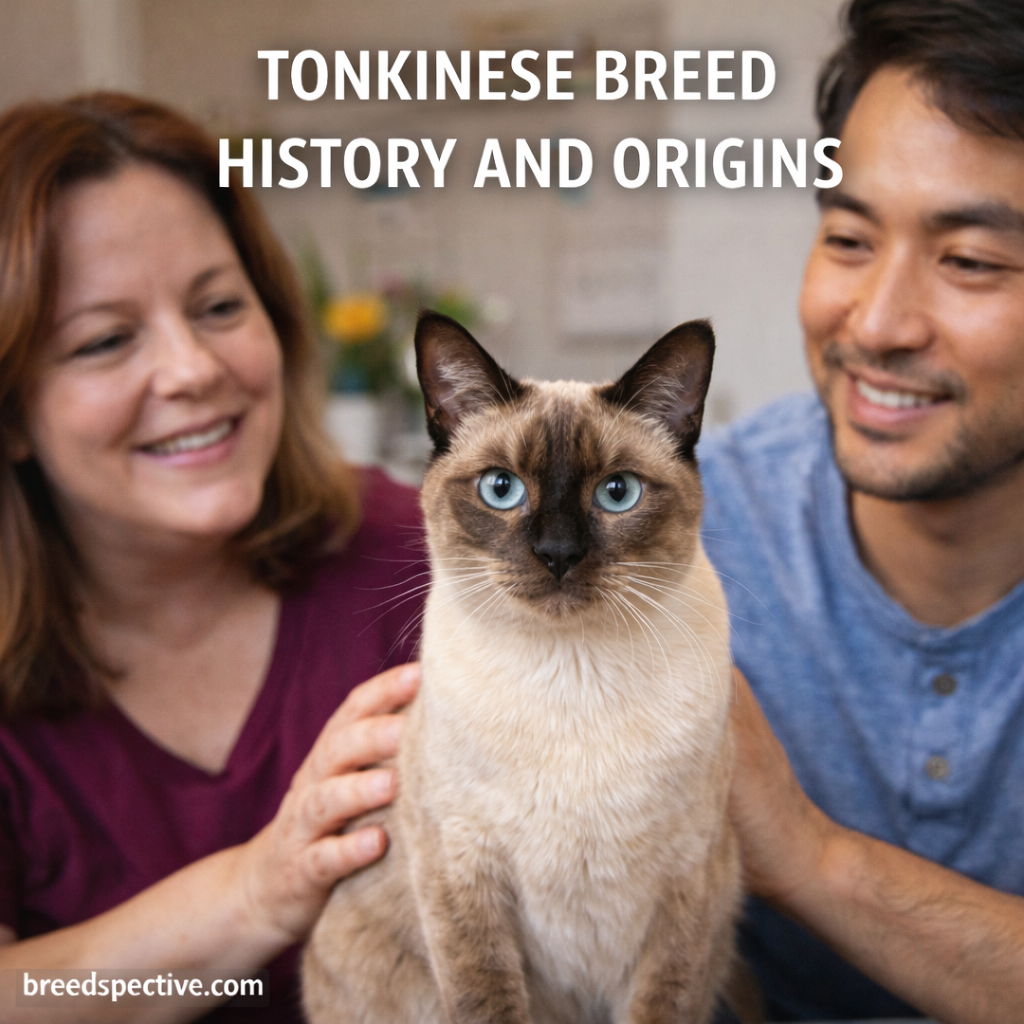
The Tonkinese cat is known today for its affectionate personality, playful energy, and striking appearance—but the breed’s story is just as fascinating as its temperament. Unlike many ancient cat breeds, the Tonkinese has a relatively modern and well-documented history rooted in intentional breeding rather than natural evolution.
Understanding the Tonkinese breed’s origins helps explain why these cats combine intelligence, sociability, and athleticism so seamlessly.
Early Roots: The Foundation Cats
The Tonkinese breed traces its origins to cats that naturally resembled a blend of Siamese and Burmese traits. These cats existed long before the breed was formally recognized.
Historical accounts suggest:
- Cats with intermediate body types appeared in Southeast Asia centuries ago
- These cats displayed softer contrast coloring than Siamese
- Temperaments were often more balanced and people-oriented
One of the earliest recorded cats resembling a Tonkinese was a cat named Wong Mau, brought to the United States in the 1930s. Wong Mau played a pivotal role in the development of both the Burmese and Tonkinese breeds.
The Siamese and Burmese Connection
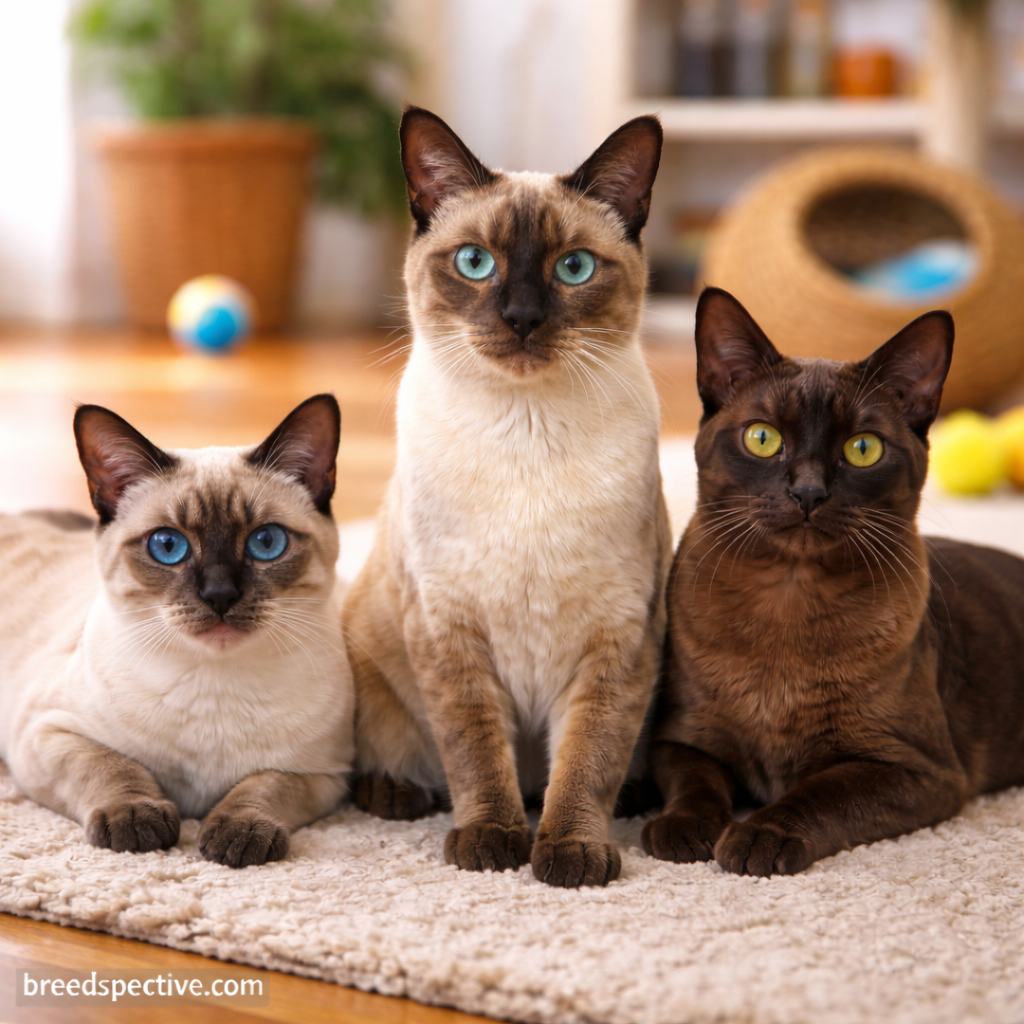
The Tonkinese breed is the direct result of crossing Siamese and Burmese cats. Each parent breed contributed defining traits that shaped the Tonkinese identity.
From the Siamese, the Tonkinese inherited:
- Intelligence and curiosity
- Vocal communication
- Athletic movement
- Colorpoint pattern genetics
From the Burmese, the breed gained:
- A more muscular, compact body
- Softer, affectionate temperament
- Reduced extremity contrast
- Greater tolerance for handling and social interaction
The goal was not to create a hybrid novelty, but to establish a consistent, stable breed with predictable traits.
Intentional Breed Development in the 1960s
The modern Tonkinese breed began to take shape in the 1960s in North America. Breeders in both the United States and Canada independently began developing cats that fell between Siamese and Burmese in appearance and temperament.
Key motivations behind the breed’s development included:
- Creating a cat with moderate vocalization
- Combining intelligence with affectionate behavior
- Producing a balanced body type
- Achieving a unique coat pattern with soft contrast
These early breeders recognized that these cats were not simply crosses, but a distinct type worthy of separate recognition.
Origin of the Name “Tonkinese”
The name “Tonkinese” does not refer to a specific geographic origin of the breed. Instead, it was inspired by the Gulf of Tonkin in Southeast Asia.
The name was chosen to:
- Evoke an exotic, Asian heritage
- Avoid favoring either Siamese or Burmese lineage
- Reflect the breed’s balanced, blended nature
Although the name suggests ancient origins, the modern Tonkinese is a product of selective breeding rather than a naturally occurring landrace.
Early Recognition Challenges
Early acceptance of the Tonkinese breed was not immediate. Many cat associations initially resisted recognizing the breed due to concerns about hybridization.
Common objections included:
- Belief that Tonkinese were simply mixed breeds
- Resistance to recognizing intermediate coat patterns
- Fear of diluting established breed standards
Despite these challenges, dedicated breeders continued refining the breed through selective breeding, gradually producing consistent traits across generations.
Recognition by Cat Associations
Over time, the Tonkinese gained recognition as a distinct breed.
Key milestones include:
- Canadian Cat Association recognition in the early 1970s
- Gradual acceptance by North American registries
- Full championship status granted by major associations over time
As standards became clearer and breeding programs stabilized, opposition faded and appreciation for the breed grew.
The Unique Tonkinese Coat Pattern
One of the most defining features of the Tonkinese is its coat pattern, which sits between the Siamese colorpoint and the Burmese solid coloration.
Tonkinese coats are typically categorized into:
- Mink: Soft contrast with aqua-colored eyes
- Point: Higher contrast similar to Siamese
- Solid: Lower contrast resembling Burmese
The mink pattern is considered the hallmark of the breed and sets Tonkinese cats apart visually from both parent breeds.
Expansion and Popularity Growth
As recognition increased, the Tonkinese began gaining popularity among cat enthusiasts seeking an interactive, social companion.
Factors contributing to growth included:
- Friendly, people-focused personality
- Adaptability to family environments
- Compatibility with other pets
- Moderate grooming requirements
Although still considered a relatively rare breed, Tonkinese cats have developed a loyal following worldwide.
Modern Breeding Practices
Today’s Tonkinese breeders focus on preserving the breed’s defining balance rather than exaggerating features.
Modern breeding priorities include:
- Maintaining moderate body proportions
- Preserving friendly, confident temperament
- Supporting genetic diversity
- Avoiding extreme vocalization or body shapes
Responsible breeding ensures that Tonkinese cats remain healthy, stable, and true to their original purpose.
How History Shapes the Tonkinese Personality
The breed’s carefully planned development directly influences its modern behavior.
Traits shaped by history include:
- High sociability from both parent breeds
- Strong human attachment
- Athletic but not frantic energy
- Emotional intelligence and sensitivity
The Tonkinese is often described as the “best of both worlds,” reflecting its blended origins.
Tonkinese vs. Siamese and Burmese Today
While closely related, the Tonkinese stands apart from its parent breeds in meaningful ways.
Key distinctions include:
- More moderate vocalization than Siamese
- More athletic build than Burmese
- Greater adaptability to varied households
- Balanced independence and affection
These differences make the Tonkinese appealing to owners who admire Siamese intelligence and Burmese affection but want a middle ground.
Why the Breed’s History Matters
Understanding the Tonkinese breed’s history helps owners set realistic expectations.
Historical insight explains:
- Why the breed craves interaction
- Why mental stimulation is essential
- Why Tonkinese cats dislike isolation
- Why routine and companionship matter
Their needs are not accidental—they are the result of intentional, purpose-driven breeding.
Final Thoughts on Tonkinese Breed History
The Tonkinese is a thoughtfully created breed with a clear purpose: to combine intelligence, affection, and balance into one exceptional companion cat. Its history is not ancient, but it is deliberate, ethical, and well-documented.
For those who appreciate a cat that actively participates in daily life, the Tonkinese stands as one of the most engaging breeds shaped by modern breeding practices.