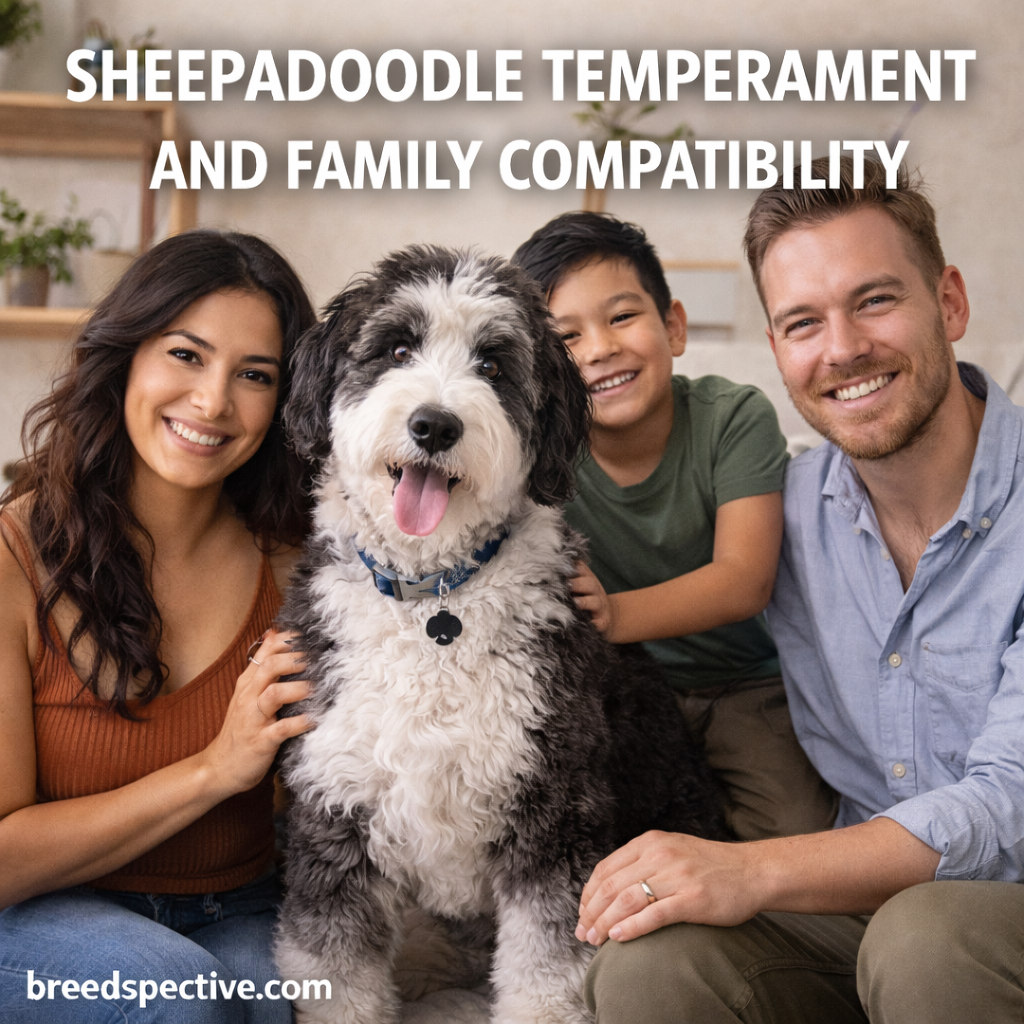
The Sheepadoodle is a popular mixed breed known for its friendly personality, intelligence, and family-oriented nature. A cross between the Old English Sheepdog and the Poodle, this hybrid combines playfulness with loyalty, making it an appealing choice for households seeking an affectionate and engaging companion.
This guide explores Sheepadoodle temperament, behavior patterns, and family compatibility to help you decide if this breed is the right fit for your lifestyle.
Sheepadoodle Temperament Overview
Sheepadoodles are typically warm, people-focused dogs that thrive on interaction. Their temperament reflects a blend of the Old English Sheepdog’s sociability and the Poodle’s intelligence.
Common temperament traits include:
- Friendly and affectionate
- Intelligent and quick to learn
- Playful and energetic
- Loyal to their family
- Social and attention-loving
They often enjoy being involved in daily family activities and may follow their favorite people from room to room.
Intelligence and Trainability
Thanks to their Poodle heritage, Sheepadoodles are highly intelligent and generally easy to train.
Training strengths include:
- Fast learning of commands
- Strong response to positive reinforcement
- Good problem-solving ability
- Enjoyment of structured activities
However, their intelligence means they can become bored without mental stimulation. Consistent training, variety, and engagement are essential to prevent unwanted behaviors.
Energy Level and Activity Needs

Sheepadoodles usually have a moderate to high energy level, especially during their younger years.
Typical energy traits:
- Playful bursts of activity
- Enjoyment of outdoor exercise
- Calm behavior indoors when exercised properly
Daily needs often include:
- One or two walks per day
- Interactive play sessions
- Mental enrichment such as puzzle toys
Without adequate exercise, Sheepadoodles may become restless or overly excitable.
Affection and Bonding Style
Sheepadoodles are known for forming strong emotional bonds with their families.
Affectionate behaviors may include:
- Seeking physical closeness
- Leaning or sitting against family members
- Greeting owners enthusiastically
- Preferring to sleep near people
They thrive in homes where companionship is consistent and may struggle if left alone for long periods.
Compatibility With Children
Sheepadoodles are often an excellent choice for families with children.
Why they work well with kids:
- Gentle and patient demeanor
- Playful nature that matches children’s energy
- Generally tolerant and forgiving
Supervision is still important, especially with younger children, as their size and enthusiasm can unintentionally cause knocks during play.
Interaction With Other Pets
Sheepadoodles are typically social dogs that can coexist well with other animals.
General tendencies include:
- Friendly toward other dogs
- Curious but manageable around cats
- Low prey drive compared to many breeds
Early socialization helps ensure positive interactions and reduces overexcitement.
Sensitivity and Emotional Awareness
This breed is emotionally perceptive and responsive to household dynamics.
Emotional traits include:
- Sensitivity to tone of voice
- Strong reaction to tension or conflict
- Desire for reassurance and consistency
Harsh training methods are not effective and can damage trust. Calm, positive guidance works best.
Behavioral Challenges to Watch For
While generally well-balanced, Sheepadoodles can develop issues if their needs aren’t met.
Common challenges include:
- Separation anxiety
- Jumping due to excitement
- Mouthiness during puppy stages
- Destructive behavior from boredom
Most issues are preventable with training, exercise, and routine.
Grooming and Temperament Connection
Although grooming is a care topic, it impacts temperament as well.
Important considerations:
- Regular grooming reduces discomfort and irritability
- Matted coats can cause stress
- Early grooming exposure improves cooperation
A comfortable dog is more relaxed, patient, and emotionally balanced.
Ideal Home Environment for a Sheepadoodle
Sheepadoodles do best in homes that provide structure, activity, and companionship.
Ideal environments include:
- Active families
- Homes with yards or nearby walking areas
- Owners who enjoy interaction and training
- Consistent daily routines
They are less suited for homes where they are left alone most of the day.
Sheepadoodle Family Compatibility Summary
Sheepadoodles are well-rounded family dogs with a strong desire for connection.
Best suited for:
- Families with children
- Social, active households
- Owners who enjoy training and play
Potential challenges for:
- Very busy households with little time at home
- Owners seeking a low-energy, independent dog
Final Thoughts
The Sheepadoodle’s temperament makes it a loving, playful, and deeply loyal companion. When given proper exercise, mental stimulation, and affection, this breed thrives in family environments and forms strong lifelong bonds.
For households ready to invest time, attention, and engagement, the Sheepadoodle offers an exceptional mix of warmth, intelligence, and family-friendly charm.