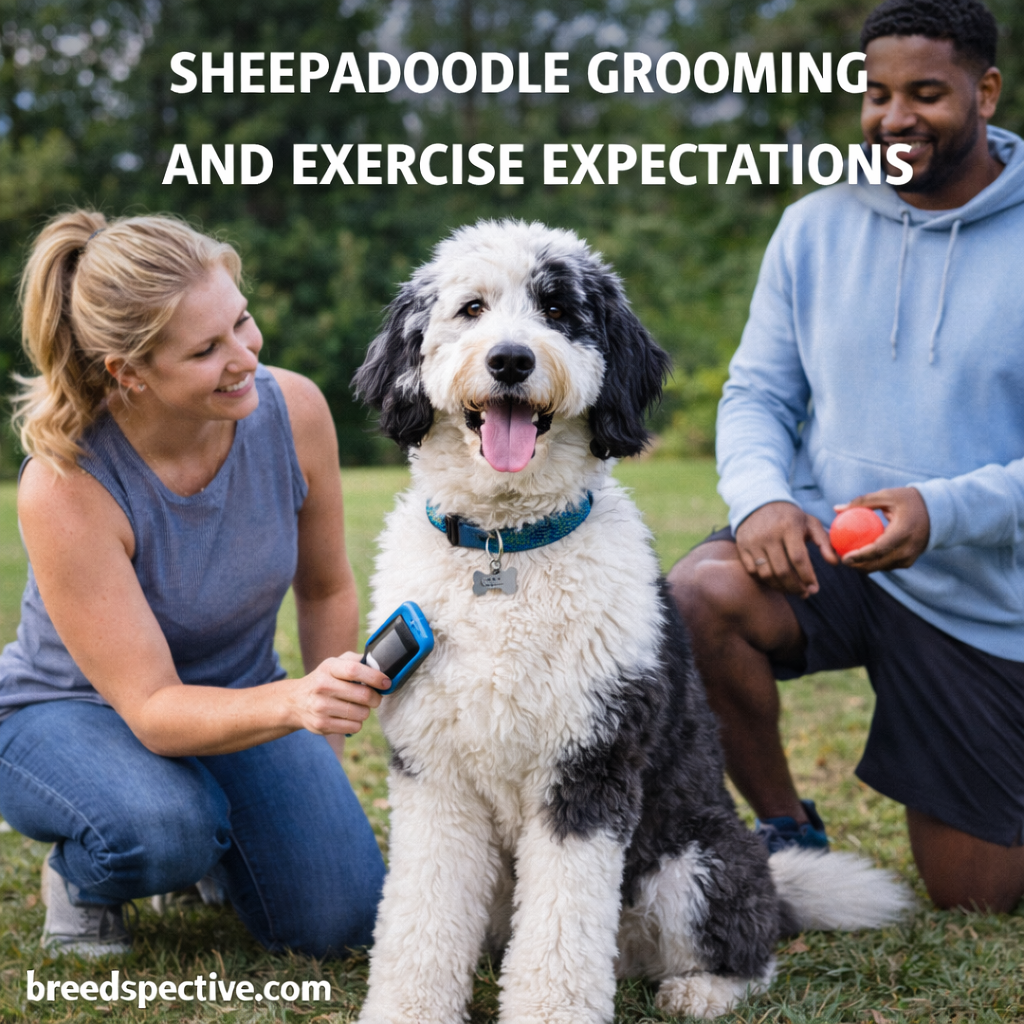
The Sheepadoodle is a high-energy, intelligent mixed breed that combines the Old English Sheepdog’s thick coat with the Poodle’s athleticism and intelligence. While this hybrid is known for being affectionate and family-friendly, it also comes with specific grooming and exercise demands that potential owners must understand.
This guide breaks down Sheepadoodle grooming requirements and daily exercise expectations so you can decide whether this popular doodle breed fits your lifestyle.
Sheepadoodle Coat Type and Grooming Needs
Sheepadoodles can inherit a range of coat types depending on their genetic mix. Most have a thick, wavy, or curly coat that requires consistent maintenance.
Common coat characteristics include:
- Dense, fluffy texture
- Low to moderate shedding
- High matting potential if neglected
- Coat length that grows continuously
Because their coat does not self-maintain, grooming is a lifelong commitment for Sheepadoodle owners.
Brushing Frequency and At-Home Grooming
Regular brushing is essential to prevent painful mats and skin issues.
Recommended brushing routine:
- 3–5 times per week for most coats
- Daily brushing for longer or curlier coats
Brushing helps:
- Prevent matting and tangles
- Remove debris and loose hair
- Keep skin healthy
- Reduce professional grooming costs
A slicker brush and metal comb are typically the most effective tools.
Professional Grooming Schedule
Most Sheepadoodles require routine professional grooming.
Typical grooming schedule:
- Every 6–8 weeks
- More frequent trims for longer styles
Professional grooming usually includes:
- Full coat trim
- Bath and blow-dry
- Nail trimming
- Ear cleaning
Skipping professional grooming can quickly lead to severe matting that requires shaving.
Bathing and Coat Hygiene
Sheepadoodles should be bathed regularly but not excessively.
Bathing guidelines:
- Every 4–6 weeks
- Use dog-specific, gentle shampoos
- Thorough drying to prevent skin irritation
Dirty or damp coats can trap bacteria and cause skin problems if not properly maintained.
Ear Care and Hygiene
Due to their floppy ears and dense hair, Sheepadoodles are prone to ear issues.
Ear care tips include:
- Weekly ear checks
- Keeping hair around ears trimmed
- Drying ears thoroughly after baths or swimming
Regular ear maintenance helps prevent infections and discomfort.
Nail Care and Paw Maintenance
Active Sheepadoodles may wear down nails naturally, but most still require trimming.
Nail care routine:
- Trim every 2–4 weeks
- Monitor dewclaws closely
Long nails can affect gait, posture, and comfort, especially in large doodles.
Sheepadoodle Energy Level Overview
Sheepadoodles are energetic dogs that need daily outlets for both physical and mental stimulation.
Energy traits include:
- Playful and enthusiastic
- High stamina during youth
- Calm indoors when exercised properly
Without adequate activity, they may develop restlessness or behavioral issues.
Daily Exercise Requirements
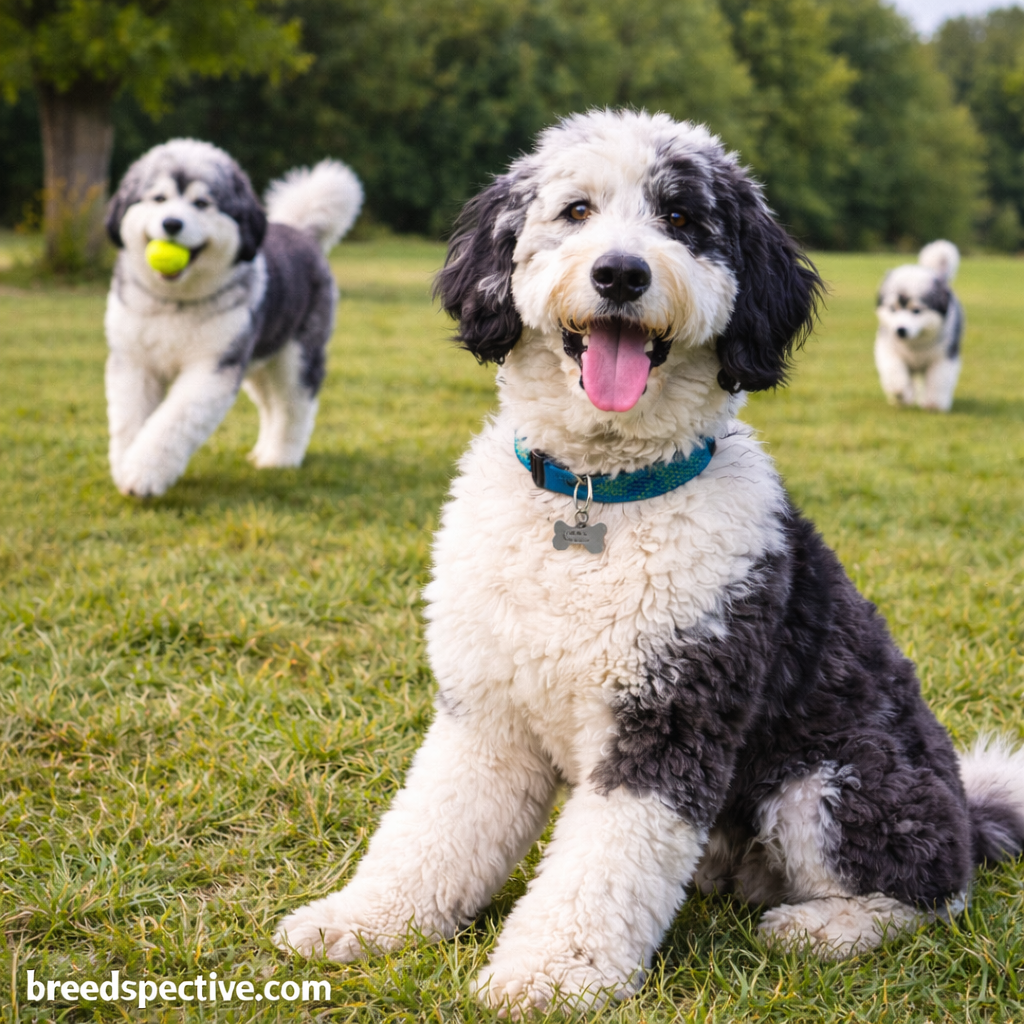
Sheepadoodles require consistent daily exercise to stay balanced and well-behaved.
Typical daily needs include:
- 60–90 minutes of physical activity
- One or two structured walks
- Interactive play sessions
Exercise should be spread throughout the day rather than concentrated in one burst.
Mental Stimulation and Enrichment
Because of their intelligence, Sheepadoodles need mental challenges as much as physical exercise.
Effective enrichment includes:
- Obedience training
- Puzzle toys
- Nose work and scent games
- Learning new commands
Mental stimulation helps prevent boredom-related behaviors such as chewing or excessive barking.
Off-Leash and Outdoor Activity
Many Sheepadoodles enjoy off-leash play in secure environments.
Important considerations:
- Reliable recall training is essential
- Secure fencing is recommended
- Supervision is always required
They often excel at activities like agility, hiking, and fetch.
Exercise Needs by Age
Puppies
- Short, frequent play sessions
- Avoid overexertion to protect joints
Adults
- Full daily exercise routines
- Combination of physical and mental work
Seniors
- Lower-impact activities
- Shorter walks with continued engagement
Adjusting exercise with age helps maintain long-term health.
Common Issues From Poor Grooming or Exercise
Neglecting grooming or exercise often leads to problems such as:
- Severe matting
- Skin infections
- Anxiety or hyperactivity
- Destructive behaviors
Most Sheepadoodle challenges are preventable with routine care and activity.
Ideal Owner Commitment Level
Sheepadoodles thrive with owners who are prepared for ongoing involvement.
Best-suited owners typically:
- Have time for frequent grooming
- Enjoy daily walks and play
- Can afford professional grooming
- Value interaction and training
They are not ideal for low-maintenance or sedentary households.
Final Thoughts
Sheepadoodle grooming and exercise expectations are higher than many first-time owners anticipate. Their beautiful coat and lively personality come with responsibility, consistency, and time investment.
For owners willing to meet these needs, the Sheepadoodle rewards them with affection, intelligence, and an energetic, family-friendly companion.