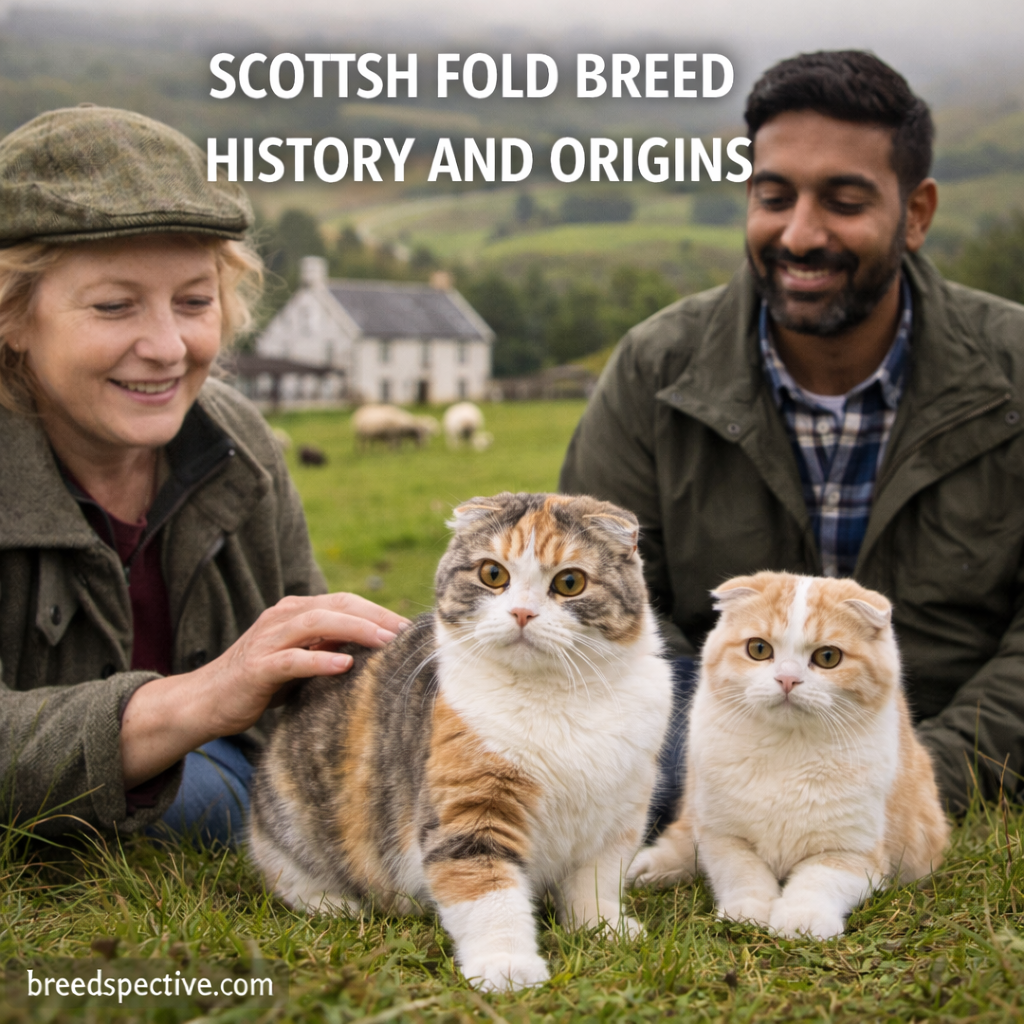
The Scottish Fold is one of the most visually distinctive cat breeds in the world, instantly recognized by its folded ears and round, expressive face. While the breed’s appearance feels almost whimsical, its origins are relatively recent and well documented.
This article explores the history and origins of the Scottish Fold, tracing how a single genetic mutation in Scotland led to the development of an internationally recognized cat breed.
The Accidental Beginning of the Scottish Fold
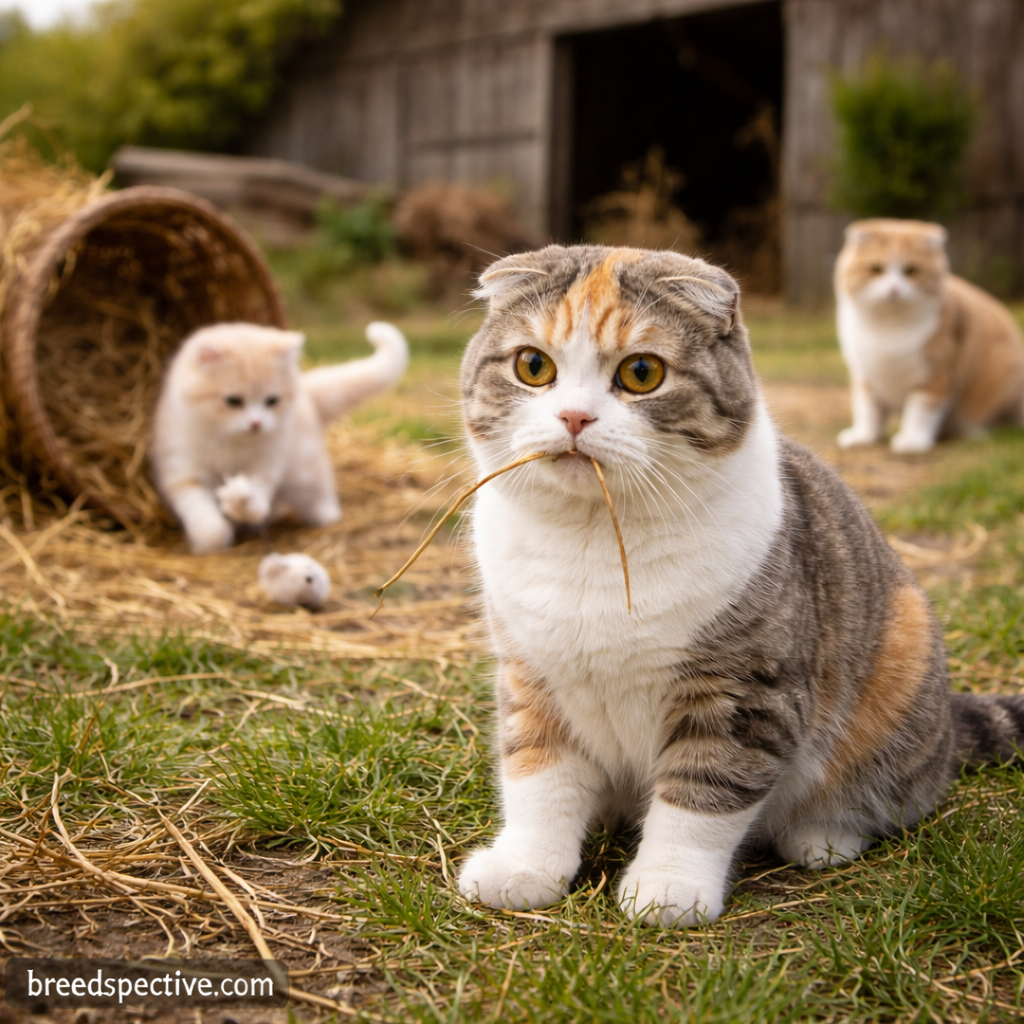
The story of the Scottish Fold begins in 1961 on a farm in rural Scotland.
A white barn cat named Susie caught attention because of her unusual ears, which folded forward instead of standing upright. This natural mutation had never been intentionally bred before and immediately intrigued local breeders.
Susie was not part of an established breed—she was a working farm cat whose unique ears appeared completely by chance.
Discovery of the Folded Ear Mutation
Susie’s folded ears were caused by a genetic mutation affecting cartilage development. Unlike normal cats, whose ear cartilage remains firm and upright, this mutation caused the ears to bend forward and downward.
Key characteristics of the mutation included:
- Forward-folded ears rather than upright ears
- A rounder head appearance
- No initial signs of illness in early generations
At the time, the long-term health implications of the mutation were not yet understood.
Early Breeding Efforts in Scotland
After Susie produced kittens—some of which inherited her folded ears—local breeders began controlled breeding experiments.
The earliest breeding goals were to:
- Preserve the folded-ear trait
- Establish consistent physical characteristics
- Determine whether the mutation was hereditary
Breeding quickly confirmed that the fold was genetically dominant, meaning only one parent needed to carry the gene for folded ears to appear in offspring.
Introduction of British Shorthair and Domestic Cats
To strengthen the developing breed, early breeders crossed Scottish Fold cats with:
- British Shorthair cats
- Local domestic shorthair cats
These outcrosses helped improve:
- Body structure
- Coat quality
- Overall health and genetic diversity
The round face, thick coat, and sturdy build often associated with Scottish Folds today are partly influenced by British Shorthair ancestry.
Expansion Beyond Scotland
As interest grew, Scottish Fold cats were exported to other countries, particularly the United States.
American breeders played a major role in refining the breed by focusing on:
- Consistent ear folding
- Balanced body proportions
- Gentle, affectionate temperament
Over time, the breed became more standardized and gained popularity outside the UK.
Health Concerns and Ethical Breeding Practices
As breeding continued, it became clear that the gene responsible for folded ears was linked to cartilage and bone development issues.
Key discoveries included:
- Breeding two folded-ear cats together increased health risks
- Some cats developed joint stiffness or mobility issues
- Ethical breeding required careful genetic planning
Responsible breeders began pairing folded-ear cats only with straight-eared cats, known as Scottish Straights, to reduce health complications.
Recognition by Cat Associations
Scottish Folds eventually gained recognition from several international cat associations, though not without controversy.
Important milestones included:
- Acceptance by major cat registries outside the UK
- Restrictions in some organizations due to welfare concerns
- Ongoing emphasis on health-focused breeding standards
Even today, recognition and acceptance vary by region, reflecting continued discussion about ethical breeding.
The Role of Scottish Straights
Scottish Straights—cats born without folded ears—are a crucial part of the breed’s survival.
They are:
- Genetically identical except for ear shape
- Essential for responsible breeding programs
- Often overlooked despite similar temperament and appearance
Without Scottish Straights, ethical Scottish Fold breeding would not be possible.
How History Shaped the Scottish Fold Personality
The Scottish Fold’s history influenced more than just appearance.
Over generations, breeders emphasized:
- Calm, affectionate temperament
- Adaptability to indoor living
- Strong human bonding
These traits helped the breed transition from farm origins to beloved household companion.
Modern Scottish Fold Cats Today
Today’s Scottish Folds are known for:
- Their iconic folded ears
- Gentle, people-oriented personalities
- Moderate activity levels
- Suitability for indoor homes
Reputable breeders now place strong emphasis on health screenings, ethical pairings, and long-term well-being.
Common Myths About Scottish Fold Origins
Some misconceptions persist about the breed’s past.
Clarifying the myths:
- Scottish Folds are not an ancient breed
- They were not selectively bred for centuries
- The folded ears originated from a single natural mutation
Their history is modern, scientific, and carefully documented.
Final Thoughts on Scottish Fold History and Origins
The Scottish Fold is a breed shaped by chance, curiosity, and careful breeding decisions. From a single farm cat in Scotland to a globally recognized companion, its journey highlights both the wonders and responsibilities of selective breeding.
Understanding the Scottish Fold’s origins helps owners appreciate not only the breed’s unique appearance but also the importance of ethical breeding practices that prioritize health alongside beauty.