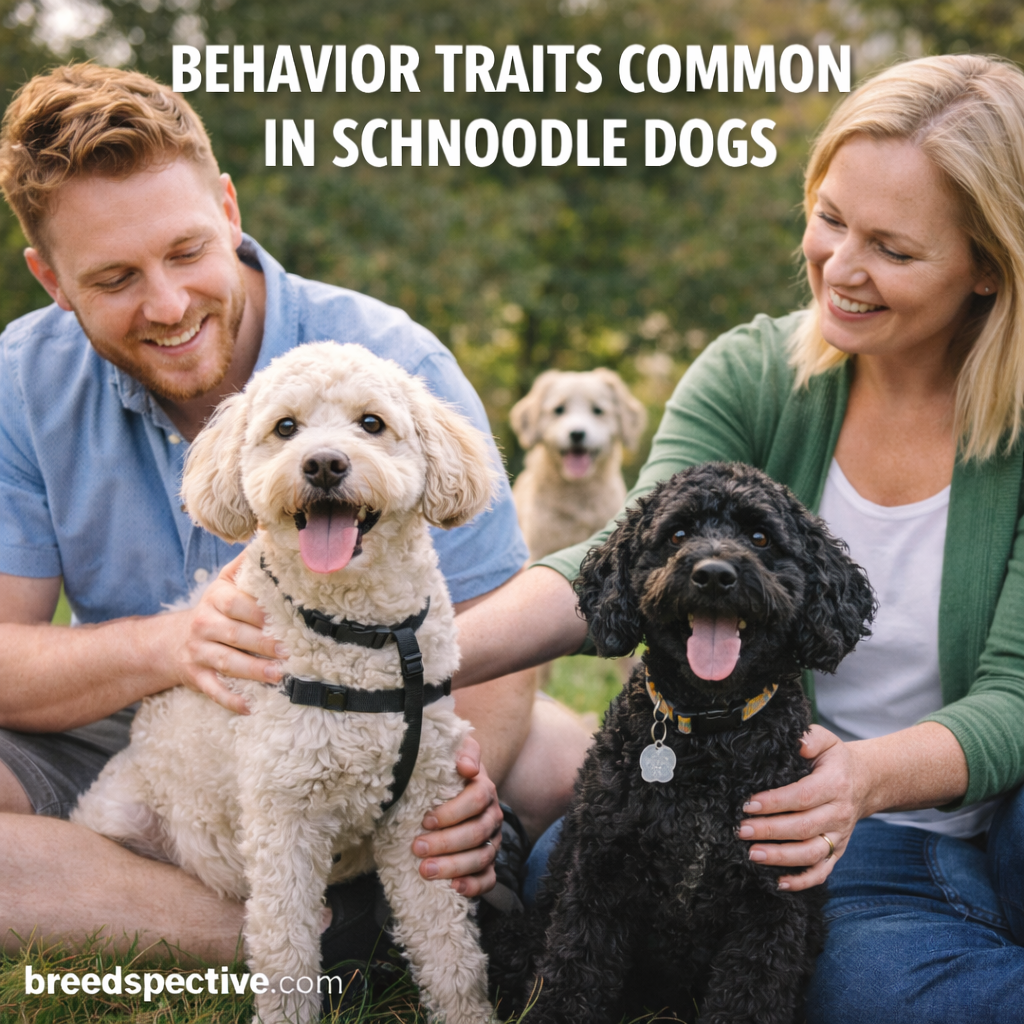
Schnoodles — a mix between a Schnauzer and a Poodle — are known for their intelligence, affectionate nature, and adaptable personalities. Because both parent breeds are highly people-oriented and trainable, Schnoodles often make excellent family companions when their needs are properly understood.
This guide explores Schnoodle temperament, energy levels, social behavior, and how well they fit into different family lifestyles.
Schnoodle Temperament Overview
Schnoodles tend to inherit a balanced mix of alertness, intelligence, and affection from both parent breeds.
Common temperament traits include:
- Friendly and people-focused behavior
- High intelligence and curiosity
- Emotional sensitivity
- Playful yet attentive personality
While individual personalities vary depending on which parent breed traits are stronger, most Schnoodles are eager to bond closely with their families.
Intelligence and Trainability
Both Schnauzers and Poodles rank high in canine intelligence, and Schnoodles benefit greatly from this combination.
Training-related traits:
- Quick learning and strong memory
- Good responsiveness to positive reinforcement
- Enjoyment of mental challenges
- Occasional stubbornness if bored
Schnoodles thrive in environments that offer regular training, puzzle toys, and structured routines.
Energy Level and Activity Needs
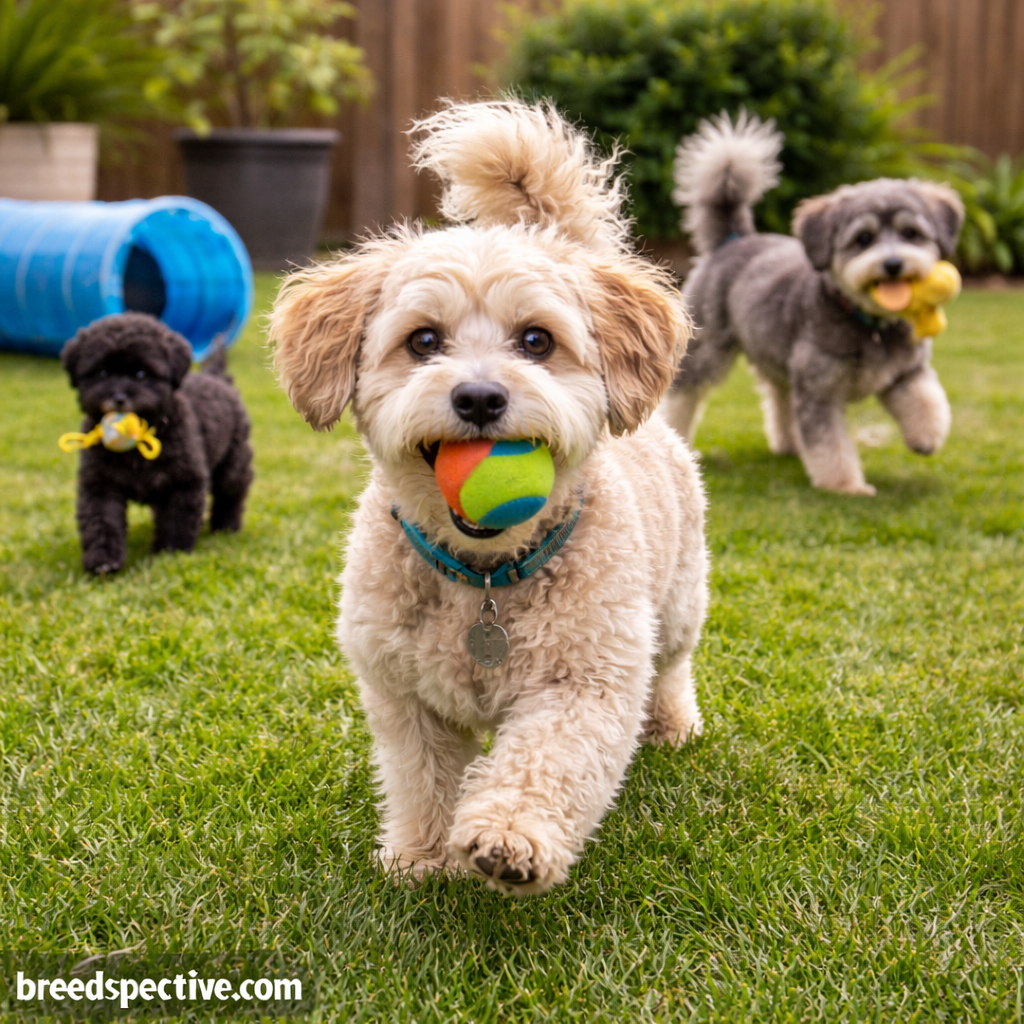
Schnoodles typically have a moderate to moderately high energy level.
Energy-related characteristics:
- Enjoy daily walks and play sessions
- Thrive with interactive games like fetch or tug
- Can adapt to apartment or house living
- Become restless if under-exercised
Daily physical activity combined with mental stimulation helps prevent behavioral issues such as chewing or excessive barking.
Affection and Emotional Bonding
Schnoodles are affectionate dogs that form strong emotional bonds with their families.
Affection traits include:
- Seeking closeness with owners
- Enjoying cuddling and lap time
- Following family members from room to room
- Sensitivity to owner moods
This emotional awareness makes them loving companions but also means they may struggle with extended periods of isolation.
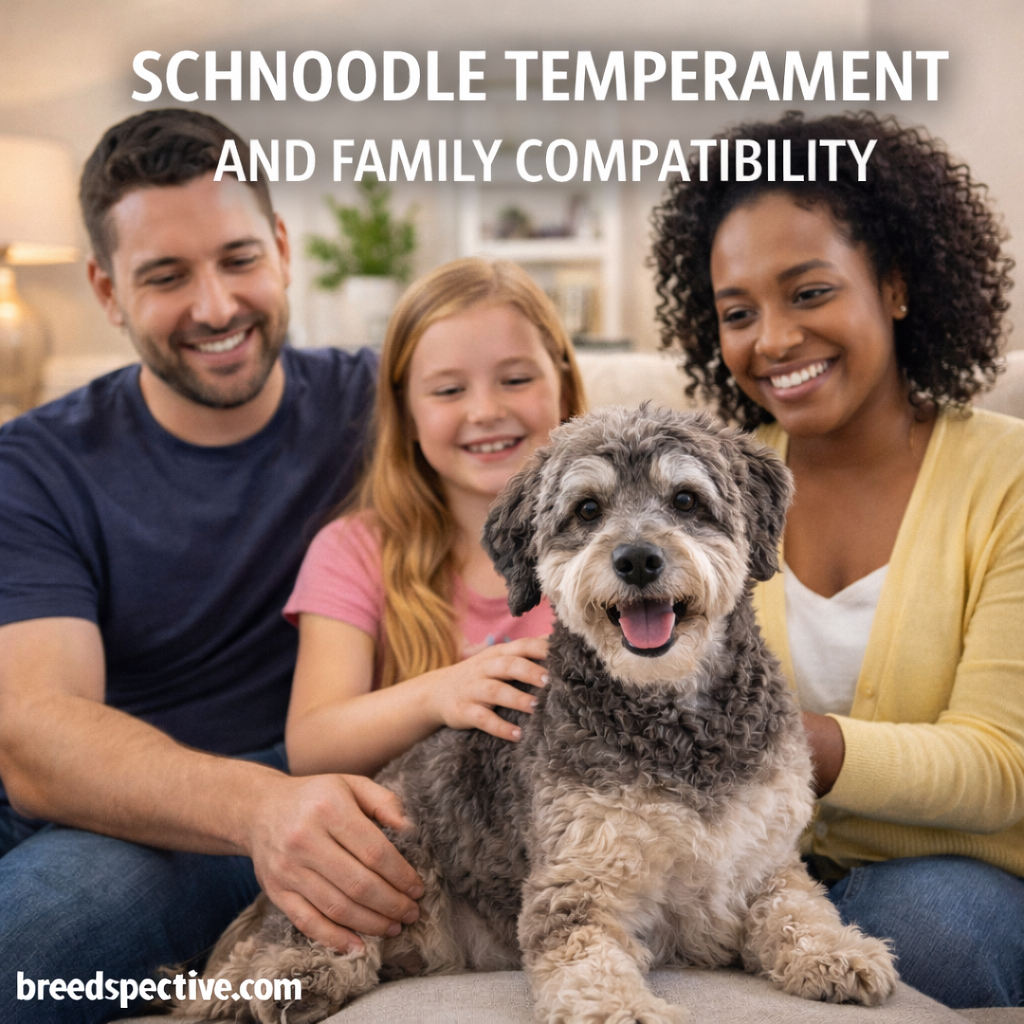
Compatibility With Children
Schnoodles are generally very good family dogs when raised with children.
Child compatibility traits:
- Gentle and playful interactions
- High tolerance for noise and activity
- Enjoyment of games and attention
- Strong desire to participate in family routines
They do best with children who understand gentle handling, especially in smaller Schnoodles bred from Miniature Schnauzers or smaller Poodles.
Compatibility With Other Pets
Schnoodles usually get along well with other animals, particularly when socialized early.
Pet compatibility factors:
- Often friendly with other dogs
- Can coexist peacefully with cats
- May show curiosity toward small animals
- Benefit from gradual introductions
Early exposure helps reduce territorial or overly excitable behavior.
Social Behavior With Strangers
Schnoodles are typically friendly but alert around unfamiliar people.
Common social tendencies:
- Curious but cautious initial behavior
- Alert barking to announce visitors
- Warm up quickly once trust is established
Their Schnauzer heritage may make them more vocal or watchful, while Poodle traits often add sociability.
Separation Anxiety and Independence
Because of their strong attachment to people, Schnoodles can be prone to separation anxiety.
Signs may include:
- Whining or barking when left alone
- Destructive behavior
- Pacing or restlessness
They do best in homes where someone is around for much of the day or where independence is gradually taught through training.
Adaptability to Different Lifestyles
Schnoodles are highly adaptable when their needs are met.
They fit well into:
- Active families
- Homes with older children
- Apartments with daily exercise
- Houses with yards and play space
Their size can vary widely, so lifestyle fit often depends on whether the dog is a Toy, Miniature, or Standard Schnoodle.
Vocal Tendencies and Alertness
Schnoodles may inherit the Schnauzer’s tendency to vocalize.
Vocal behavior includes:
- Alert barking at sounds or movement
- Vocal excitement during play
- Communication when bored or anxious
Consistent training helps prevent excessive barking from becoming a habit.
Grooming Sensitivity and Handling
While not directly related to temperament, grooming tolerance affects family compatibility.
Behavioral grooming traits:
- Generally cooperative with routine grooming
- Sensitive to rough handling
- Respond well to calm, patient care
Early exposure to brushing and handling improves long-term cooperation.
Potential Behavioral Challenges
Like all mixed breeds, Schnoodles can develop challenges if their needs are unmet.
Common issues include:
- Boredom-related behaviors
- Mild stubbornness
- Separation-related stress
- Overexcitement in young dogs
Most issues are manageable with training, exercise, and consistent routines.
Ideal Family Environment for a Schnoodle
Schnoodles thrive in families that:
- Enjoy interaction and play
- Provide mental stimulation
- Use positive reinforcement training
- Offer companionship and structure
They are not well-suited for households where they are left alone for long hours every day.
Final Thoughts
Schnoodles are intelligent, affectionate, and family-oriented dogs that adapt well to many lifestyles. Their playful energy, emotional sensitivity, and eagerness to please make them excellent companions for families willing to invest time in training, exercise, and bonding.
When matched with the right home, a Schnoodle becomes a loyal, engaging, and deeply connected family member.