
The Russian Blue is admired today for its plush silver-blue coat, vivid green eyes, and calm, intelligent nature. While the breed’s modern reputation is well established, its origins are surrounded by mystery, maritime travel, and careful selective breeding. Understanding Russian Blue breed history and origins helps explain the breed’s reserved temperament, loyalty, and elegant appearance.
This article explores where the Russian Blue came from, how it spread across the world, and how its past shaped the cat we know today.
Early Origins in Northern Russia
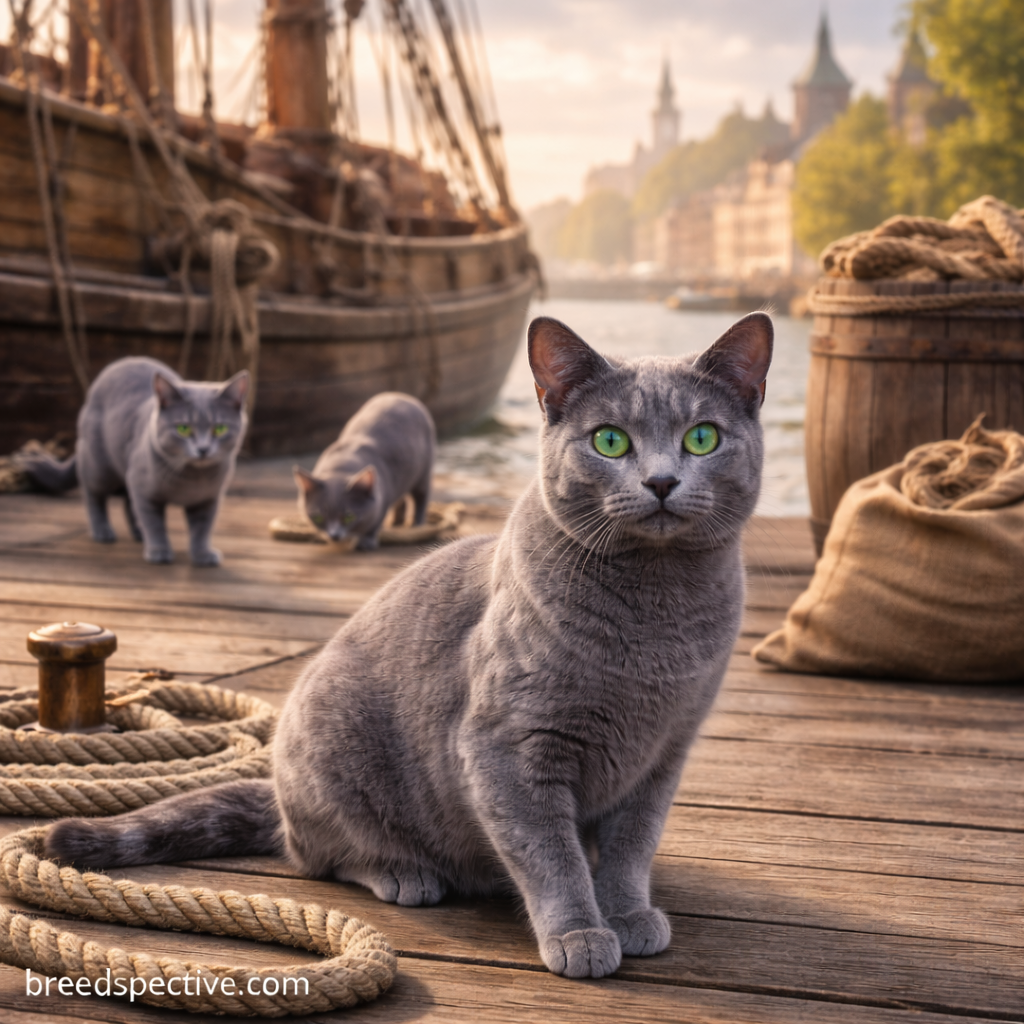
The Russian Blue is widely believed to have originated in the port city of Arkhangelsk in northern Russia. This region’s cold climate is thought to have influenced the breed’s dense, plush double coat.
Key theories about early origins include:
- Natural development in harsh northern climates
- Thick fur evolved for insulation
- Calm, observant temperament suited to quiet environments
Because written records are limited, much of the breed’s earliest history is based on geographic and physical evidence rather than documentation.
Arrival in Europe by Sea
Russian Blues are believed to have reached Europe via merchant ships in the mid-1800s. Sailors likely valued these cats for their hunting ability and calm demeanor aboard ships.
Important milestones include:
- Arrival in Britain through shipping routes
- Early admiration for the breed’s appearance
- Initial classification as “Archangel Cats,” referencing Arkhangelsk
These early cats quickly attracted attention at cat shows due to their unique coat color and refined build.
Early Recognition and Cat Shows
By the late 19th century, Russian Blues were appearing in organized cat exhibitions in England.
Key developments include:
- Exhibition under various names, including Archangel Cat
- Recognition as a distinct type among blue-coated cats
- Early breeding efforts to preserve appearance and temperament
At this stage, Russian Blues were often grouped with other blue cats before breed standards became more refined.
Challenges During World War II
World War II nearly led to the disappearance of the Russian Blue in Europe. Breeding programs were severely disrupted, and remaining cats were extremely limited.
To preserve the breed, breeders:
- Crossed Russian Blues with Siamese and British Shorthairs
- Carefully selected kittens that matched Russian Blue traits
- Gradually refined coat texture, eye color, and body type
These efforts saved the breed but also temporarily altered its appearance and temperament.
Development of the Modern Russian Blue
After the war, breeders focused on restoring the Russian Blue’s original characteristics.
Selective breeding emphasized:
- Dense, plush double coat
- Distinct silver-blue coloration
- Bright green eyes
- Calm, reserved temperament
By the mid-20th century, the Russian Blue had regained a consistent and recognizable appearance.
Expansion Into the United States
Russian Blues were introduced to the United States in the early to mid-1900s. American breeders played a key role in stabilizing the modern breed standard.
Important developments include:
- Recognition by major cat registries
- Refinement of body structure and coat quality
- Growing popularity as companion cats
The breed gained a reputation for being intelligent, gentle, and emotionally sensitive.
How History Shaped Russian Blue Personality
The Russian Blue’s temperament is closely tied to its historical background.
Historical influences on personality include:
- Calm demeanor from quiet environments
- Loyalty formed through close human bonds
- Sensitivity shaped by selective breeding
- Reserved nature influenced by careful social interaction
These traits make Russian Blues deeply attached to their families while remaining cautious with strangers.
Russian Blue vs Similar Breeds
Russian Blues are sometimes confused with other blue-coated cats, but their history and traits are distinct.
Key differences include:
- Plush double coat unlike short, flat coats
- Naturally quiet communication style
- More reserved personality than many similar breeds
- Strong preference for routine and familiarity
These distinctions reflect intentional breeding choices made over decades.
Russian Blues in Modern Times
Today, Russian Blues are cherished as companion cats around the world.
Modern characteristics influenced by history include:
- Strong bonds with trusted humans
- Preference for stable environments
- Moderate energy levels
- Elegant, low-drama presence
They are especially popular with owners who value calm interaction and emotional awareness.
Why Russian Blue History Still Matters
Understanding the Russian Blue’s origins helps owners better meet the breed’s needs.
Benefits of knowing the breed’s history include:
- Realistic expectations of temperament
- Improved care and enrichment choices
- Reduced stress from environmental changes
- Stronger human-cat relationships
History explains why Russian Blues thrive on routine, trust, and consistency.
Final Thoughts
Russian Blue breed history is a blend of natural development, maritime travel, near extinction, and careful restoration. From northern Russia to homes around the world, the breed has retained its elegance, intelligence, and emotional depth.
Understanding Russian Blue history and origins offers valuable insight into why this breed remains one of the most quietly devoted and refined feline companions today.