Puggle Temperament Overview
The Puggle is a popular mixed breed created by crossing a Pug with a Beagle. This combination results in a dog that blends the Beagle’s curiosity and energy with the Pug’s affectionate, people-loving nature. Puggles are known for being friendly, expressive, and deeply attached to their families.
They tend to thrive on human interaction and enjoy being involved in daily household life. While generally cheerful and outgoing, their temperament can vary depending on which parent breed’s traits are more dominant.
Common temperament traits include:
- Affectionate and people-oriented
- Playful and energetic
- Curious and alert
- Social with familiar people
- Emotionally expressive
Puggles are rarely aloof and usually prefer companionship over independence.
Personality Traits in Everyday Life
In daily life, Puggles are lively, entertaining companions. They often follow family members from room to room and enjoy being at the center of activity. Their Beagle heritage can make them inquisitive and scent-driven, while their Pug side contributes to their love of cuddling and relaxation.
Typical personality characteristics include:
- Enthusiastic greetings
- A strong desire for attention
- Occasional stubbornness
- Playful behavior well into adulthood
- Sensitivity to owner moods
Because of their expressive faces and behavior, Puggles often communicate their needs clearly, whether they want to play, eat, or cuddle.
Energy Level and Exercise Needs
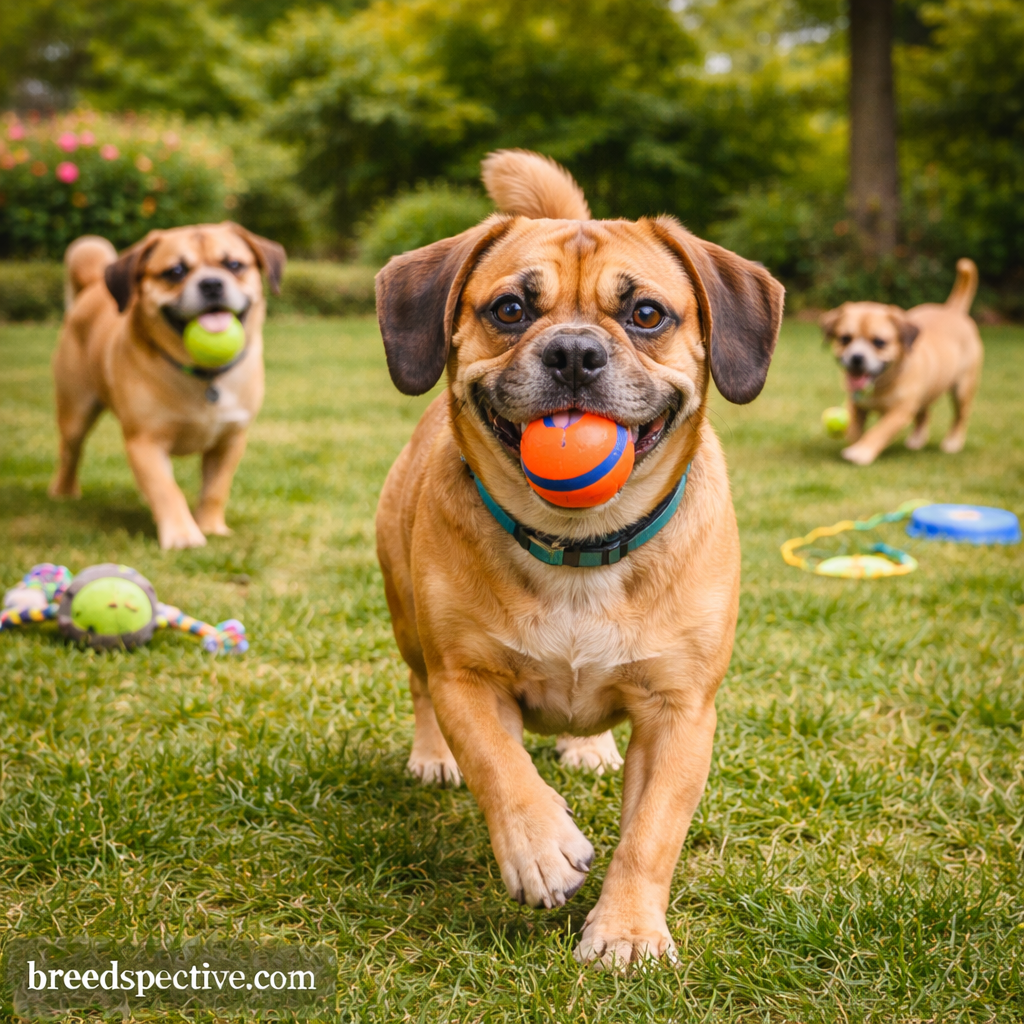
Puggles have a moderate energy level. They are more active than Pugs but usually less intense than purebred Beagles. Daily exercise is important to prevent boredom and weight gain.
Their activity needs usually include:
- 30–60 minutes of daily exercise
- Walks combined with playtime
- Short bursts of energetic activity
- Mental stimulation through games or training
They enjoy exploring new smells, so leash walks are recommended. Off-leash time should only occur in securely fenced areas due to their scent-driven instincts.
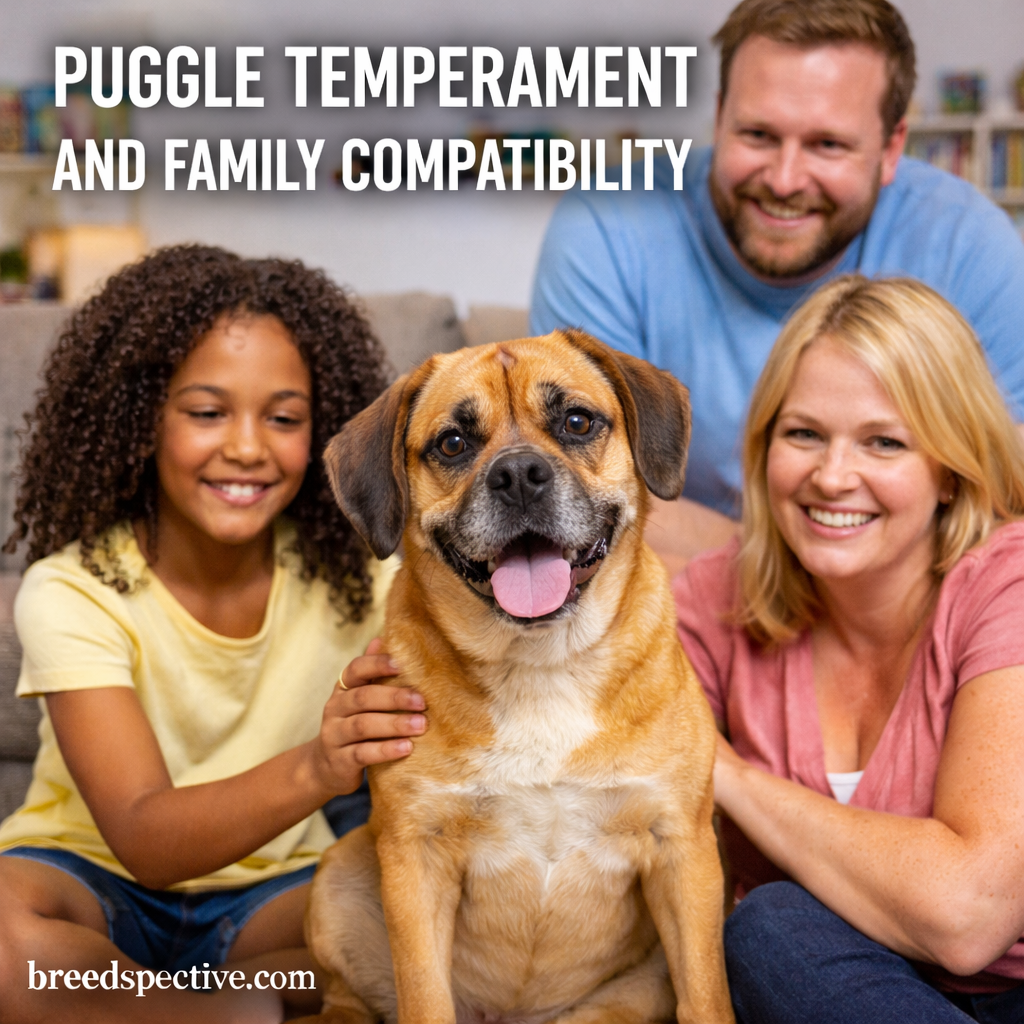
Puggles and Family Compatibility
Puggles are widely regarded as excellent family dogs. Their friendly nature and adaptable personality make them well-suited for a variety of household types.
Why Puggles work well in families:
- Gentle and affectionate with children
- Enjoy play without being overly rough
- Adapt well to busy households
- Thrive on routine and companionship
Supervision is still important with very young children, as Puggles can become overly excited during play.
They do best in homes where they are not left alone for long periods, as they strongly prefer human interaction.
Behavior With Children
Puggles typically do very well with children when properly socialized. They enjoy interactive play and are usually patient and tolerant.
Positive traits with kids include:
- Playful but not aggressive
- Tolerant of handling
- Enjoy games and attention
- Often form strong bonds with kids
Teaching children respectful interaction helps prevent accidental stress or overstimulation.
Compatibility With Other Pets
Most Puggles are social with other dogs and can coexist peacefully with cats, especially when raised together.
Pet compatibility factors include:
- Generally friendly with other dogs
- May chase smaller animals due to scent instincts
- Better with cats when introduced early
- Enjoy social play with canine companions
Early socialization helps reduce chasing behaviors and improves adaptability.
Trainability and Intelligence
Puggles are intelligent but can be stubborn. Their Beagle side may encourage independent thinking, while their Pug side seeks approval and affection.
Training characteristics include:
- Respond well to positive reinforcement
- Easily motivated by food rewards
- Short attention span if sessions are too long
- Can become distracted by scents
Consistency, patience, and engaging training sessions produce the best results.
Common Behavioral Challenges
While generally easygoing, Puggles can develop behavioral issues if their needs are not met.
Common challenges include:
- Excessive barking
- Separation anxiety
- Food obsession and begging
- Stubbornness during training
- Weight gain from inactivity
Most of these issues are manageable with structure, exercise, and clear boundaries.
Living Environment and Space Needs
Puggles are adaptable and can live comfortably in apartments or houses, provided they receive adequate exercise and attention.
Ideal living conditions include:
- Moderate daily activity
- Access to walks or outdoor play
- Climate-controlled environments
- Owners who enjoy interaction and routine
Because some Puggles inherit breathing sensitivities from the Pug side, extreme heat should be avoided.
Who Is a Puggle Best For?
Puggles are best suited for owners who want an affectionate, playful, and social companion.
They are a great fit for:
- Families with children
- First-time dog owners
- Apartment or suburban living
- People who enjoy daily walks and play
They may not be ideal for:
- Owners away from home all day
- People seeking a highly obedient dog
- Those wanting a low-shedding breed
Final Thoughts on Puggle Temperament and Family Fit
The Puggle combines charm, curiosity, and affection into a compact, family-friendly companion. Their playful energy and emotional warmth make them a joy to live with, especially for households that value interaction and routine.
With proper training, regular exercise, and plenty of attention, the Puggle can be a loving and adaptable addition to a wide range of families.