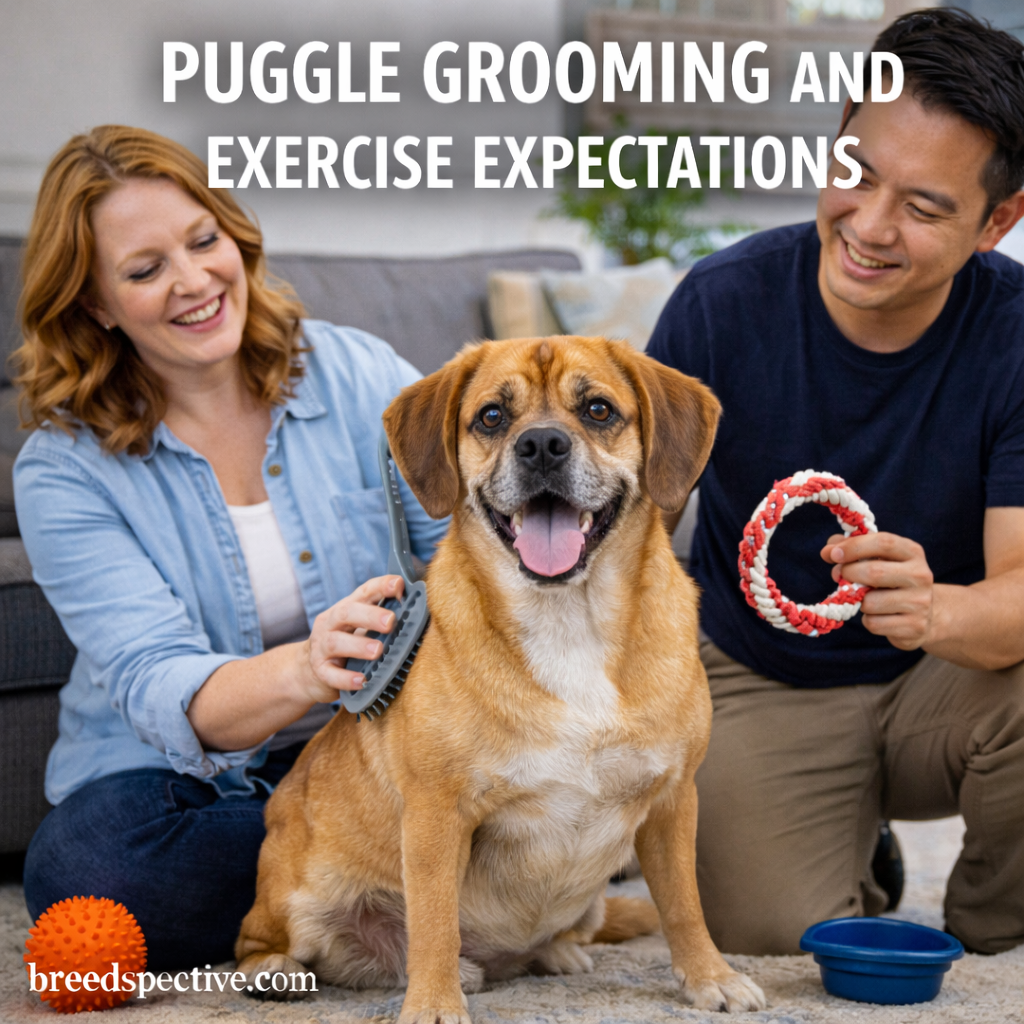
Puggle Grooming and Exercise Overview
The Puggle is a mixed breed that combines the Pug’s compact build and expressive face with the Beagle’s athleticism and curiosity. As a result, Puggles have moderate grooming needs and a manageable but important exercise requirement.
While they are generally easy to care for, their grooming and activity routines must be consistent to prevent common issues such as shedding buildup, skin irritation, weight gain, and boredom-related behaviors.
Coat Type and Shedding Level
Puggles typically have a short, dense coat that lies close to the body. Coat texture can vary slightly depending on whether the Pug or Beagle traits are more dominant, but shedding is common year-round.
Coat characteristics include:
- Short, smooth hair
- Dense undercoat in many individuals
- Moderate to heavy shedding
- Seasonal shedding increases in spring and fall
Although the coat is short, Puggles are not considered low-shedding dogs.
Brushing and Coat Maintenance
Regular brushing helps control shedding and keeps the coat healthy. It also reduces loose hair around the home and promotes better skin health.
Recommended brushing routine:
- 2–3 times per week
- Daily brushing during heavy shedding periods
- Use a rubber brush or soft bristle brush
- Gentle strokes to avoid skin irritation
Consistent brushing significantly reduces loose hair buildup.
Bathing and Skin Care
Puggles do not require frequent bathing, but occasional baths help remove dirt, oils, and allergens from the coat.
Bathing guidelines include:
- Every 4–6 weeks or as needed
- Use a gentle, dog-safe shampoo
- Avoid overbathing to prevent dry skin
- Rinse thoroughly to avoid residue
Some Puggles may be prone to sensitive skin, especially if they inherit the Pug’s skin folds.
Facial Folds and Wrinkle Care
If a Puggle inherits deeper facial folds from the Pug side, these areas require routine cleaning to prevent moisture buildup and irritation.
Facial care tips:
- Wipe folds several times per week
- Dry thoroughly after cleaning
- Watch for redness or odor
- Keep the area clean and dry
Not all Puggles have pronounced wrinkles, but those that do need extra attention.
Ear Cleaning and Dental Care
Puggles often have floppy ears, which can trap moisture and debris.
Routine ear care includes:
- Weekly ear checks
- Cleaning as needed with a vet-approved solution
- Drying ears after baths or outdoor play
Dental care is also important, as small-to-medium breeds are prone to dental buildup.
Dental maintenance includes:
- Brushing teeth several times per week
- Dental chews or toys
- Regular veterinary dental checks
Nail Trimming and Paw Care
Puggles should have their nails trimmed regularly to prevent discomfort and posture issues.
Nail care guidelines:
- Trim every 3–4 weeks
- Check nails after long walks
- Inspect paw pads for cracks or irritation
Proper nail length supports healthy movement and exercise.
Exercise Needs and Energy Level
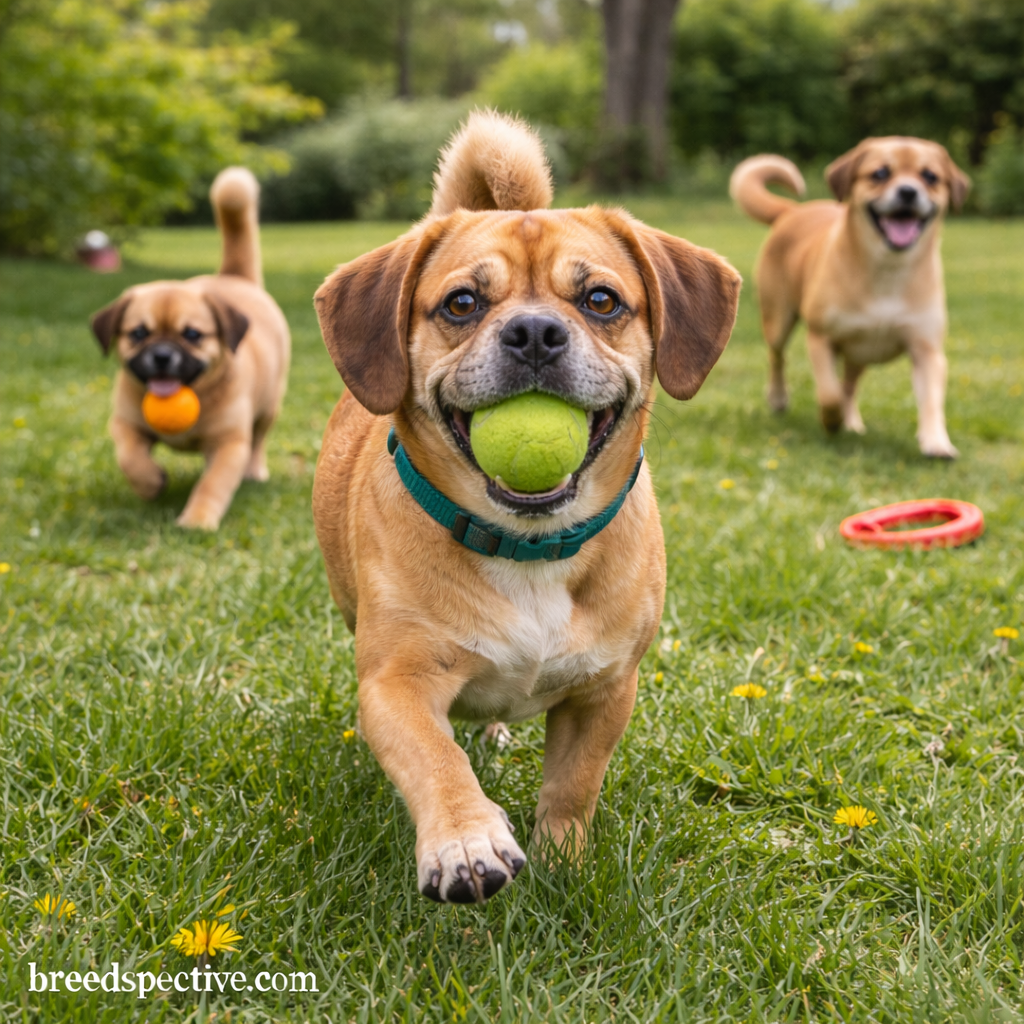
Puggles have a moderate energy level. They are more active than Pugs but usually less intense than Beagles. Daily exercise is essential for both physical and mental health.
Typical exercise needs include:
- 30–60 minutes of activity per day
- Combination of walks and playtime
- Moderate pacing rather than intense workouts
They enjoy activity but can tire quickly, especially in warm weather.
Walking and Outdoor Activity
Daily walks are one of the best forms of exercise for a Puggle. Their Beagle heritage gives them a strong interest in smells and exploration.
Walking recommendations:
- One or two walks per day
- Secure leash at all times
- Allow time for sniffing and exploration
- Avoid extreme heat
Due to possible breathing sensitivity, exercise intensity should be monitored closely.
Playtime and Mental Stimulation
In addition to physical activity, Puggles benefit greatly from mental enrichment.
Effective enrichment activities include:
- Puzzle toys
- Hide-and-seek games
- Basic obedience training
- Scent-based games
Mental stimulation helps prevent boredom-related behaviors such as chewing or excessive barking.
Exercise Limitations and Safety Considerations
Some Puggles inherit shortened snouts from the Pug side, which can affect breathing and heat tolerance.
Important safety considerations:
- Avoid intense exercise in hot or humid weather
- Provide frequent water breaks
- Watch for signs of overheating
- Exercise during cooler parts of the day
Moderation is key to keeping a Puggle safe and comfortable.
Weight Management Through Exercise
Puggles are prone to weight gain if exercise and diet are not carefully managed.
Exercise helps with:
- Maintaining a healthy weight
- Reducing joint strain
- Improving mood and behavior
- Supporting overall longevity
Consistent daily activity plays a major role in long-term health.
Ideal Grooming and Exercise Routine
An ideal routine for a Puggle balances light grooming with consistent activity.
A healthy weekly routine may include:
- Brushing several times per week
- Daily walks and play sessions
- Weekly ear and fold checks
- Regular mental enrichment
Routine and consistency are more important than intensity.
Final Thoughts on Puggle Grooming and Exercise
Puggles are relatively low-maintenance when it comes to grooming but require consistent attention to shedding, skin care, and hygiene. Their exercise needs are moderate but essential for preventing weight gain and behavioral issues.
With regular brushing, basic grooming care, daily walks, and engaging play, the Puggle remains a happy, healthy, and well-balanced companion for a wide range of households.