
The Pug is one of the world’s oldest companion dog breeds, with a history rooted in ancient royalty, luxury, and intentional human companionship. Unlike many breeds developed for hunting, guarding, or work, the Pug was created for a single purpose: to live closely with people and provide emotional comfort. Its distinctive appearance and affectionate temperament are the result of centuries of careful breeding.
This article explores the Pug’s origins, historical role, and how its original purpose continues to shape the breed today.
Ancient Origins of the Pug
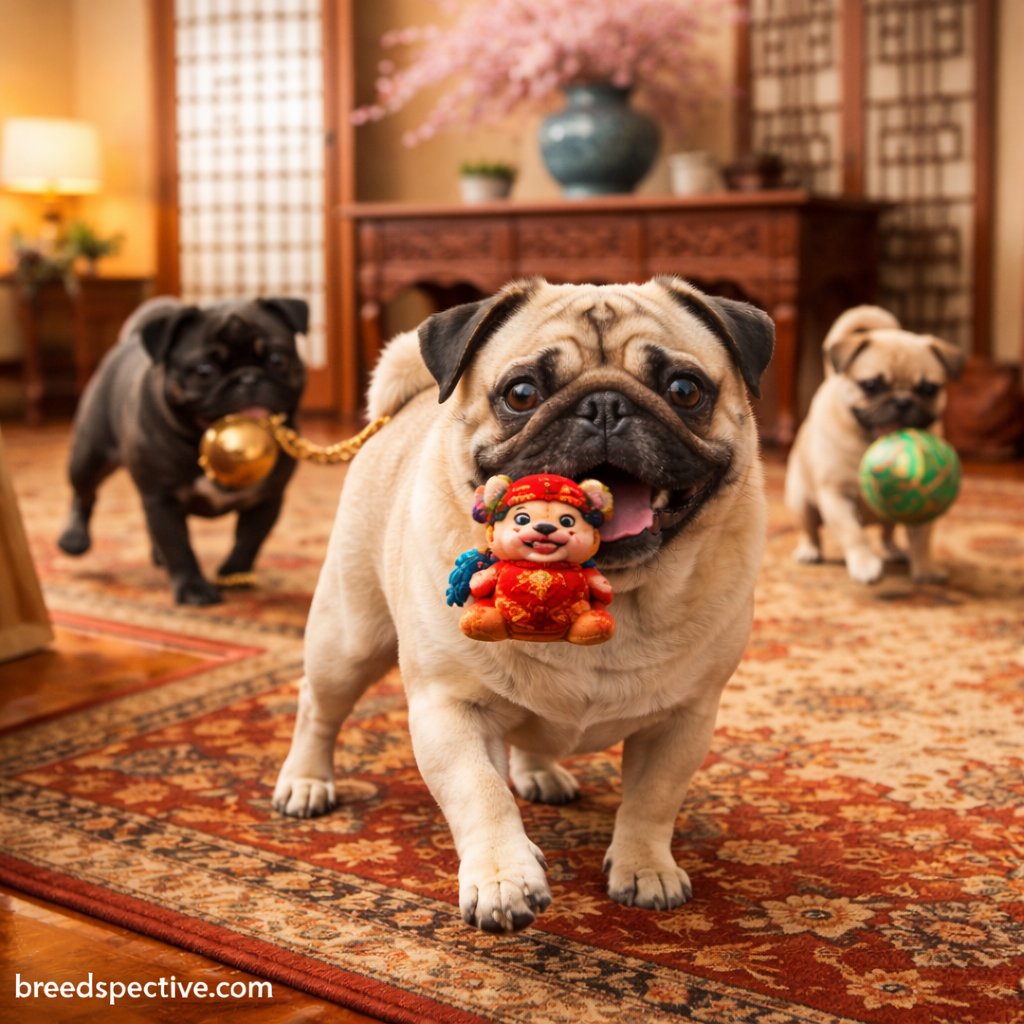
The Pug’s history dates back more than 2,000 years to ancient China, making it one of the oldest known companion breeds.
Key aspects of its early origins include:
- Bred during the Han Dynasty (around 200 BCE)
- Kept exclusively by Chinese emperors and nobility
- Preserved through highly controlled breeding programs
Pugs were considered valuable treasures and lived sheltered, luxurious lives within imperial palaces.
Cultural Significance in Ancient China
Pugs were not simply pets—they carried symbolic meaning in Chinese culture.
Notable cultural elements included:
- Facial wrinkles were prized and selectively bred
- Symmetrical wrinkle patterns were especially valued
- Certain wrinkle formations were believed to resemble Chinese characters associated with luck or fortune
Their expressive faces were one of the breed’s most celebrated traits, admired for both appearance and symbolism.
Life in the Imperial Court
For centuries, Pugs lived exclusively among Chinese royalty.
Their palace life typically included:
- Dedicated caretakers and servants
- Guarded living quarters
- Restricted breeding to preserve lineage
Because of their elite status, Pugs were rarely seen outside the imperial court, helping keep the breed pure and consistent.
Original Purpose of the Pug
The Pug was bred solely as a companion dog.
Its original role included:
- Providing emotional comfort to royalty
- Offering constant physical closeness
- Sitting on laps and warming owners
- Serving as a symbol of wealth and prestige
Pugs were never intended to hunt, guard, or perform physical labor. Their value was emotional, not functional.
Temperament Shaped by History
The Pug’s modern personality is a direct result of its historical purpose.
Centuries of selective breeding produced traits such as:
- Strong attachment to humans
- Desire for constant companionship
- Low prey drive
- Minimal independence
Pugs were bred to thrive alongside people, not away from them.
Introduction to Europe
Pugs were introduced to Europe in the 16th century through Dutch traders.
Important milestones include:
- Arrival in the Netherlands via trade routes
- Rapid adoption by European nobility
- Spread throughout royal courts across Europe
The breed’s charm and compact size made it especially popular among aristocratic families.
Pugs and European Royalty
Once in Europe, Pugs became closely associated with royalty and the upper class.
Notable historical connections include:
- The House of Orange in the Netherlands
- French and English royal courts
- Ownership by noblewomen and aristocrats
In some cultures, Pugs symbolized loyalty, devotion, and prestige.
Breed Recognition and Standardization
As the breed spread beyond royal circles, formal standards were established.
Key developments included:
- Formation of early breed clubs in the 19th century
- Recognition by major kennel organizations
- Standardization of size, coat color, and facial features
Despite these changes, the Pug’s role as a companion remained unchanged.
Original Purpose vs. Modern Life
While Pugs no longer live in palaces, their role has stayed remarkably consistent.
Then and now, the Pug’s purpose is to:
- Provide companionship
- Strengthen emotional bonds with humans
- Thrive in close indoor environments
- Offer affection and comfort
Few breeds have maintained such a clear connection to their original purpose.
How History Influences the Modern Pug
Today’s Pugs still reflect their ancient heritage through:
- People-focused behavior
- Comfort with indoor living
- Low-to-moderate energy levels
- Sensitivity to owner emotions
Understanding this history explains why Pugs struggle with long periods alone and thrive in attentive, companion-focused homes.
Final Thoughts
The Pug’s history is a story of devotion, luxury, and intentional companionship. From ancient Chinese palaces to modern living rooms, the breed has always existed to be close to people. Its affectionate nature, expressive face, and relaxed lifestyle are the result of thousands of years of purposeful breeding.
Understanding the Pug’s original purpose helps owners better appreciate the breed’s needs—and why the Pug remains one of the most beloved companion dogs in the world.