
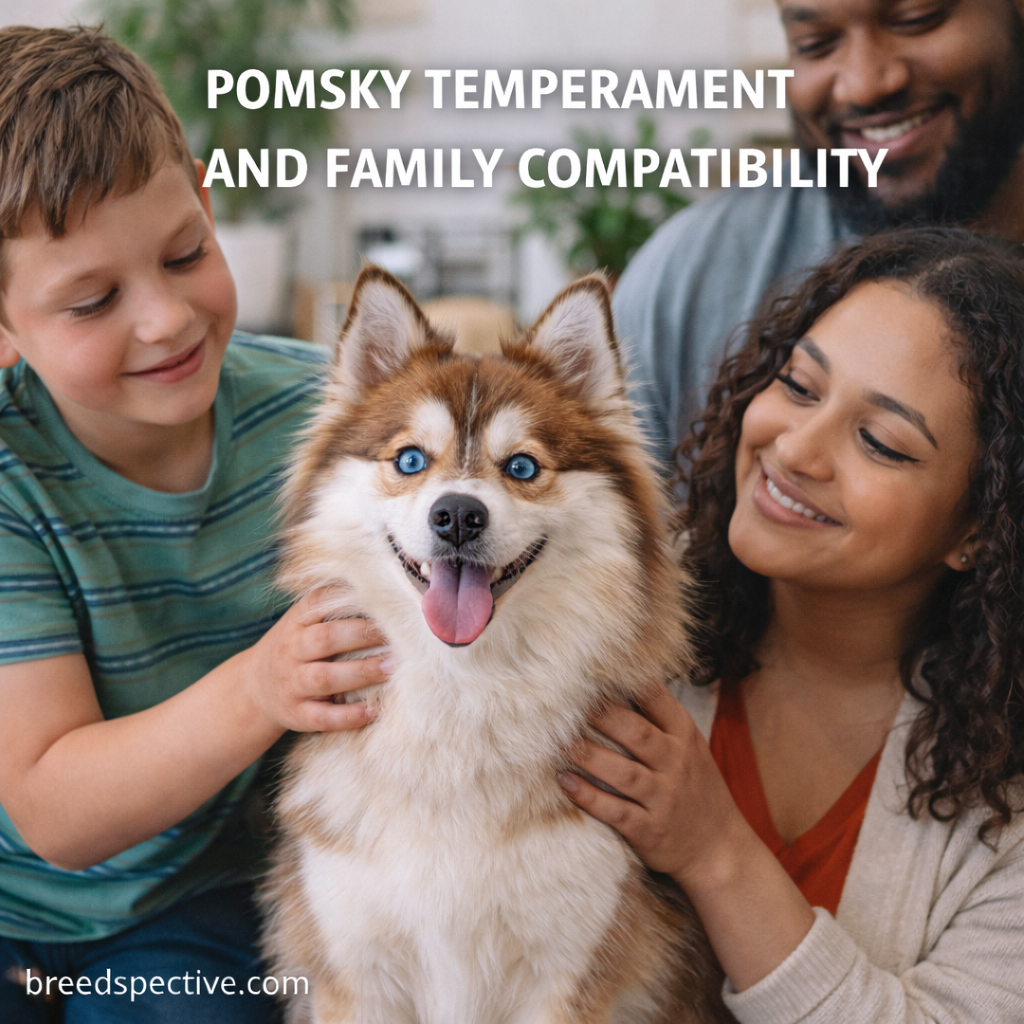
The Pomsky is a popular mixed breed known for its fox-like appearance, expressive eyes, and energetic personality. A cross between the Pomeranian and the Siberian Husky, Pomskies combine traits from both parent breeds, resulting in a dog that is playful, intelligent, and full of character. Understanding Pomsky temperament and family compatibility is essential for determining whether this mixed breed fits your home and lifestyle.
This guide explains how Pomskies typically behave, how they interact with families, and what kinds of households they thrive in.
Pomsky Temperament Overview
Pomskies tend to inherit a blend of the Husky’s confidence and curiosity with the Pomeranian’s alertness and affection. Because they are a mixed breed, individual temperaments can vary, but some patterns are common.
Typical Pomsky temperament traits include:
- Playful and energetic
- Intelligent and quick to learn
- Affectionate with family members
- Alert and sometimes vocal
- Curious and occasionally mischievous
Pomskies are often described as big personalities in small-to-medium-sized bodies. They enjoy being involved in daily activities and do best when they receive regular attention.
Intelligence and Trainability
Pomskies are generally intelligent dogs, but their intelligence can come with a stubborn streak, especially if Husky traits are dominant.
Training characteristics include:
- Quick understanding of commands
- Selective listening when bored or distracted
- Strong response to positive reinforcement
- Need for consistent, patient training
Short, engaging training sessions with treats, praise, and variety tend to work best. Harsh training methods can lead to resistance or anxiety.
Energy Level and Activity Needs
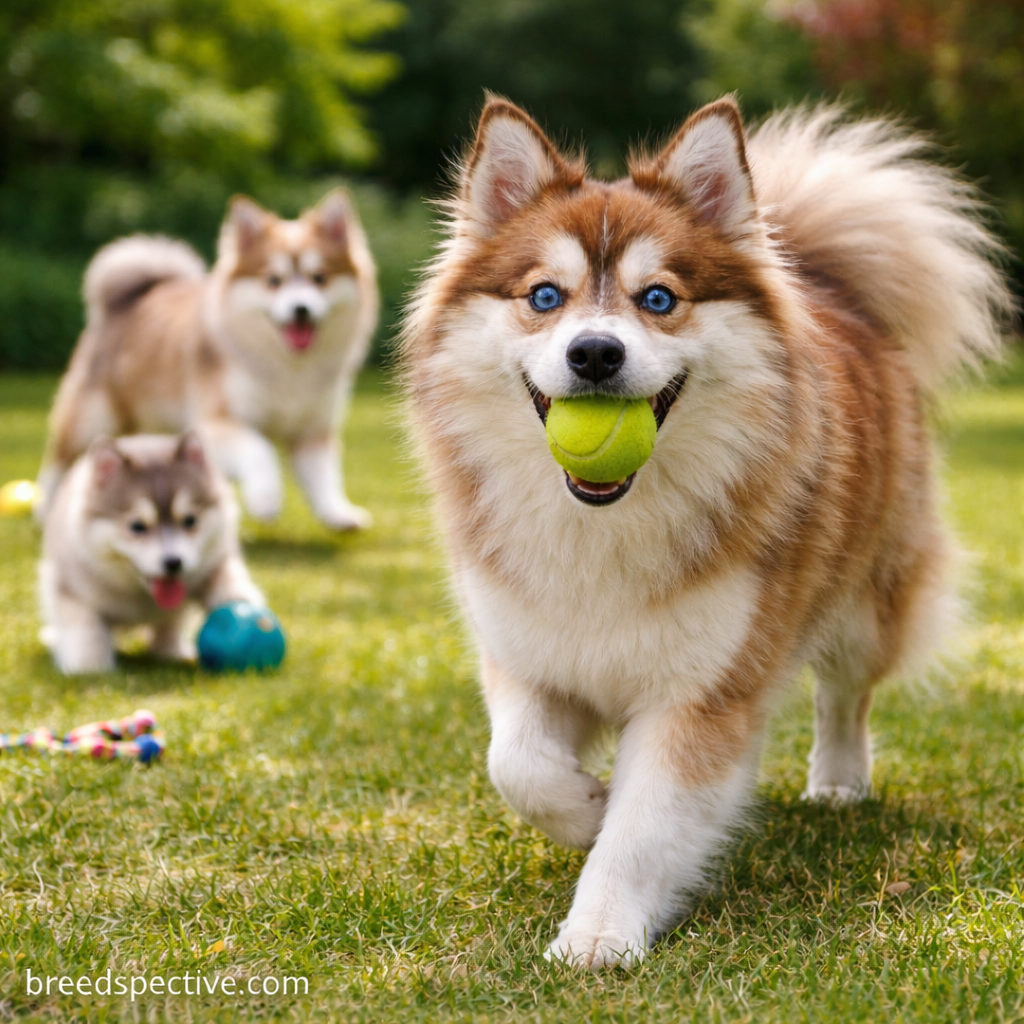
Pomskies have moderate to high energy levels, especially during their younger years. They need daily activity to stay balanced and well-behaved.
Common energy traits include:
- Bursts of playful energy throughout the day
- Enjoyment of walks, playtime, and games
- Curiosity-driven exploration
- Rest periods between activity sessions
Without enough physical and mental stimulation, Pomskies may become bored, vocal, or destructive.
Social Behavior With Family Members
Pomskies are typically affectionate and loyal with their families. They enjoy companionship and often form strong bonds with their primary caregivers.
Family interaction traits include:
- Enjoys spending time near family members
- Thrives on routine and predictability
- Can become anxious if left alone too long
- Often playful and entertaining at home
They are not ideal for households where they will be left alone for long hours without interaction.
Pomskies and Children
Pomskies can do well with children when properly socialized and supervised.
Important considerations include:
- Best suited for families with older children
- May be sensitive to rough handling
- Enjoy interactive play when boundaries are respected
- Benefit from teaching children how to interact gently
Their smaller size compared to Huskies makes supervision especially important to avoid accidental injuries.
Compatibility With Other Pets
Pomsky compatibility with other pets depends heavily on early socialization and individual temperament.
General tendencies include:
- Can coexist well with other dogs
- May display prey drive toward smaller animals
- Benefits from gradual introductions
- Often enjoys canine companionship
Early exposure to cats and other pets increases the likelihood of peaceful coexistence.
Vocal Tendencies and Alertness
Pomskies can be quite vocal, inheriting the Husky’s expressive nature and the Pomeranian’s alert barking.
Vocal behaviors may include:
- Alert barking at unfamiliar sounds
- Occasional howling or “talking”
- Vocalization when bored or excited
Training and enrichment can help manage excessive noise.
Living Environment Suitability
Pomskies are adaptable but do best in environments that support their activity and attention needs.
Ideal living situations include:
- Homes with daily activity opportunities
- Apartments with committed exercise routines
- Houses with secure outdoor space
- Families with time for interaction and play
They may struggle in environments that are overly quiet, isolated, or lacking stimulation.
Potential Behavioral Challenges
Like many intelligent mixed breeds, Pomskies can develop behavioral issues if their needs are not met.
Common challenges include:
- Separation anxiety
- Stubbornness during training
- Excessive barking
- Destructive behaviors when bored
These issues are often preventable with structure, enrichment, and consistent routines.
Is the Pomsky a Good Family Dog?
Pomskies can be excellent family companions for the right households.
They are a good match for families who:
- Enjoy active, playful dogs
- Have time for training and interaction
- Prefer a smaller dog with a big personality
- Can provide daily mental and physical stimulation
They may not be ideal for families seeking a low-energy or low-maintenance dog.
Final Thoughts
Pomsky temperament blends intelligence, energy, and affection into a lively and engaging companion. While they can be loving and entertaining family dogs, they require commitment, structure, and attention to thrive.
Understanding Pomsky temperament and family compatibility helps ensure a positive match—leading to a happier household and a well-adjusted, confident dog.