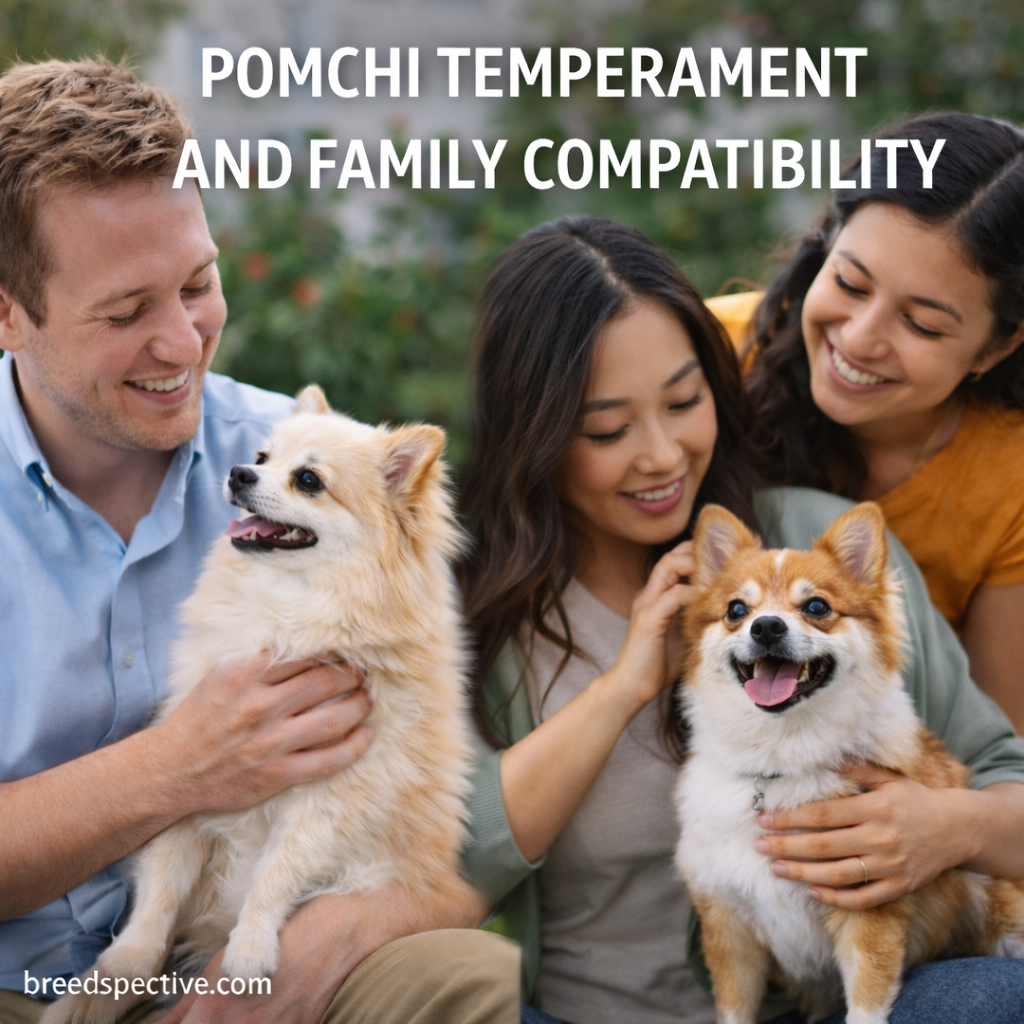
The Pomchi is a small mixed breed that combines the lively personality of the Pomeranian with the devotion of the Chihuahua. Known for being alert, affectionate, and confident for their size, the Pomchi can make a rewarding companion when matched with the right household.
Understanding Pomchi temperament and family compatibility is essential, as this breed’s small size and bold personality don’t suit every lifestyle equally well.
Overall Pomchi Temperament
Pomchis are often described as big dogs in small bodies. Their temperament is shaped by both parent breeds, resulting in a mix of affection, alertness, and independence.
Common temperament traits include:
- Loyal and strongly bonded to their owners
- Alert and watchful
- Confident and sometimes feisty
- Intelligent and curious
- Emotionally responsive
While many Pomchis are friendly and loving, their personality can vary depending on which parent breed they favor more strongly.
Affection and Attachment to Owners
Pomchis tend to form close bonds with one or two primary people in the household.
What This Looks Like
- Following owners from room to room
- Seeking lap time and physical closeness
- Becoming protective of favored family members
This strong attachment makes Pomchis excellent companions, but it can also lead to clingy behavior if boundaries aren’t established early.
Social Behavior With Strangers
Pomchis are naturally alert dogs and often cautious around unfamiliar people.
Typical behaviors include:
- Barking when someone approaches the home
- Hesitation around new faces
- Warming up once they feel secure
Early socialization plays a major role in whether a Pomchi becomes politely reserved or overly reactive.
Compatibility With Children
Pomchis can live in families with children, but they are generally better suited to homes with older, respectful kids.
Best Fit Scenarios
- Older children who understand gentle handling
- Calm household environments
- Supervised interactions
Potential Challenges
- Fragile size makes them prone to accidental injury
- Low tolerance for rough play
- May snap if startled or handled improperly
Pomchis are usually not ideal for homes with very young or highly energetic children.
Compatibility With Other Pets
Pomchi compatibility with other animals depends heavily on early exposure.
With Other Dogs
- Often do well with calm or similarly sized dogs
- May display dominance despite small size
- Can be territorial without proper socialization
With Cats
- Often coexist peacefully when introduced gradually
- Best results occur when raised together
Their confident nature means they may challenge larger dogs, so supervision is important.
Energy Level and Activity Needs
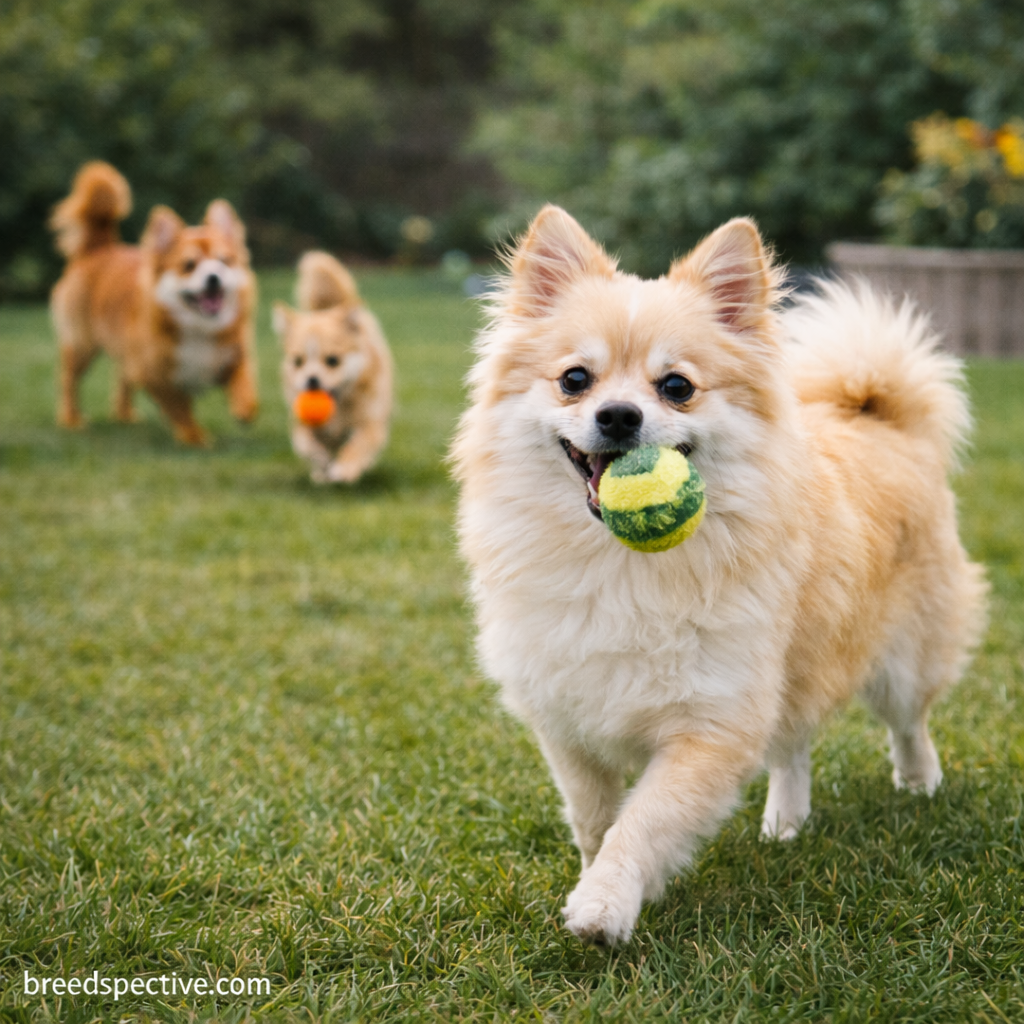
Pomchis are moderately energetic but do not require intense exercise.
Typical activity needs include:
- Short daily walks
- Indoor play sessions
- Mental stimulation through games or training
They enjoy activity but tire quickly, making them suitable for apartments and smaller living spaces.
Vocal Tendencies and Alertness
Pomchis are naturally vocal dogs.
Common reasons they bark include:
- Alerting to noises or movement
- Protecting their territory
- Seeking attention
Without training, barking can become excessive. Consistent boundaries and positive reinforcement help manage vocal behavior.
Trainability and Behavior Management
Pomchis are intelligent but can be stubborn.
Training traits often include:
- Quick learning when motivated
- Selective listening
- Sensitivity to tone
Best training approaches:
- Short, positive training sessions
- High-value rewards
- Clear, consistent rules
- Avoiding harsh corrections
Patience and consistency are key to successful Pomchi training.
Separation-Related Behavior
Because Pomchis bond closely with their owners, they may struggle with extended alone time.
Possible signs include:
- Barking or whining
- Restlessness
- Mild destructive behavior
Gradual independence training and predictable routines help reduce separation-related issues.
Ideal Family Environment for a Pomchi
Pomchis thrive in households that offer:
- Calm, structured environments
- Owners who enjoy close companionship
- Consistent routines
- Gentle handling and supervision
They are especially well-suited for singles, couples, seniors, or families with older children.
Final Thoughts
Pomchis are affectionate, alert, and confident companions with strong personalities packed into small frames. While they are not the best fit for every family, they can thrive in the right home—especially one that values close bonding, gentle interaction, and consistent training.
Understanding Pomchi temperament and family compatibility helps ensure a happy, balanced relationship where both dog and family can enjoy life together.