
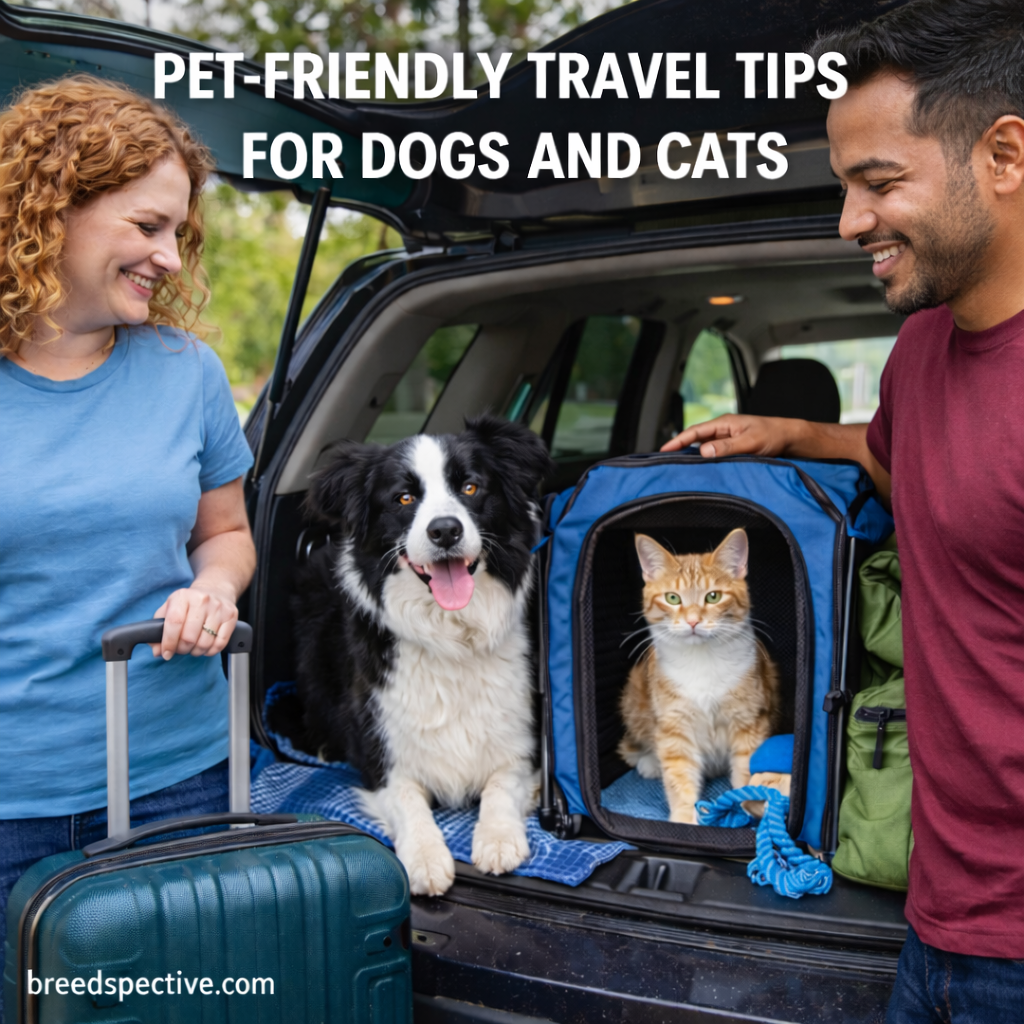
Traveling with pets has become increasingly common as more families consider dogs and cats true members of the household. Whether you’re planning a weekend road trip or a longer vacation, traveling with pets requires thoughtful preparation to ensure safety, comfort, and reduced stress for everyone involved.
This guide covers practical, pet-friendly travel tips for dogs and cats, including planning, packing, transportation, lodging, and keeping your pet calm and secure throughout the journey.
Preparing Your Pet Before Travel
Preparation is the foundation of successful pet travel. Rushing the process often leads to anxiety, accidents, or unexpected problems.
Key steps to take before departure:
- Schedule a veterinary checkup if your pet hasn’t been seen recently
- Ensure vaccinations and preventive medications are up to date
- Confirm your pet is healthy enough to travel
- Update microchip and ID tag information
- Introduce carriers, crates, or harnesses well in advance
For pets new to travel, short practice trips can help them acclimate before a longer journey.
Choosing the Right Travel Carrier or Restraint
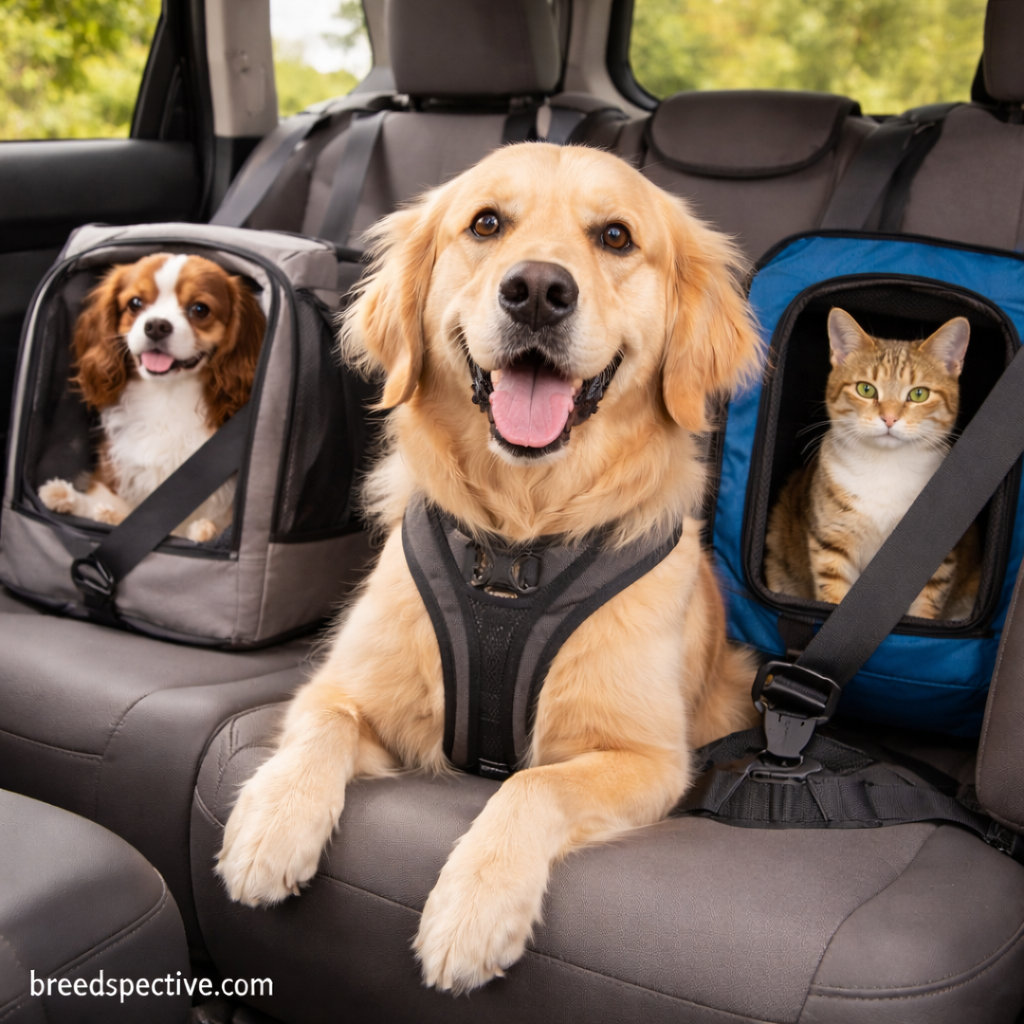
Safety during travel is essential, especially in vehicles.
For Dogs
Recommended options include:
- Crash-tested harnesses attached to seatbelts
- Secured crates placed on the vehicle floor or cargo area
- Travel barriers for larger vehicles
Dogs should never roam freely in a moving car, as this increases injury risk during sudden stops.
For Cats
Cats travel best in:
- Hard or soft-sided carriers
- Well-ventilated, escape-proof enclosures
- Carriers secured with a seatbelt
Even calm cats should always remain in carriers to prevent escape or injury.
Packing a Pet Travel Essentials Kit
A well-prepared pet travel kit can prevent stress and emergencies.
Include the following:
- Food and treats for the entire trip
- Collapsible food and water bowls
- Bottled water (to avoid sudden water changes)
- Leash, harness, and waste bags
- Litter, litter box, and scoop for cats
- Medications and supplements
- Pet-safe wipes and cleaning supplies
- Favorite toys or comfort items
Keeping familiar items nearby helps pets feel more secure in unfamiliar environments.
Managing Food and Feeding Schedules
Feeding routines may need adjustment during travel.
Helpful feeding tips:
- Avoid feeding large meals right before travel
- Offer small portions several hours before departure
- Stick to your pet’s regular diet to prevent digestive upset
- Maintain consistent feeding times when possible
For long trips, plan regular breaks to allow dogs to hydrate and relieve themselves.
Keeping Pets Calm During Travel
Travel can be overstimulating for pets due to motion, noise, and unfamiliar surroundings.
Ways to reduce anxiety include:
- Keeping the environment calm and quiet
- Playing soft background noise or familiar music
- Covering part of a carrier to limit visual stimulation
- Using pheromone sprays or calming collars (vet-approved)
- Staying relaxed yourself, as pets often mirror human stress
Avoid sedating pets unless specifically directed by a veterinarian.
Road Trip Tips for Dogs and Cats
Road trips are often the easiest way to travel with pets, but they still require planning.
Best practices for car travel:
- Stop every 2–3 hours for dogs to stretch and hydrate
- Never leave pets unattended in parked vehicles
- Keep windows partially closed to prevent escape
- Secure all carriers and restraints before driving
- Monitor temperature and airflow continuously
Cats usually prefer fewer stops and quieter environments, while dogs benefit from regular movement.
Flying With Pets: What to Know
Air travel with pets requires extra preparation and research.
Important considerations:
- Review airline pet policies carefully
- Confirm carrier size and weight requirements
- Decide between in-cabin or cargo travel
- Book pet reservations early, as space is limited
- Avoid peak travel seasons when possible
Not all pets are good candidates for air travel. Some breeds, ages, or medical conditions may increase risk.
Finding Pet-Friendly Accommodations
Not all lodging options welcome pets, so research is critical.
When booking accommodations:
- Confirm pet policies before reserving
- Ask about size, weight, or breed restrictions
- Check for additional pet fees or deposits
- Look for nearby green spaces or walking areas
- Review guest feedback related to pet stays
Respecting property rules helps maintain positive relationships between pet owners and hosts.
Maintaining Routine While Traveling
Pets thrive on routine, even while away from home.
Try to maintain consistency by:
- Feeding at the same times each day
- Keeping walk and play schedules similar
- Using familiar commands and cues
- Offering downtime for rest and relaxation
A predictable routine helps pets adjust more quickly to new environments.
Pet Safety in New Environments
Unfamiliar surroundings present new risks for pets.
Safety precautions include:
- Inspecting rooms for hazards like open windows or exposed cords
- Keeping pets leashed in unfamiliar outdoor areas
- Avoiding contact with unfamiliar animals
- Securing doors and gates at all times
For cats, keeping them indoors during travel stays is strongly recommended.
Preparing for Emergencies on the Road
Unexpected situations can happen, even with careful planning.
Emergency preparedness tips:
- Carry copies of veterinary records
- Know the location of nearby emergency vets
- Keep recent photos of your pet for identification
- Have a plan if travel delays occur
Being prepared helps you respond calmly and effectively if issues arise.
Common Pet Travel Mistakes to Avoid
Avoid these frequent travel errors:
- Skipping restraint or carrier use
- Feeding right before long travel periods
- Forgetting ID or medical documentation
- Leaving pets unattended in vehicles
- Assuming all pets enjoy travel
Understanding your pet’s individual comfort level is key.
Final Thoughts on Pet-Friendly Travel
Traveling with dogs and cats can be rewarding when done thoughtfully and responsibly. With proper preparation, safety measures, and respect for your pet’s needs, travel becomes less stressful and more enjoyable for everyone involved.
By planning ahead, maintaining routines, and prioritizing comfort and security, pet owners can create positive travel experiences that strengthen the bond between pets and their families.