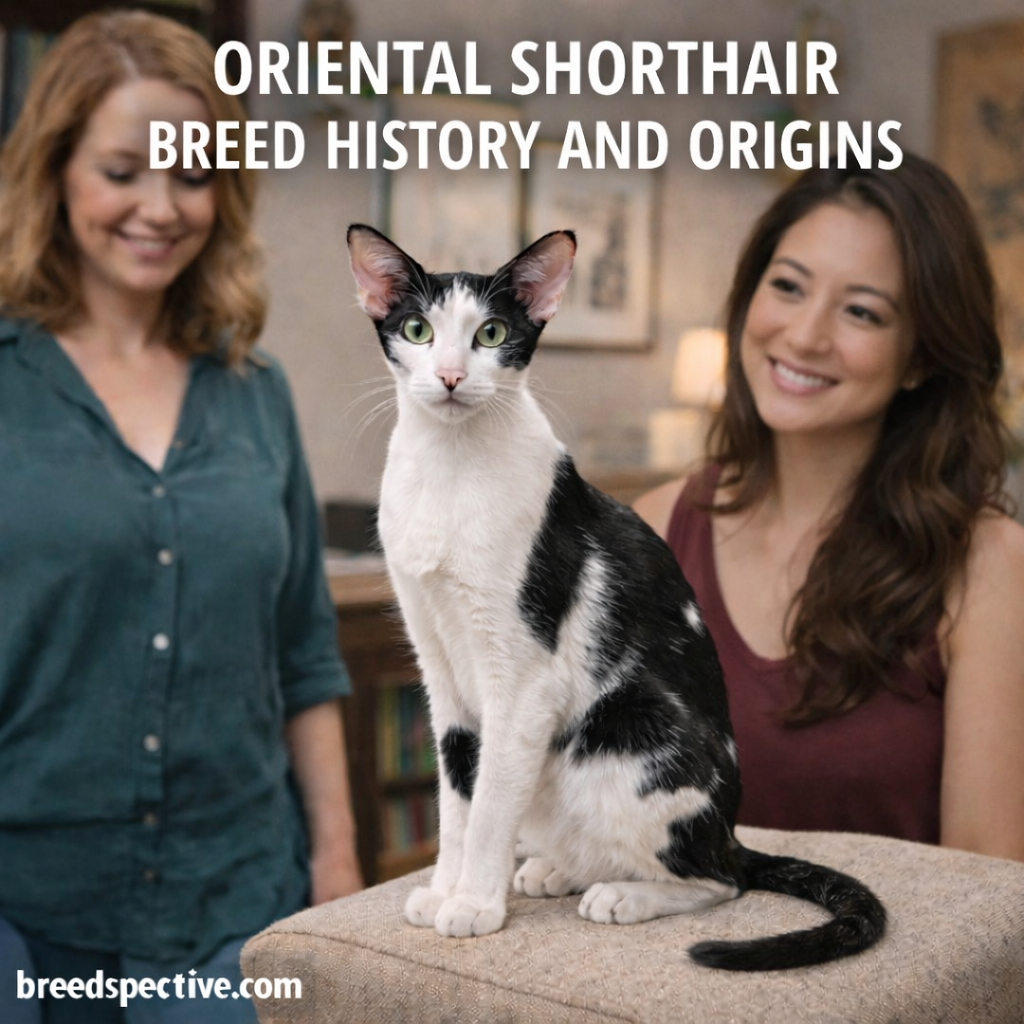
The Oriental Shorthair is a modern breed with ancient roots, combining the elegance of Eastern cats with deliberate Western breeding programs. Known today for its sleek body, large ears, and highly social personality, the Oriental Shorthair was developed to expand color variety while preserving the distinctive traits of the Siamese lineage.
Understanding the breed’s history helps explain its intelligence, vocal nature, and deep attachment to humans.
Ancient Roots in Southeast Asia
The origins of the Oriental Shorthair trace back to Southeast Asia, the same region that gave rise to Siamese-type cats.
Historical foundations include:
- Natural cats native to Thailand and surrounding regions
- Early depictions in ancient manuscripts
- Slender bodies and wedge-shaped heads
- Strong bonds with humans
These early cats formed the genetic and physical blueprint for modern Oriental breeds.
Relationship to the Siamese Cat
The Oriental Shorthair is closely related to the Siamese and shares much of its genetic heritage.
Key similarities include:
- Body structure and head shape
- High intelligence and vocal communication
- Strong social and emotional bonds
- Active, people-oriented temperament
The primary distinction lies in coat color and pattern diversity rather than body type.
Early Development in the United Kingdom
Modern Oriental Shorthair development began in the mid-20th century in the United Kingdom.
Breeding goals included:
- Preserving Siamese body type
- Introducing non-pointed coat colors
- Expanding patterns without altering temperament
British breeders began crossing Siamese cats with other shorthaired breeds to achieve these goals.
Influence of Other Cat Breeds
Several breeds contributed to the Oriental Shorthair’s development.
Common contributors include:
- British Shorthair
- Russian Blue
- Abyssinian
- Domestic shorthair cats
These crosses introduced new colors while maintaining a sleek, athletic build.
Expansion of Coat Colors and Patterns
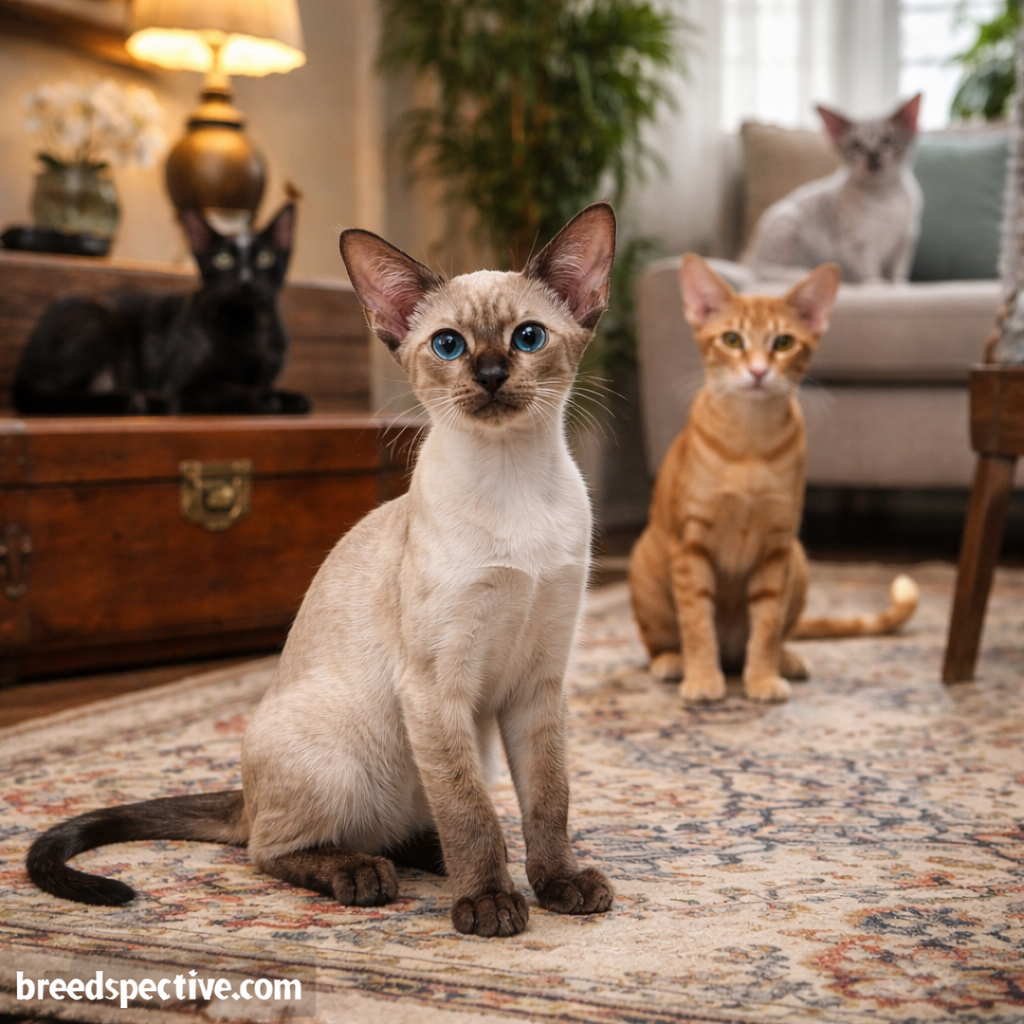
One of the defining features of the Oriental Shorthair is its wide range of coat variations.
Developed traits include:
- Solid, tabby, smoke, and shaded coats
- Bicolor and tricolor patterns
- Over 300 recognized color and pattern combinations
This diversity sets the Oriental Shorthair apart from many other pedigreed breeds.
Recognition by Cat Associations
As the breed gained consistency, formal recognition followed.
Important milestones:
- Recognition in the UK during the 1950s and 1960s
- Acceptance by major international cat registries
- Separate classification from Siamese cats
Official recognition helped standardize appearance while preserving personality traits.
Introduction to the United States
The Oriental Shorthair arrived in the United States during the 1970s.
American breeders focused on:
- Refining body proportions
- Expanding coat color diversity
- Preserving outgoing temperament
The breed quickly gained popularity among enthusiasts seeking an interactive companion cat.
Why the Breed Was Named “Oriental Shorthair”
The name reflects both heritage and physical characteristics.
Naming significance:
- “Oriental” references Eastern ancestry
- “Shorthair” distinguishes it from long-haired varieties
- Emphasizes breed type rather than color
The Oriental Longhair later emerged using similar principles.
Transition From Novelty to Companion Breed
Originally bred for appearance and diversity, the Oriental Shorthair soon became valued for companionship.
Key factors in this transition:
- Exceptionally social nature
- Strong human attachment
- High intelligence and trainability
These traits made the breed especially popular with active, engaged owners.
How History Shaped the Modern Oriental Shorthair
The breed’s past directly influences its current behavior.
Historical traits still present today:
- Strong vocal communication
- High energy and curiosity
- Emotional sensitivity
- Need for constant interaction
The Oriental Shorthair remains closely tied to its Siamese ancestry in both form and temperament.
Common Misconceptions About the Breed’s Origins
Several myths persist about Oriental Shorthair history.
Common misconceptions:
- They are simply Siamese cats in different colors
- They are a naturally occurring ancient breed
- Their appearance was bred without regard for temperament
In reality, the breed was carefully developed with both structure and personality in mind.
Oriental Shorthairs in the Modern World
Today, Oriental Shorthairs are cherished for their distinctive appearance and engaging personalities.
Modern roles include:
- Companion animals
- Show cats
- Therapy and emotional support animals
Their adaptability keeps them relevant in a wide range of households.
Final Thoughts
The Oriental Shorthair’s history is a blend of ancient feline heritage and thoughtful modern breeding. Developed to expand beauty without sacrificing intelligence or sociability, this breed represents one of the most people-oriented cats in the world.
Understanding its origins explains why the Oriental Shorthair is not just visually striking, but also emotionally engaging, vocal, and deeply connected to human life.