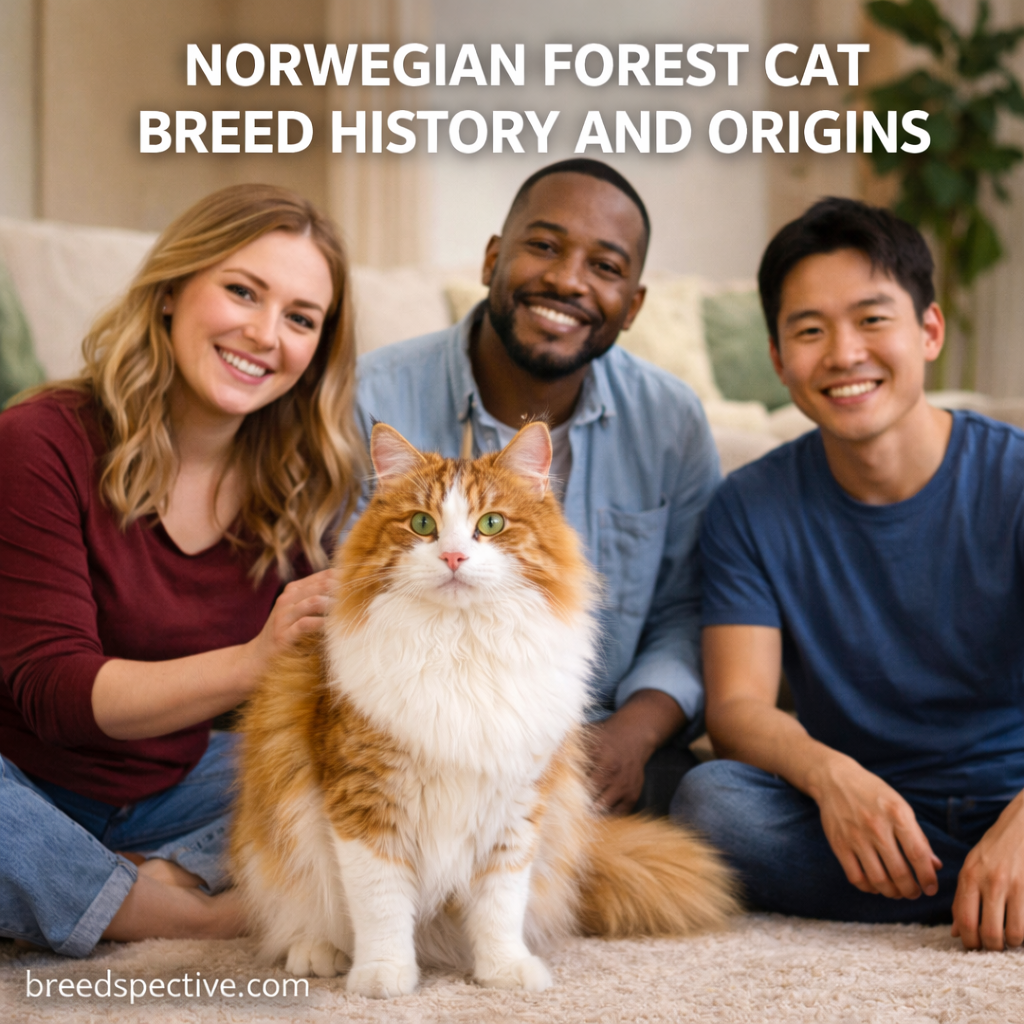
The Norwegian Forest Cat is a powerful, long-haired breed shaped by harsh climates, natural selection, and centuries of folklore. Known for its thick coat, strong build, and calm confidence, this breed developed long before formal cat breeding existed. Understanding Norwegian Forest Cat breed history and origins explains why this cat is so resilient, independent, and well adapted to cold environments.
This article explores where the Norwegian Forest Cat came from, how it survived the Nordic climate, and how its past influences the breed today.
Ancient Roots in Scandinavia
The Norwegian Forest Cat is considered a natural breed, meaning it evolved with minimal human interference. Its origins trace back hundreds, possibly thousands, of years in Norway and surrounding Scandinavian regions.
Key influences on early development include:
- Cold Nordic climates requiring dense, weather-resistant coats
- Forested terrain demanding strong climbing ability
- Natural selection favoring hardy, athletic cats
These cats developed traits necessary for survival rather than appearance.
Survival in Harsh Northern Climates
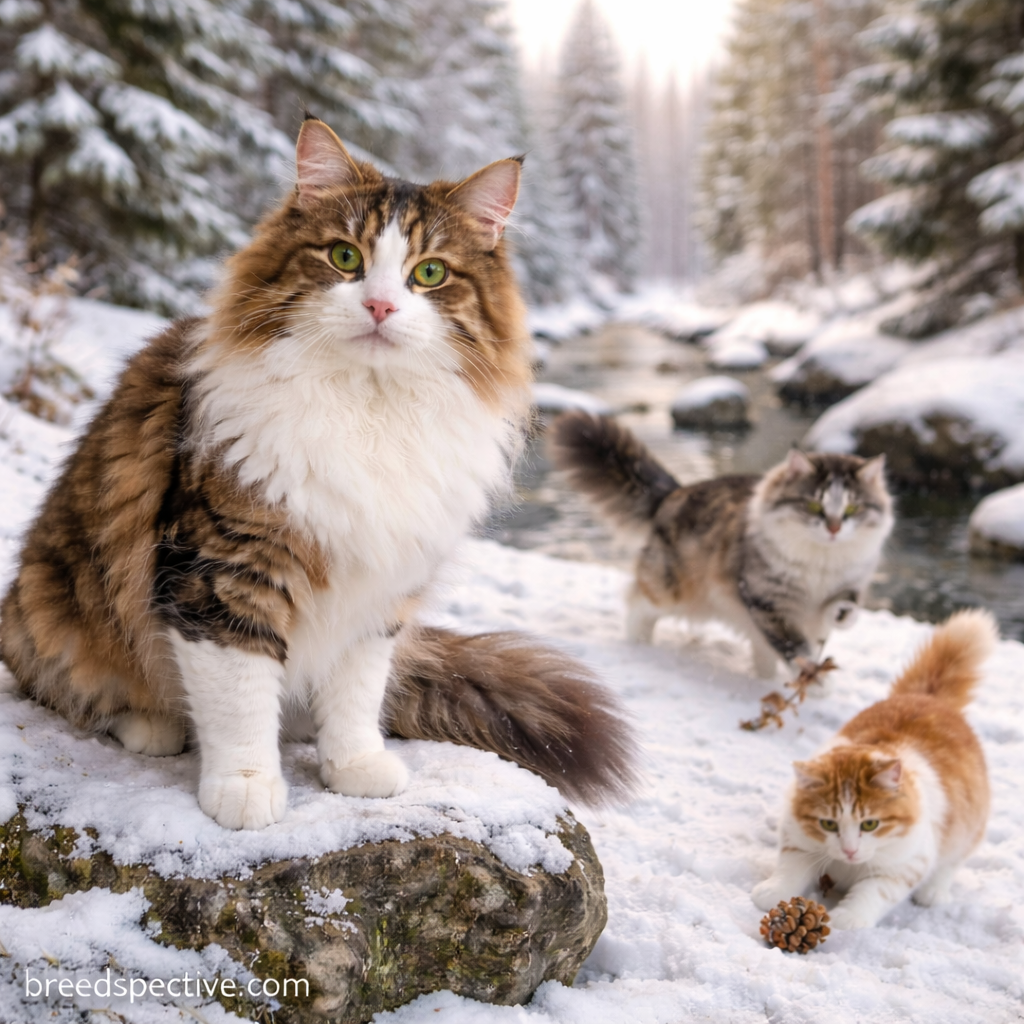
Norwegian winters are long, cold, and unforgiving. The Norwegian Forest Cat’s physical traits evolved specifically to handle these conditions.
Survival-driven characteristics include:
- Thick double coat with water-resistant guard hairs
- Long, bushy tail for warmth and balance
- Strong hind legs for climbing trees
- Large body size to conserve heat
These adaptations allowed the breed to hunt, shelter, and survive outdoors year-round.
Role in Norse Folklore and Mythology
Norwegian Forest Cats appear in Scandinavian folklore, where they were admired for strength and mystique.
Legends often describe:
- Large cats pulling the chariot of the goddess Freyja
- Cats with magical or protective qualities
- Forest-dwelling companions to gods and farmers
While symbolic, these stories highlight how deeply the breed was embedded in Norwegian culture.
Farm Life and Practical Roles
Beyond mythology, Norwegian Forest Cats played practical roles in rural communities.
Historically, they were valued for:
- Controlling rodent populations
- Protecting stored grain
- Living independently around farms and barns
Their intelligence and self-sufficiency made them reliable working cats rather than pampered pets.
Decline and Near Extinction
By the early 20th century, the Norwegian Forest Cat faced decline due to urbanization and crossbreeding with domestic cats.
Threats to the breed included:
- Loss of rural farm environments
- Dilution of natural traits through mixing
- Lack of formal breed recognition
Without intervention, the breed risked losing its distinct identity.
Preservation and Formal Recognition
Efforts to preserve the Norwegian Forest Cat began in Norway during the mid-1900s.
Key preservation milestones include:
- Selective breeding programs to restore original traits
- Establishment of breed standards
- Recognition by cat organizations
These efforts ensured the breed retained its natural appearance and temperament.
Introduction to the International Cat World
Norwegian Forest Cats gained international attention in the late 20th century.
Global expansion included:
- Introduction to Europe outside Scandinavia
- Arrival in North America
- Recognition by major cat registries
Despite growing popularity, responsible breeding continues to emphasize health and natural traits.
How History Shaped Modern Norwegian Forest Cats
The breed’s history strongly influences its modern personality and needs.
Historical traits seen today include:
- Strong climbing instincts
- Emotional independence
- Calm, confident temperament
- Tolerance for cooler environments
These cats remain closer to their wild roots than many other breeds.
Norwegian Forest Cats Today
Today, Norwegian Forest Cats are cherished companions known for balance and resilience.
Modern roles include:
- Indoor companions with climbing enrichment
- Family pets with gentle social behavior
- Low-drama, emotionally steady housemates
They thrive in homes that respect their independence while providing structure and enrichment.
Why Norwegian Forest Cat History Matters
Understanding the breed’s origins helps owners meet its needs more effectively.
Benefits include:
- Better environmental setup with vertical space
- Respect for independence and boundaries
- Appreciation for seasonal shedding and coat care
- Stronger human-cat relationships
Breed history explains why Norwegian Forest Cats behave differently from more domesticated breeds.
Final Thoughts
Norwegian Forest Cat breed history is a story of survival, strength, and natural evolution. Shaped by cold climates and rugged landscapes, this breed developed into a powerful yet gentle companion with deep cultural roots.
Understanding Norwegian Forest Cat history and origins provides valuable insight into the breed’s personality, care needs, and enduring appeal—making it easier to create a home where this remarkable cat can truly thrive.