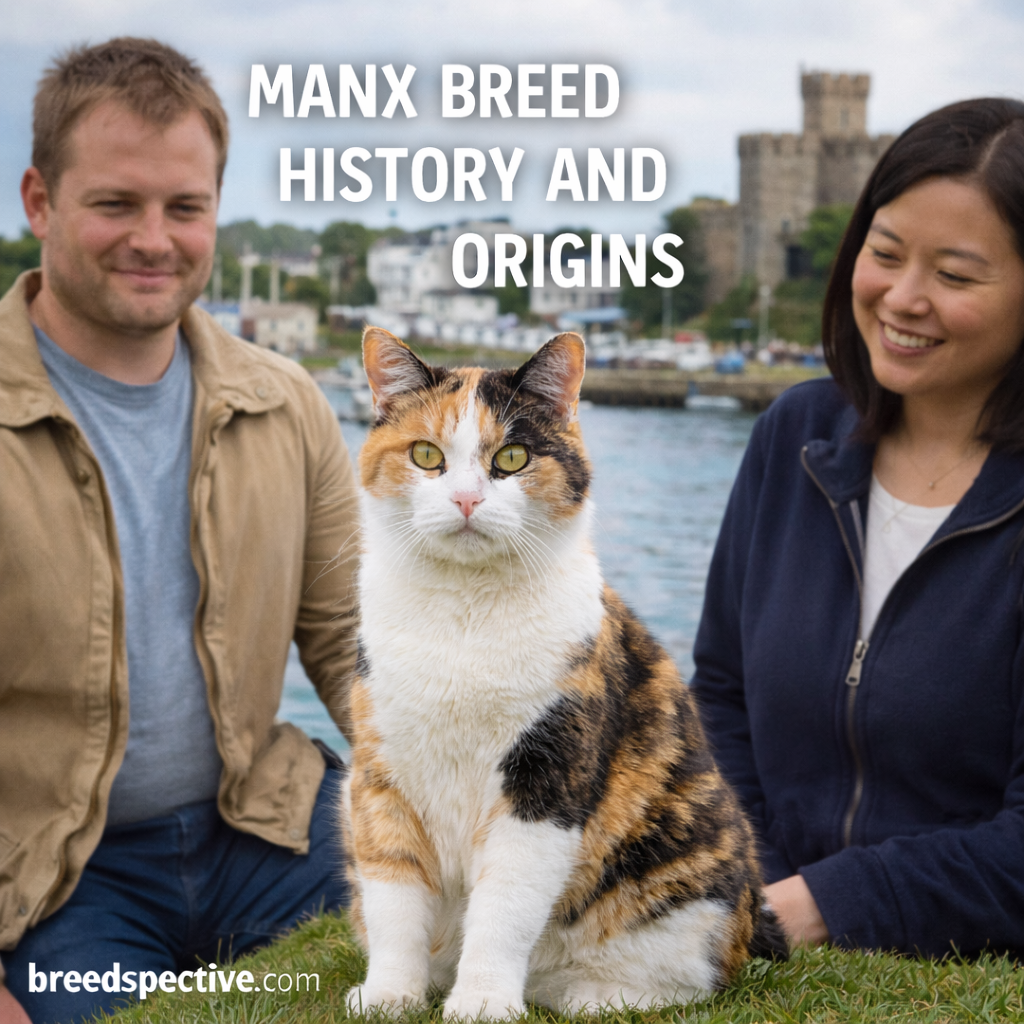
The Manx cat is one of the oldest and most distinctive cat breeds in the world, instantly recognizable for its naturally shortened or completely absent tail. Beyond its unique appearance, the Manx has a rich history shaped by isolation, natural selection, and close relationships with humans. Understanding the Manx breed’s history and origins provides insight into its physical traits, temperament, and enduring popularity.
Origins on the Isle of Man
The Manx breed originated on the Isle of Man, a small island located in the Irish Sea between Great Britain and Ireland. Due to the island’s geographic isolation, cats living there developed unique genetic traits over generations.
Key factors influencing early development include:
- Limited gene pool due to isolation
- Natural selection favoring survival traits
- Minimal outside breeding influence
- Close coexistence with human settlements
The tailless trait emerged naturally and became widespread because it offered no disadvantage in the island environment.
The Natural Tailless Mutation
The Manx cat’s defining feature—the absence of a tail—is the result of a natural genetic mutation rather than selective breeding.
Important details about this mutation:
- It affects spinal development
- It can result in varying tail lengths, from none to partial tails
- It became common due to the island’s closed population
- It was preserved through natural reproduction
Because the trait appeared naturally, early Manx cats were not bred specifically for appearance but evolved through environmental conditions.
Folklore and Legends Surrounding the Manx
The Manx cat has inspired numerous myths and legends over centuries, many attempting to explain its missing tail.
Popular folklore includes stories that:
- The cat’s tail was lost closing Noah’s Ark
- The breed descended from a cat-rabbit hybrid
- The tail was removed to avoid Viking taxes
While these tales are fictional, they highlight how long the Manx has been part of local culture and storytelling.
Role as a Working Cat
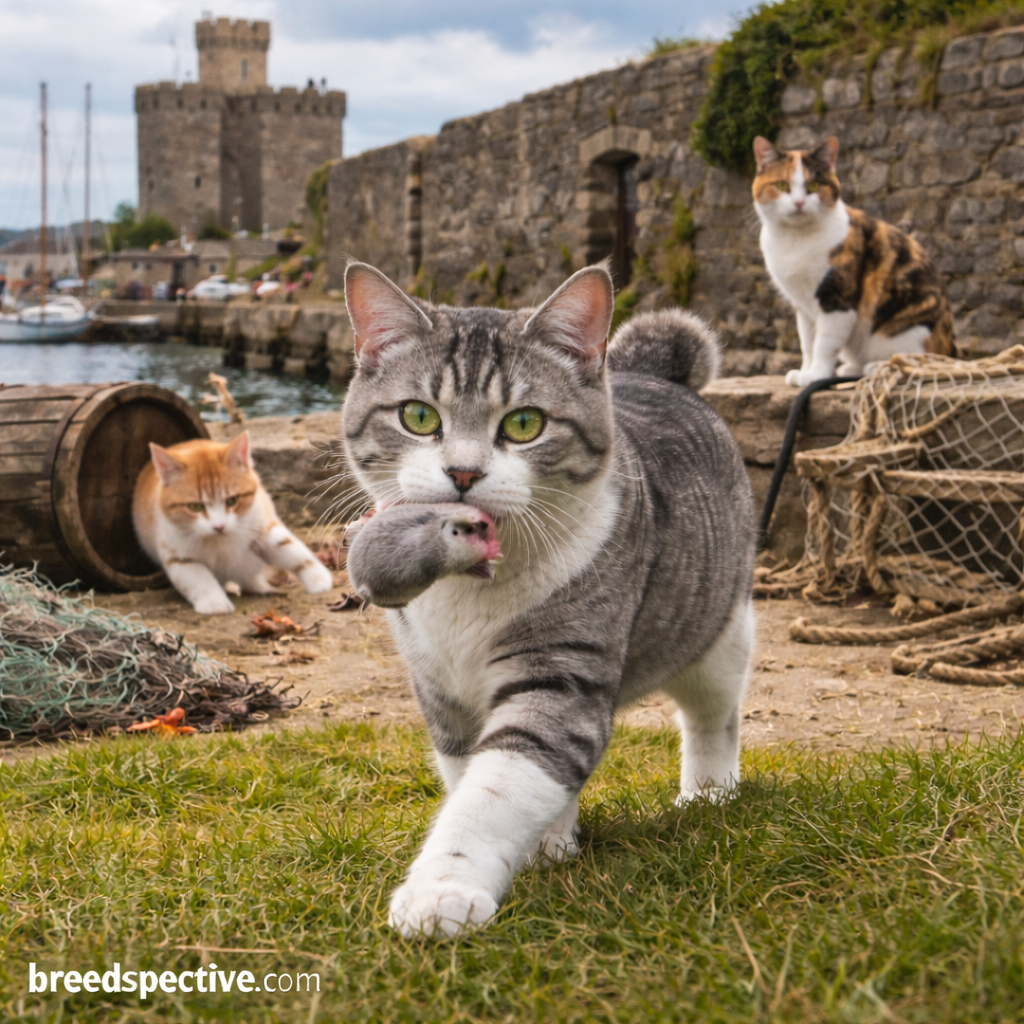
Historically, Manx cats were valued less for their looks and more for their abilities. They served as working cats in homes, farms, and ships.
Traditional roles included:
- Controlling rodent populations
- Protecting food supplies
- Living aboard ships as pest control
- Providing companionship to sailors and families
Their strong hunting instincts and adaptability made them highly valued in practical environments.
Spread Beyond the Isle of Man
As maritime travel increased, Manx cats began to spread beyond their island origins. Sailors often brought them aboard ships, introducing the breed to new regions.
This expansion led to:
- Recognition of the breed outside the Isle of Man
- Increased interest in their unique appearance
- Early documentation in cat registries
- Gradual establishment in Europe and North America
Despite wider distribution, the Manx retained many of its original traits due to careful breeding.
Recognition as a Formal Breed
By the late 19th and early 20th centuries, the Manx gained recognition as a distinct cat breed.
Milestones in breed recognition include:
- Inclusion in early cat shows
- Formal breed standards established
- Acceptance by major cat associations
- Growing popularity among cat enthusiasts
Breed standards emphasized both physical structure and overall health rather than tail absence alone.
Preservation and Responsible Breeding
Because the tailless gene can be associated with spinal issues if mismanaged, modern breeding practices focus on health and balance.
Responsible breeding priorities include:
- Avoiding pairing two completely tailless cats
- Maintaining genetic diversity
- Monitoring spinal and neurological health
- Preserving temperament and athleticism
These practices help ensure the Manx remains a healthy and sustainable breed.
How History Shaped the Modern Manx
The Manx cat’s history continues to influence its behavior and physical traits today.
Historical influences are reflected in:
- Strong hind legs developed for movement and hunting
- Confident, adaptable temperament
- Loyalty and attachment to humans
- Athletic ability despite compact size
The breed’s past as a working and island-adapted cat explains its balanced energy and social nature.
Conclusion
The Manx breed is a product of nature, isolation, and human partnership. From its origins on the Isle of Man to its recognition as a beloved companion worldwide, the Manx has remained true to its roots. Its unique appearance, combined with a rich history and practical origins, makes the Manx a fascinating and enduring breed.