
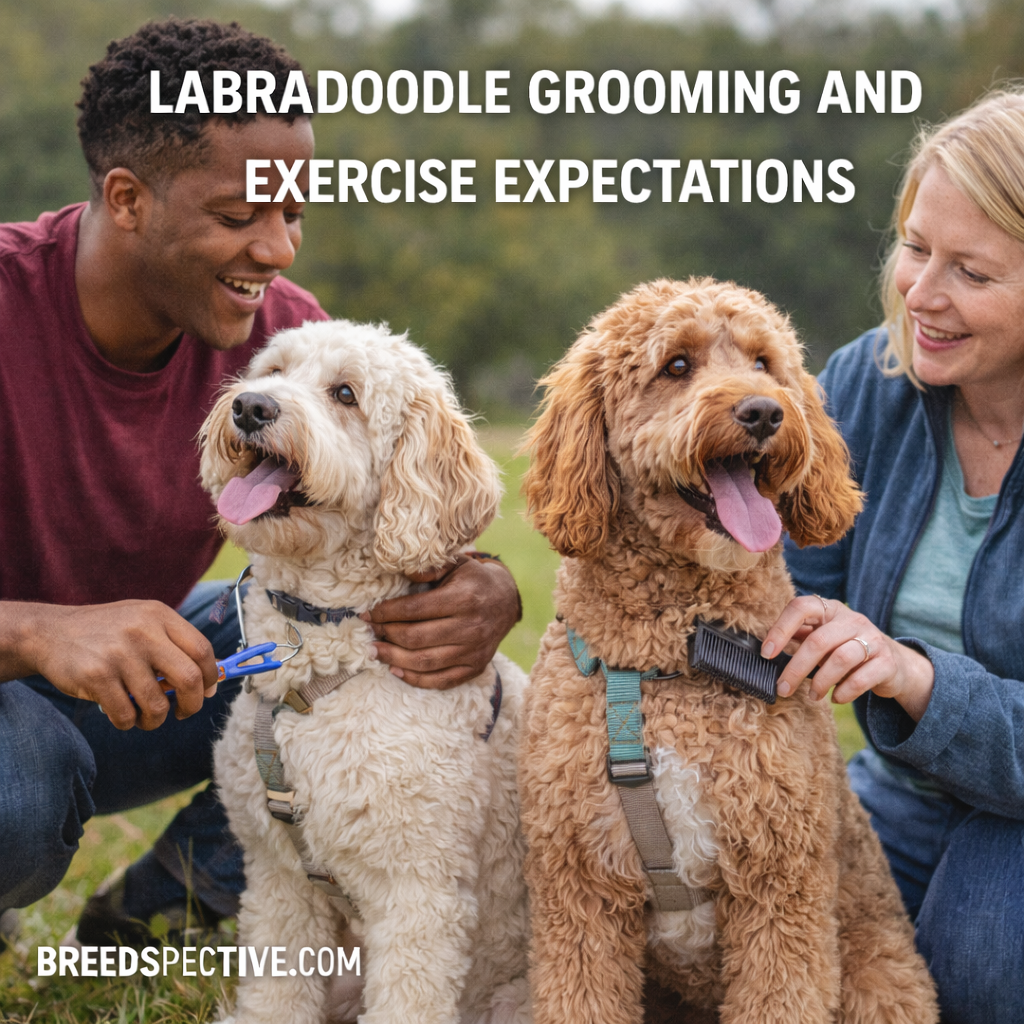
Labradoodles are popular mixed-breed dogs known for their friendly temperament, intelligence, and often low-shedding coats. As a cross between a Labrador Retriever and a Poodle, Labradoodles can vary widely in appearance, energy level, and grooming needs. Understanding these differences is essential for providing proper care and setting realistic expectations.
This guide explains Labradoodle grooming requirements and exercise needs so you can determine whether this mixed breed fits your lifestyle.
Understanding Labradoodle Coat Types
Labradoodle grooming needs depend heavily on coat type. Because this is a mixed breed, coats are not uniform.
Common Labradoodle coat types include:
- Curly coat – Dense, poodle-like curls that shed minimally but mat easily
- Wavy coat – Loose curls or waves with moderate shedding
- Straight coat – More lab-like, sheds more, and requires less intensive grooming
Coat type often becomes more apparent as the dog matures, usually by 8–12 months of age.
How Often Should You Groom a Labradoodle?
Most Labradoodles require regular grooming, especially those with curly or wavy coats.
General grooming schedule:
- Brushing 3–5 times per week
- Daily brushing for curly coats
- Professional grooming every 6–8 weeks
Key areas to focus on:
- Behind the ears
- Under the collar
- Armpits and groin
- Tail and hindquarters
Neglecting brushing can lead to painful matting that often requires shaving.
Bathing and Coat Maintenance
Labradoodles do not need frequent baths unless they get dirty or develop odor.
Bathing guidelines:
- Every 4–8 weeks as needed
- Use dog-specific, gentle shampoos
- Thoroughly dry the coat to prevent skin irritation
Overbathing can strip natural oils and cause dry skin.
Nail, Ear, and Dental Care
Regular maintenance beyond coat care is essential.
Nail care:
- Trim every 3–4 weeks
- Listen for clicking on hard floors
Ear care:
- Check weekly for redness or odor
- Labradoodles with floppy ears are prone to moisture buildup
Dental care:
- Brush teeth several times per week
- Dental chews can supplement brushing
Routine checks help prevent infections and long-term health issues.
Labradoodle Exercise Needs
Labradoodles are an active, energetic mixed breed. Their exercise needs often reflect both Labrador and Poodle ancestry.
Typical daily exercise requirements:
- 60–90 minutes per day
- Combination of physical and mental activity
Without enough exercise, Labradoodles may develop behavioral problems such as chewing, barking, or hyperactivity.
Best Types of Exercise for Labradoodles

Labradoodles thrive on varied activities rather than repetitive routines.
Ideal activities include:
- Long walks or hikes
- Fetch and retrieval games
- Swimming
- Agility or obedience training
- Puzzle toys and interactive games
Mental stimulation is just as important as physical movement for this intelligent breed.
Indoor vs Outdoor Lifestyle Considerations
Labradoodles adapt well to different living environments when exercise needs are met.
They do well in:
- Homes with fenced yards
- Active families
- Suburban or rural settings
They can live in apartments if:
- Daily exercise is consistent
- Mental stimulation is provided
- Alone time is limited
They are not suited for sedentary households.
Puppies vs Adult Labradoodle Needs
Age significantly impacts grooming and exercise expectations.
Puppies:
- Require gentle, frequent brushing
- Short, frequent play sessions
- Early grooming exposure is critical
Adults:
- More structured exercise routines
- Full grooming schedules
- Better tolerance for longer activities
Senior Labradoodles may need reduced exercise but still benefit from regular movement.
Common Grooming and Exercise Mistakes
Owners often underestimate Labradoodle care requirements.
Common mistakes include:
- Assuming all Labradoodles are low-maintenance
- Skipping brushing between grooming appointments
- Relying on yard time alone for exercise
- Ignoring mental stimulation
Consistency is key to preventing both coat issues and behavioral problems.
Is a Labradoodle Right for You?
Labradoodles are best for owners who are willing to commit time to grooming and daily activity.
They’re a great fit for:
- Active individuals or families
- Owners comfortable with routine grooming
- Homes that value training and engagement
They may not be ideal for:
- Low-energy lifestyles
- Owners unwilling to brush regularly
- People away from home for long hours
Final Thoughts
Labradoodles are affectionate, intelligent, and energetic dogs, but they are not maintenance-free. Regular grooming and consistent exercise are essential to keeping them healthy, comfortable, and well-behaved.
If you’re prepared to meet their grooming needs and provide daily physical and mental activity, a Labradoodle can be a rewarding and adaptable companion.