
Some dogs shed a little. Others seem to release an endless supply of fur year-round. High-shedding dog breeds are completely normal—but without the right grooming routine, shedding can quickly overwhelm your home, furniture, and clothing.
This guide explains which dog breeds shed the most, why shedding happens, and how to manage fur effectively with daily habits, grooming tools, and lifestyle adjustments.
What Causes Heavy Shedding in Dogs?
Shedding is a natural process that helps dogs regulate body temperature and maintain healthy skin and coats. High-shedding breeds typically have double coats, meaning they have:
- A dense, insulating undercoat
- A longer, protective topcoat
Common shedding triggers include:
- Seasonal coat changes (spring and fall)
- Indoor living with artificial lighting
- Poor grooming routines
- Diet and skin health issues
Heavy shedding is not a flaw—it’s a biological feature.
Common High-Shedding Dog Breeds
While individual dogs vary, certain breeds are consistently known for heavy shedding.
Some of the most common high-shedding breeds include:
- German Shepherd
- Labrador Retriever
- Golden Retriever
- Siberian Husky
- Alaskan Malamute
- Akita
- Bernese Mountain Dog
- Great Pyrenees
- Chow Chow
Mixed breeds with double-coat ancestry may also shed heavily.
Seasonal vs Year-Round Shedding
Not all shedding looks the same.
Seasonal shedders:
- Blow their coats heavily 1–2 times per year
- Shed intensely for several weeks
- Often require daily brushing during peak seasons
Year-round shedders:
- Lose fur consistently every day
- Shed less dramatically but more constantly
- Require ongoing maintenance
Many high-shedding breeds experience both patterns.
Daily Brushing: The Most Important Tool
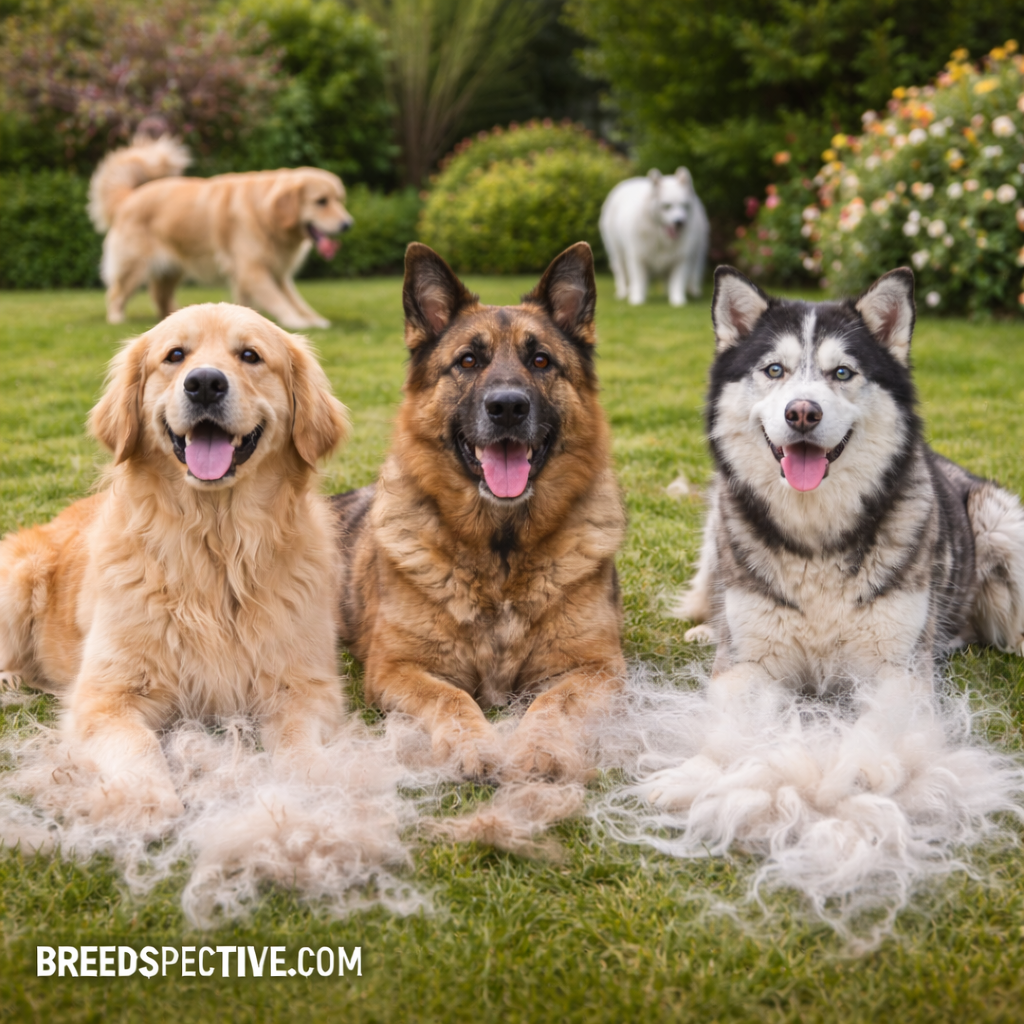
Brushing is the single most effective way to manage shedding.
Recommended brushing frequency:
- Daily for heavy shedders
- At least 3–5 times per week year-round
- Twice daily during seasonal coat blows
Benefits of regular brushing:
- Removes loose undercoat before it falls indoors
- Reduces matting and skin irritation
- Improves coat shine and airflow
- Decreases fur on furniture and clothing
Skipping brushing allows fur to collect where you don’t want it.
Best Grooming Tools for High-Shedding Dogs
Not all brushes work the same way. Tool choice matters.
Commonly effective tools include:
- Undercoat rakes for thick double coats
- Slicker brushes for surface fur and tangles
- Deshedding tools for controlled undercoat removal
- Rubber brushes for short-haired shedders
Avoid overuse of aggressive deshedding tools, which can irritate skin if used improperly.
Bathing and Shedding Control
Bathing helps loosen dead fur—but only when done correctly.
Bathing guidelines:
- Every 4–8 weeks for most high shedders
- Use dog-specific, moisturizing shampoos
- Always brush before and after bathing
Overbathing can dry out skin and actually increase shedding.
Diet and Coat Health
Nutrition plays a major role in shedding intensity.
Key dietary factors include:
- High-quality protein
- Omega-3 and omega-6 fatty acids
- Adequate hydration
Poor diets often result in brittle fur, flaky skin, and excessive shedding beyond normal levels.
Managing Fur Inside the Home
Even with grooming, some fur is inevitable.
Helpful home strategies:
- Vacuum high-traffic areas frequently
- Use washable furniture covers
- Choose pet-hair-resistant fabrics
- Run air purifiers to reduce airborne fur
- Brush dogs outdoors when possible
Consistency matters more than perfection.
Shedding Myths to Avoid
Many shedding misconceptions lead to frustration.
Common myths include:
- “Short-haired dogs don’t shed”
- “Shaving stops shedding”
- “Shedding means poor health”
In reality, shaving double-coated dogs can damage coat regrowth and worsen temperature regulation.
When Shedding Becomes a Health Concern
While shedding is normal, sudden changes are not.
Consult a veterinarian if you notice:
- Patchy hair loss
- Bald spots
- Red or irritated skin
- Sudden increase in shedding
- Excessive scratching or licking
Medical issues such as allergies, parasites, or hormonal imbalances may be involved.
Is a High-Shedding Dog Right for You?
High-shedding dogs are not low-maintenance—but they are manageable.
They’re a good fit for owners who:
- Can commit to regular grooming
- Don’t mind daily brushing
- Value breed traits over cleanliness perfection
They may not be ideal for:
- Severe allergy sufferers
- People unwilling to groom regularly
- Those expecting minimal cleanup
Final Thoughts
High-shedding dog breeds come with fur—but also loyalty, intelligence, and companionship. Shedding cannot be eliminated, but it can be controlled with the right routine, tools, and expectations.
When grooming becomes part of daily life rather than a reaction to fur buildup, living with a high-shedding dog becomes far more manageable—and far less frustrating.