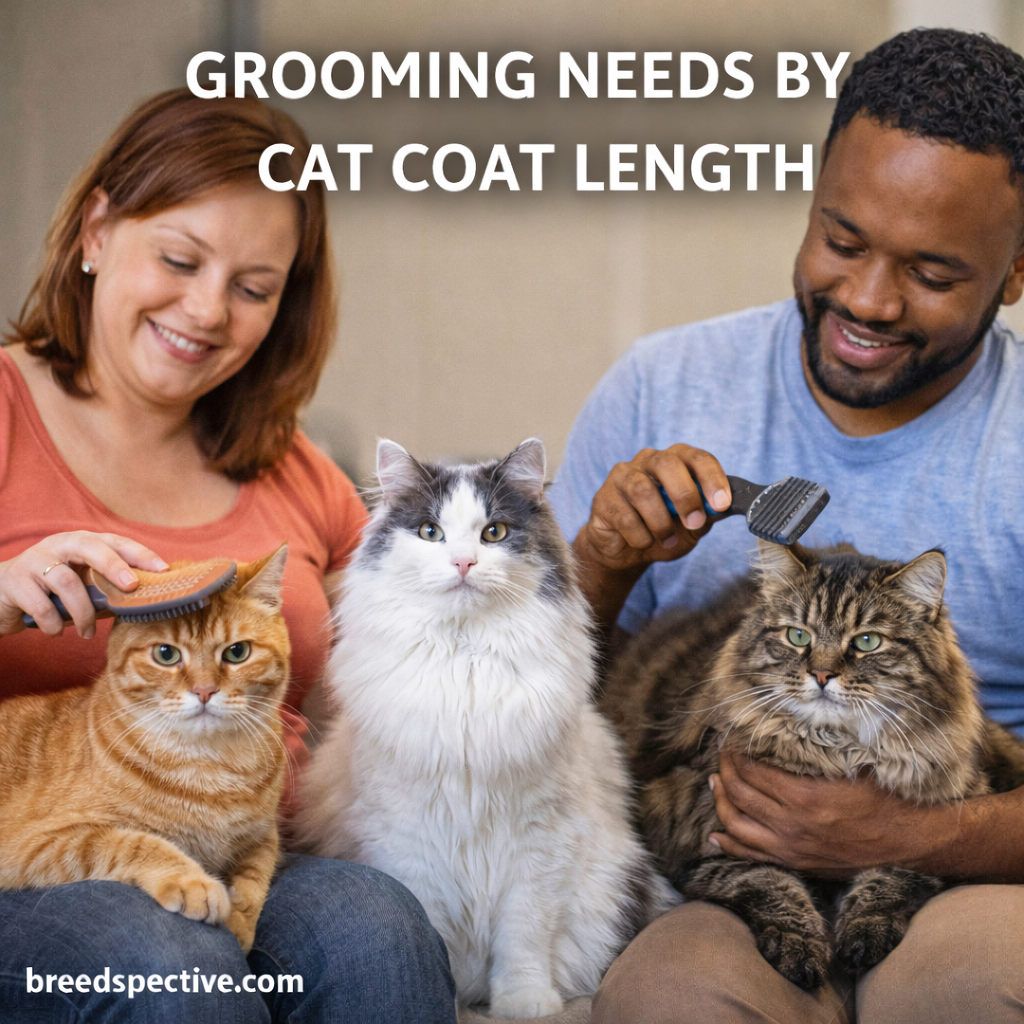
A cat’s coat length plays a major role in how much grooming and maintenance they need. While all cats groom themselves naturally, differences in fur length, density, and texture affect shedding, matting, hairballs, and overall coat health. Understanding grooming needs by coat length helps owners create routines that keep cats comfortable, healthy, and looking their best.
This article breaks down grooming requirements for short-haired, medium-haired, and long-haired cats, along with practical tips for each coat type.
Why Coat Length Matters in Cat Grooming
Coat length directly influences how easily loose hair is shed and removed.
Key factors affected by coat length include:
- Frequency of brushing
- Risk of tangles or mats
- Hairball formation
- Amount of shedding around the home
- Skin and coat cleanliness
Matching grooming routines to coat length prevents common issues and reduces stress for both cats and owners.
Grooming Needs of Short-Haired Cats

Short-haired cats have coats that lie close to the body and generally require the least maintenance. However, “low maintenance” does not mean “no maintenance.”
Typical grooming needs include:
- Brushing once per week
- Increased brushing during seasonal shedding
- Occasional bathing only if needed
- Regular nail trimming and ear checks
Short-haired cats still shed, especially during spring and fall, and benefit from brushing to remove loose fur and distribute natural oils.
Common Challenges for Short-Haired Cats
Despite their manageable coats, short-haired cats can still experience grooming-related issues.
Common concerns include:
- Excess shedding in warm months
- Hairballs from self-grooming
- Dry skin if diet or hydration is poor
Routine brushing and a balanced diet usually keep these issues under control.
Grooming Needs of Medium-Haired Cats
Medium-haired cats fall between short and long coats in terms of maintenance. Their fur is often softer and thicker, which increases the risk of tangles.
Recommended grooming routine:
- Brushing 2–3 times per week
- Daily brushing during heavy shedding periods
- Close attention to areas prone to tangles, such as the chest and behind the legs
Medium coats benefit from consistency to prevent matting before it starts.
Common Challenges for Medium-Haired Cats
Medium-length coats can develop problems if grooming is inconsistent.
Potential issues include:
- Small mats forming near friction points
- Increased hairballs
- More noticeable shedding indoors
Early grooming intervention prevents mats from becoming painful or requiring shaving.
Grooming Needs of Long-Haired Cats
Long-haired cats require the most frequent and hands-on grooming. Their coats are prone to tangling and matting if not maintained regularly.
Ideal grooming routine includes:
- Daily brushing
- Use of wide-tooth combs and slicker brushes
- Regular checks for hidden mats
- Occasional sanitary trims if needed
Skipping grooming sessions can quickly lead to mats that pull on the skin and cause discomfort.
Common Challenges for Long-Haired Cats
Long coats come with unique grooming challenges.
Common concerns include:
- Severe matting if brushing is skipped
- Increased hairball risk
- Trapped debris or litter
- Skin irritation beneath mats
Many long-haired cats require professional grooming support in addition to home care.
Seasonal Shedding and Coat Length
All coat types shed, but the amount and visibility vary by length.
Seasonal effects include:
- Short coats shedding lightly but consistently
- Medium coats shedding in thicker clumps
- Long coats producing noticeable fur buildup
Increasing brushing frequency during shedding seasons helps manage loose hair and reduces hairballs.
Tools Best Suited for Each Coat Length
Using the right tools makes grooming more effective and comfortable.
Recommended tools by coat length:
Short-haired cats:
- Rubber grooming mitts
- Soft-bristle brushes
Medium-haired cats:
- Slicker brushes
- Fine-tooth combs
Long-haired cats:
- Wide-tooth combs
- Dematting tools
- Long-pin slicker brushes
Avoid harsh tools that pull on the skin or break the fur.
Bathing Needs by Coat Length
Most cats do not require frequent bathing, regardless of coat length.
General guidelines:
- Short-haired cats rarely need baths
- Medium-haired cats may need occasional baths if dirty
- Long-haired cats may benefit from infrequent, gentle baths
Bathing should always be done with cat-safe products and minimal stress.
Grooming and Hairball Prevention
Hairballs are closely linked to coat length and grooming habits.
Prevention strategies include:
- Regular brushing to remove loose fur
- Adequate hydration
- Balanced diets with hairball support if needed
Long-haired and medium-haired cats are especially prone to hairballs without proper grooming.
Grooming Needs Change With Age
As cats age, grooming needs often increase.
Senior cats may:
- Groom themselves less effectively
- Develop mats more easily
- Need more frequent brushing assistance
Adjusting grooming routines ensures comfort and prevents skin problems in older cats.
Common Grooming Mistakes to Avoid
Avoid these common errors across all coat lengths:
- Waiting until mats form before brushing
- Using the wrong grooming tools
- Overbathing
- Ignoring skin changes or discomfort
Gentle, regular grooming is always more effective than infrequent intensive sessions.
Final Thoughts on Grooming Needs by Cat Coat Length
Every cat benefits from grooming, but the amount and frequency depend heavily on coat length. Short-haired cats need minimal upkeep, medium-haired cats require consistent attention, and long-haired cats demand daily care to stay healthy and comfortable.
By tailoring grooming routines to coat length, owners can reduce shedding, prevent mats, and support long-term skin and coat health for cats of all types.