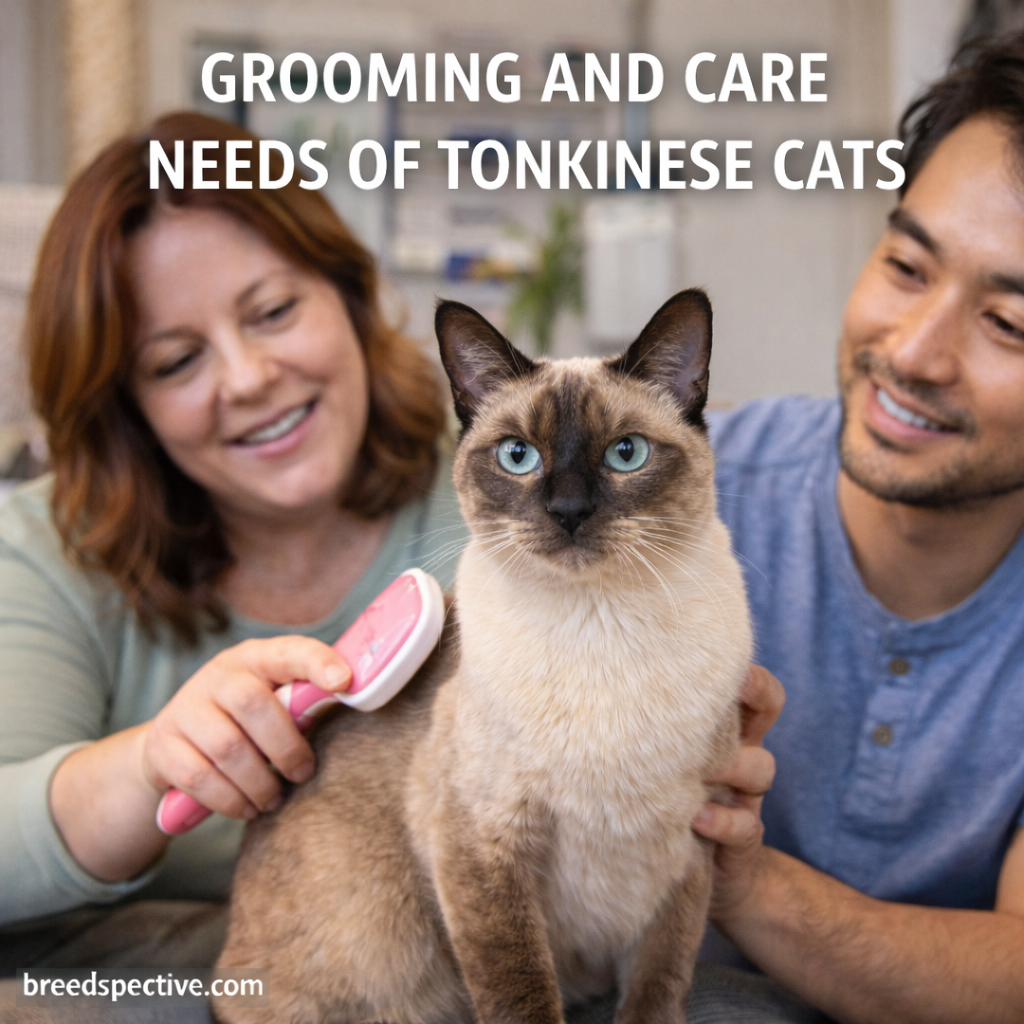
Tonkinese cats are known for their sleek coats, athletic bodies, and people-oriented personalities—but their grooming and care needs are just as important as their social traits. While this breed is relatively low-maintenance compared to long-haired cats, Tonkinese cats still require consistent care to stay healthy, comfortable, and emotionally balanced.
This guide covers everything you need to know about grooming, daily care, health considerations, and environmental needs for Tonkinese cats.
Coat Type and Shedding Levels
Tonkinese cats have short, fine coats that lie close to the body. Their fur has a smooth, silky texture and lacks the dense undercoat seen in many other breeds.
Key coat characteristics include:
- Short, close-lying hair
- Minimal undercoat
- Low to moderate shedding
- Naturally glossy appearance
Because of this coat type, Tonkinese cats typically shed less than many other breeds and are easier to keep clean.
Brushing and Coat Maintenance
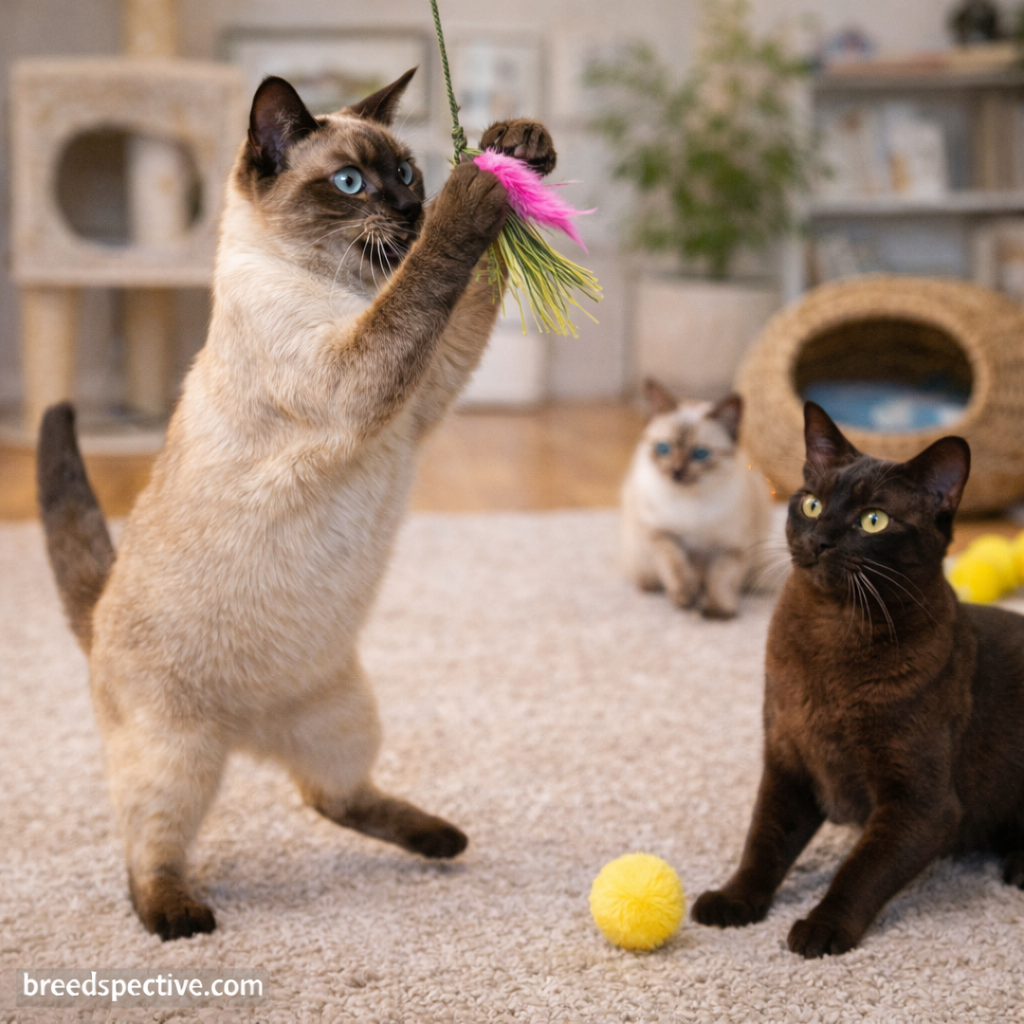
Despite their short coat, regular brushing helps maintain skin health and reduce loose hair.
Recommended brushing routine:
- Once per week for most Tonkinese cats
- Twice per week during seasonal shedding periods
- Use a soft-bristle brush or rubber grooming mitt
Brushing helps distribute natural oils, remove dead hair, and strengthen the bond between cat and owner.
Bathing Needs
Tonkinese cats rarely need baths unless they get into something messy or sticky.
Bathing guidelines:
- Occasional baths only when necessary
- Use cat-specific, gentle shampoo
- Keep sessions short and calm
Most Tonkinese cats groom themselves effectively and do not benefit from frequent bathing.
Nail Trimming and Paw Care
Regular nail trimming prevents discomfort and accidental scratching.
Care tips include:
- Trim nails every 2–3 weeks
- Use cat-safe nail clippers
- Avoid cutting into the quick
- Provide scratching posts to reduce overgrowth
Scratching posts help maintain claw health while satisfying natural scratching instincts.
Ear Cleaning and Ear Health
Tonkinese cats generally have clean ears, but periodic checks are still important.
Ear care recommendations:
- Inspect ears weekly
- Clean only if visible dirt or wax is present
- Use a vet-approved ear cleaner
- Never insert cotton swabs deep into the ear
Redness, strong odor, or discharge may indicate infection and should be evaluated by a veterinarian.
Dental Care and Oral Hygiene
Dental health is often overlooked but essential for Tonkinese cats.
Best practices include:
- Weekly tooth brushing if tolerated
- Dental treats or water additives as supplements
- Annual veterinary dental checks
Good oral hygiene helps prevent gum disease, tooth loss, and systemic health issues.
Eye Care and Facial Cleanliness
Tonkinese cats typically have clear, bright eyes and minimal tear staining.
Eye care tips:
- Wipe corners gently if discharge appears
- Use a soft, damp cloth
- Monitor for redness or excessive tearing
Persistent eye issues should always be checked by a veterinarian.
Diet and Nutritional Needs
Proper nutrition supports coat condition, energy levels, and overall health.
Diet considerations include:
- High-quality protein-based food
- Balanced fats for coat health
- Proper portion control to prevent weight gain
Tonkinese cats are active and muscular, so maintaining lean body condition is important throughout their lives.
Exercise and Mental Stimulation
Grooming and care extend beyond physical maintenance—mental and emotional care are just as critical.
Tonkinese cats benefit from:
- Daily interactive play sessions
- Puzzle toys and climbing structures
- Rotating toys to prevent boredom
Without adequate stimulation, Tonkinese cats may develop attention-seeking or stress-related behaviors.
Litter Box and Hygiene Habits
Tonkinese cats are typically clean and consistent with litter box use.
Care tips include:
- Scoop daily
- Fully clean boxes weekly
- Provide one box per cat plus one extra
Clean litter areas reduce stress and help prevent avoidance behaviors.
Seasonal and Environmental Considerations
Tonkinese cats adapt well to indoor living but still benefit from a stable environment.
Important considerations:
- Keep indoor temperatures comfortable
- Avoid sudden routine changes
- Provide vertical space and cozy resting areas
Their short coats mean they are more sensitive to cold than long-haired breeds.
Health Monitoring and Routine Vet Care
Regular health checks are an essential part of overall care.
Recommended care includes:
- Annual veterinary exams
- Vaccinations as advised
- Monitoring weight, appetite, and behavior
Early detection of health changes often leads to better outcomes.
Grooming as a Bonding Experience
Tonkinese cats are highly social and often enjoy gentle grooming sessions.
Benefits include:
- Reduced stress
- Increased trust
- Early detection of skin or health issues
When introduced positively, grooming becomes a rewarding routine rather than a chore.
Final Thoughts on Tonkinese Grooming and Care
Tonkinese cats are relatively low-maintenance in terms of grooming, but they are high-needs when it comes to attention, interaction, and emotional care. Their sleek coat is easy to manage, yet their active minds and social nature require daily engagement.
For owners willing to provide routine care, stimulation, and companionship, the Tonkinese is a clean, affectionate, and deeply rewarding breed to live with.