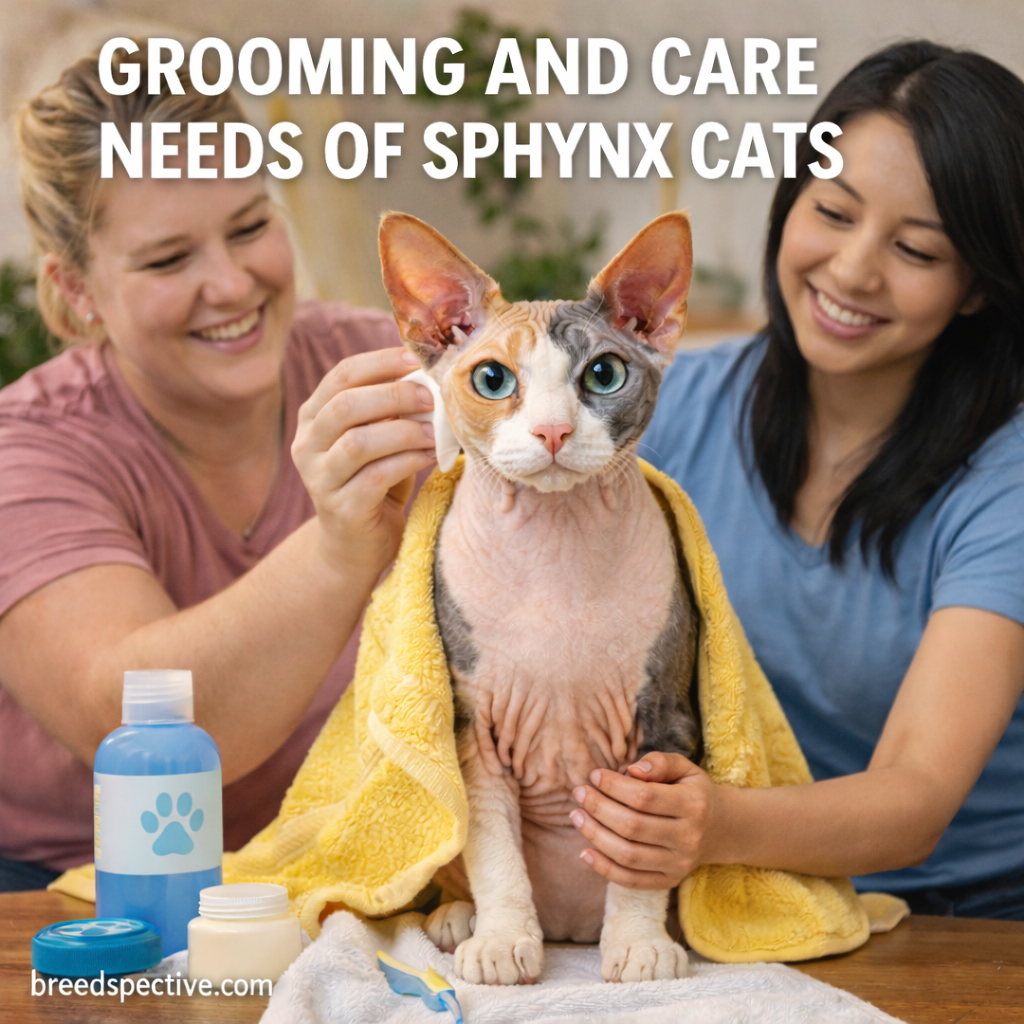
Sphynx cats are famous for their hairless appearance, but the lack of fur does not mean they are low-maintenance. In fact, Sphynx cats require more consistent grooming and daily care than many furred breeds. Their exposed skin, unique metabolism, and sensitivity to temperature mean owners must follow a specialized care routine to keep them healthy and comfortable.
This guide explains everything you need to know about grooming and caring for Sphynx cats, from skin care and bathing to ear cleaning, nail maintenance, and environmental needs.
Understanding Why Sphynx Cats Need Special Care
Unlike furry cats, Sphynx cats do not have a coat to absorb oils produced by the skin. As a result, oils accumulate directly on the skin’s surface.
This leads to several unique needs:
- Regular bathing to prevent oil buildup
- Frequent ear cleaning
- Careful temperature regulation
- Ongoing skin monitoring
Without proper grooming, Sphynx cats can develop skin irritation, clogged pores, or infections.
Skin Care for Sphynx Cats
Skin care is the most important aspect of Sphynx grooming.
Why Skin Care Matters
Because their skin is exposed, Sphynx cats are prone to:
- Excess oil buildup
- Blackheads and clogged pores
- Redness or irritation
- Dry patches if over-bathed
Balancing cleanliness and moisture is key.
Daily and Weekly Skin Maintenance
Recommended routine:
- Wipe skin gently with a warm, damp cloth between baths
- Check folds and wrinkles for buildup
- Avoid scented wipes or harsh chemicals
- Use only cat-safe, fragrance-free products
Never use human skincare products, as they can disrupt a cat’s natural skin balance.
Bathing a Sphynx Cat
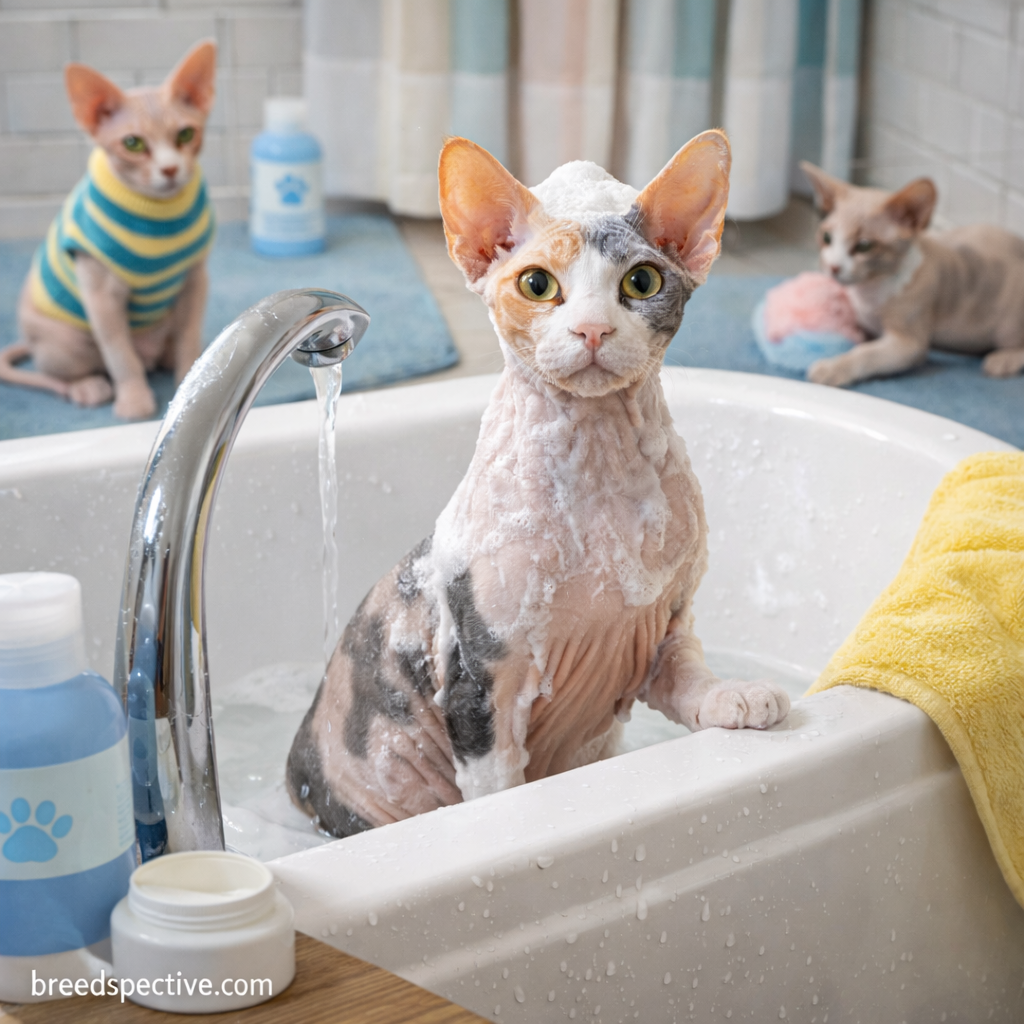
Despite common myths, Sphynx cats do need baths.
How Often to Bathe
Most Sphynx cats need a bath:
- Every 1–2 weeks
- More often for oil-prone individuals
- Less often if skin becomes dry
Each cat’s skin chemistry is different, so frequency may vary.
How to Bathe a Sphynx Cat Safely
Basic bathing steps:
- Use warm (not hot) water
- Choose a gentle, hypoallergenic cat shampoo
- Lather lightly—do not scrub aggressively
- Rinse thoroughly to avoid residue
- Dry with a soft towel in a warm room
Avoid leaving the cat damp, as they can lose body heat quickly.
Ear Cleaning Needs
Sphynx cats produce more ear wax than most breeds.
Why Ear Cleaning Is Essential
Without fur to trap debris, oils and wax build up rapidly inside the ears, increasing the risk of infection.
Ear Cleaning Routine
Recommended care:
- Check ears weekly
- Clean with a vet-approved ear solution
- Use cotton pads or soft gauze (never cotton swabs)
- Stop if redness or odor appears and consult a vet
Regular ear care helps prevent chronic ear infections.
Nail and Paw Care
Sphynx cats also accumulate oil around their nails.
Nail Trimming
Trim nails:
- Every 1–2 weeks
- Using cat-specific nail clippers
- Carefully avoiding the quick
Cleaning Nail Beds
Oil and debris can collect around the nail base.
Helpful tips:
- Gently wipe paws during bath time
- Pay attention to redness or swelling
- Keep scratching surfaces clean
Eye Care for Sphynx Cats
Because they lack eyelashes, Sphynx cats may experience mild eye discharge.
Routine Eye Care
- Wipe eyes gently with a soft, damp cloth
- Clean from inner corner outward
- Use a fresh cloth for each eye
Persistent discharge, squinting, or redness should be evaluated by a veterinarian.
Temperature Sensitivity and Environmental Care
Sphynx cats are highly sensitive to temperature changes.
Keeping Them Warm
Because they lack insulation:
- Keep indoor temperatures stable
- Provide blankets and heated beds
- Use sweaters in cooler climates
Sun Protection
Sphynx cats can get sunburned.
Safety tips:
- Limit direct sun exposure
- Avoid leaving them in sunny windows for long periods
- Never apply human sunscreen unless approved by a veterinarian
Diet and Metabolism Considerations
Sphynx cats have a higher metabolism than many other breeds.
Nutritional Needs
They often require:
- High-quality, protein-rich food
- Slightly higher calorie intake
- Consistent feeding schedules
A balanced diet supports skin health and energy regulation.
Common Grooming Mistakes to Avoid
Avoid these frequent errors:
- Over-bathing, which causes dry skin
- Using human soaps or wipes
- Ignoring ear and nail care
- Allowing prolonged sun exposure
- Skipping regular skin inspections
Consistency matters more than intensity when it comes to grooming.
Long-Term Health Monitoring
Regular grooming helps you detect potential health issues early.
Watch for:
- Changes in skin color or texture
- Excessive oiliness or dryness
- Persistent odors
- Unusual lethargy or discomfort
Routine veterinary checkups combined with proper grooming greatly improve quality of life.
Final Thoughts on Sphynx Grooming and Care
Sphynx cats may lack fur, but they make up for it with unique grooming and care needs. With regular skin maintenance, proper bathing, ear cleaning, and environmental awareness, Sphynx cats thrive as affectionate, healthy companions.
For owners willing to commit to consistent care, the reward is a deeply bonded, playful, and loving cat unlike any other breed.